
A wholesale trout program fails long before a shipment is rejected or arrives late. It fails when the buyer accepts unclear origin, loosely defined specifications, or a price that does not account for yield, freight, and cold-chain risk. Knowing how to source trout wholesale means building a supply arrangement that protects product quality and margin from the farm through final delivery.
For distributors, supermarket teams, foodservice operators, and industrial buyers, Norwegian trout can provide a premium, dependable alternative within a broader seafood portfolio. The opportunity is strongest when sourcing is based on verified production, export capability, and an agreed product specification – not on a spot quote alone.
Start With the Trout Specification
Before requesting prices, define exactly what your operation needs to buy. “Trout” is not a complete purchasing specification. A supplier needs enough detail to allocate the right raw material, processing capacity, packaging, and transport solution.
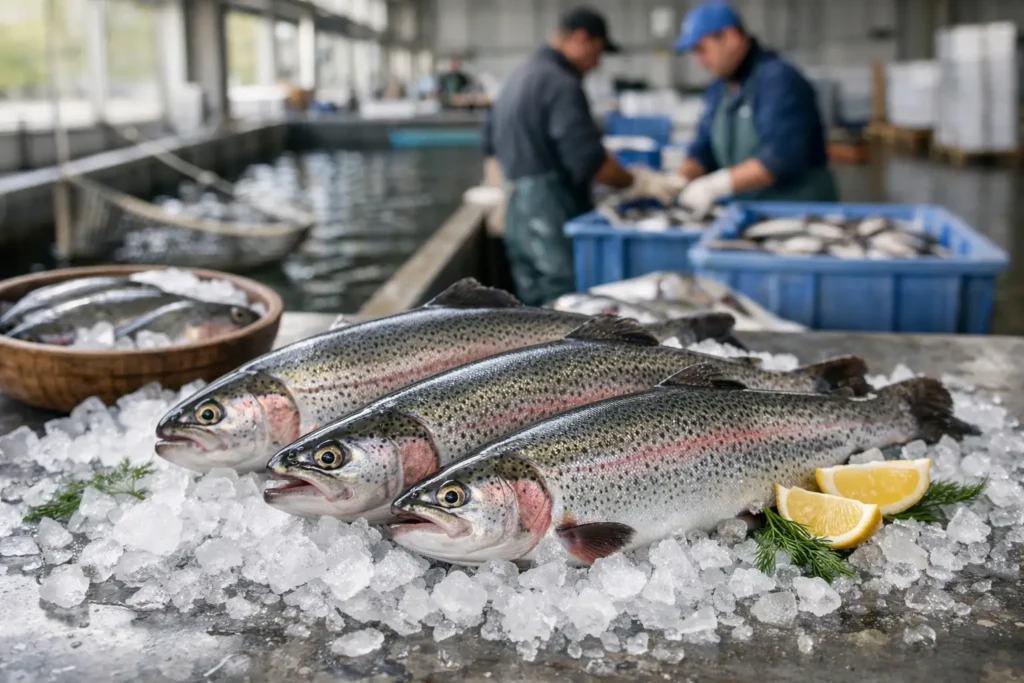
Start with the required format. Wholesale buyers commonly source whole round trout, HOG trout, trimmed fish, fillets, portions, or frozen products. HOG, meaning head-on gutted, is often a practical choice for processors and buyers that want more control over cutting and yield. Retail and foodservice programs may require more finished formats, standardized trim, individual portions, or specific label requirements.
Size range matters just as much. A restaurant group may need consistent portions from a defined fish weight, while a distributor may need several size bands to serve different accounts. Specify whether weight is measured as whole fish, gutted fish, or finished fillet. If that point is not clear, price comparisons become unreliable.
Also confirm whether fresh or frozen product best fits the business model. Fresh Norwegian trout supports premium counter, sushi, and foodservice programs where speed and appearance are critical. Frozen trout can offer greater inventory flexibility, longer sales windows, and less exposure to delivery disruptions. Neither format is automatically better. The right choice depends on sales velocity, storage capacity, destination, and customer expectations.
Source From Verified Farms and Processing Facilities
The strongest wholesale supply chains begin close to production. Working with a factory-direct exporter reduces unnecessary handling and gives the buyer better visibility into where fish is farmed, processed, packed, and dispatched.
Ask prospective suppliers to document farm origin, processing location, food safety controls, and relevant sustainability credentials. For Norwegian trout, buyers should expect traceability that connects each shipment to a defined production chain. This is essential for commercial confidence, but it also supports retailer requirements, import documentation, and customer audits.
Certification requirements vary by market and customer segment. Some buyers need specific third-party farm certifications; others focus on supplier approval procedures, veterinary documentation, residue controls, and lot-level traceability. The practical rule is simple: establish the required documentation before contracting volume. Do not assume that a supplier’s general compliance statement meets the needs of a particular retail, foodservice, or industrial program.
Processing standards deserve equal attention. Confirm whether the facility can consistently deliver your requested trim, pin-bone standard, skin treatment, glazing level for frozen products, packing method, and case configuration. Product samples can be useful, but samples do not replace production specifications. The written specification should govern every shipment.
Evaluate Wholesale Trout Pricing by Total Landed Cost
Factory prices are a major advantage of direct sourcing, but the lowest ex-works or FOB quote is not always the lowest-cost purchase. Wholesale trout pricing must be evaluated against the total landed cost and the commercial value of the delivered product.
A meaningful quote should identify the product format, size range, fresh or frozen status, pack weight, Incoterm, currency, payment terms, delivery window, and minimum order quantity. If any of these items are missing, the buyer is comparing incomplete offers.
Yield is frequently overlooked. A lower-priced whole trout may create more labor, trim loss, and waste than a higher-priced processed format. Conversely, a buyer with efficient in-house processing may gain a cost advantage from HOG fish. Calculate the usable cost per pound after processing, freight, duties where applicable, handling, and expected loss. That figure is more valuable than the invoice price alone.
Price stability also matters. Trout supply and freight costs can move with seasonality, harvest planning, feed costs, currency, and air or ocean capacity. For ongoing volume, discuss a pricing mechanism rather than relying entirely on individual spot purchases. A structured supply agreement can provide clearer planning while allowing reasonable adjustments when market conditions change.
Verify Export Readiness Before Placing an Order
International seafood sourcing is an operational discipline. Even premium fish loses value if documents are delayed, labeling is incorrect, or the cold chain is not protected through transit.
An export-ready supplier should be able to explain the documentation package for the destination market, including health certificates, commercial invoices, packing lists, certificates of origin when required, product labels, and transport records. US buyers should confirm that the supplier understands the requirements that apply to imported seafood and can coordinate with the importer of record, customs broker, and receiving facility.
Discuss logistics early, especially for fresh trout. Confirm the planned transport mode, airport or port routing, temperature range, packaging insulation, gel or ice method where applicable, transit time, and contingency procedures. For frozen product, verify storage temperatures, container loading practices, temperature monitoring, and the available shelf life on arrival.
A reliable exporter does not treat logistics as an afterthought. It manages logistics as part of product quality. The buyer should know who is responsible at each handoff, what happens if a flight is missed or a container is delayed, and how temperature exceptions are documented and resolved.
Build a Supplier Qualification Process
A disciplined supplier qualification process reduces the risk of inconsistent supply. Start with a commercial and technical review, then move to a controlled first order before expanding into regular volume.
For a new wholesale trout supplier, review these four areas:
- Product capability: available formats, fish sizes, processing capacity, freezing capability, packaging, and lead times.
- Quality and traceability: farm origin, lot identification, food safety systems, certifications, specifications, and complaint procedures.
- Export performance: destination-market experience, document accuracy, freight coordination, cold-chain controls, and customs support.
- Commercial reliability: pricing structure, credit terms, volume commitments, communication speed, and contingency supply options.
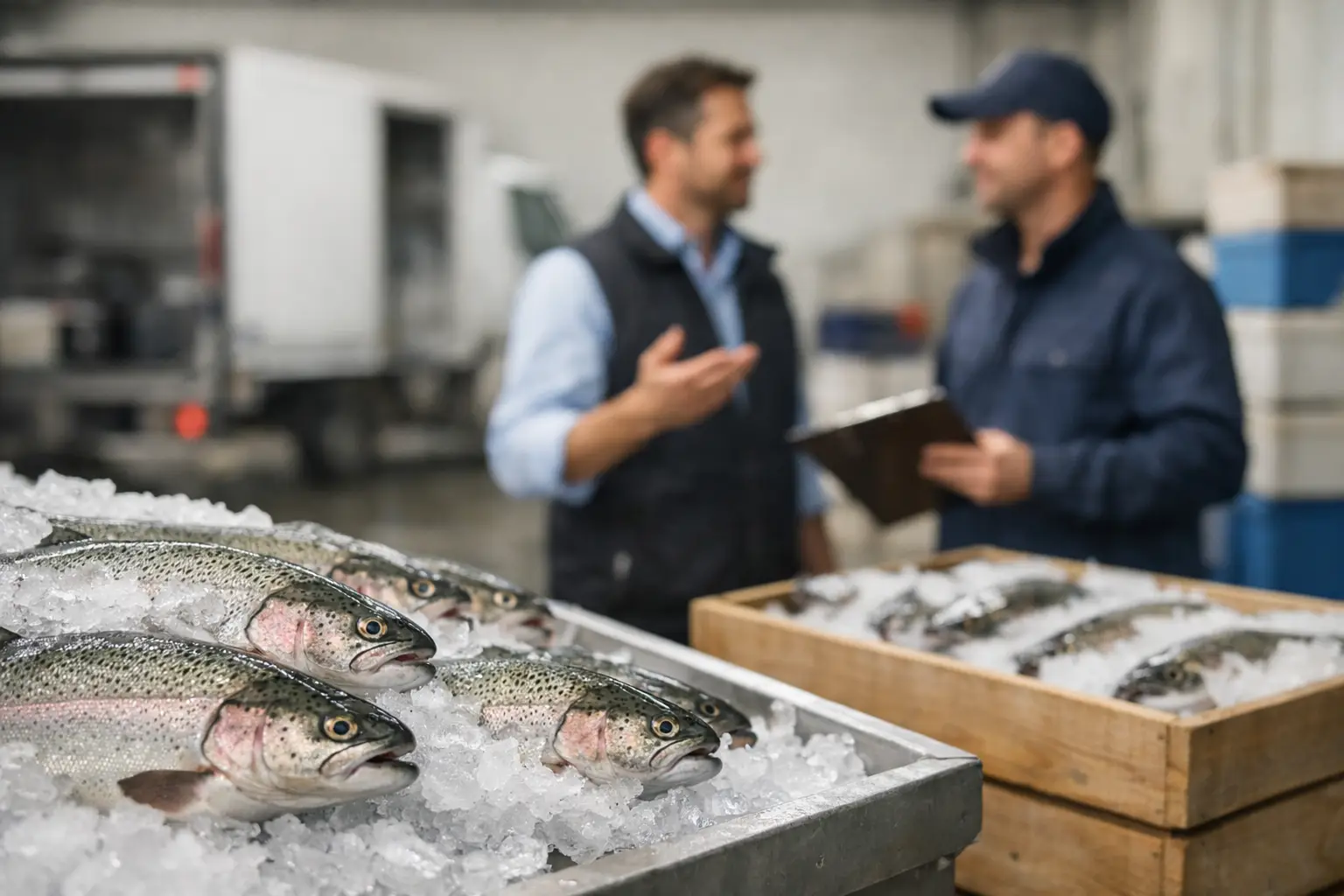
During the first shipment, inspect the product against the agreed specification rather than relying on a general impression. Check weights, appearance, odor, temperature, pack integrity, labeling, and documentation. Record findings quickly and address deviations while the shipment details are still clear.
The goal is not to find a supplier that never faces a disruption. Seafood production and global logistics involve variables. The goal is to work with a supplier that communicates early, documents facts, and has the operational capacity to correct issues without placing your customer relationships at risk.
Plan Volume Around Demand and Shelf Life
Wholesale buying works best when procurement is connected to real demand. A large purchase can improve unit economics, but excess fresh inventory creates pressure on sales teams and margin. Smaller, frequent deliveries may reduce waste, yet they can increase freight cost and administrative work.
Use sales history, customer commitments, seasonal menus, retail promotions, and warehouse capacity to create a realistic forecast. Then discuss that forecast with the supplier. A supplier with direct access to farms and processing facilities can plan harvest and production more effectively when it receives forward volume visibility.
For buyers with variable demand, consider dividing the program between a contracted base volume and flexible call-off quantities. This approach can protect core supply while leaving room for changing market conditions. It depends on the exporter’s production planning model and the buyer’s willingness to commit, but it is often more practical than buying every load on the spot market.
Choose a Partner That Can Scale With Your Program
The best answer to how to source trout wholesale is not simply to locate fish. It is to secure a supplier that can deliver the same quality, specification, documents, and service level as volume grows.
Nordpoll Seafood works directly with certified Norwegian farms and processing facilities to supply premium trout in fresh and frozen wholesale formats for international buyers. Direct factory access can help reduce intermediary costs while providing the traceability and export coordination required for serious B2B procurement.
Treat the first order as the start of a measurable supply relationship. When specifications are clear, logistics are controlled, and performance is reviewed shipment by shipment, wholesale trout becomes a dependable category rather than a recurring sourcing risk.