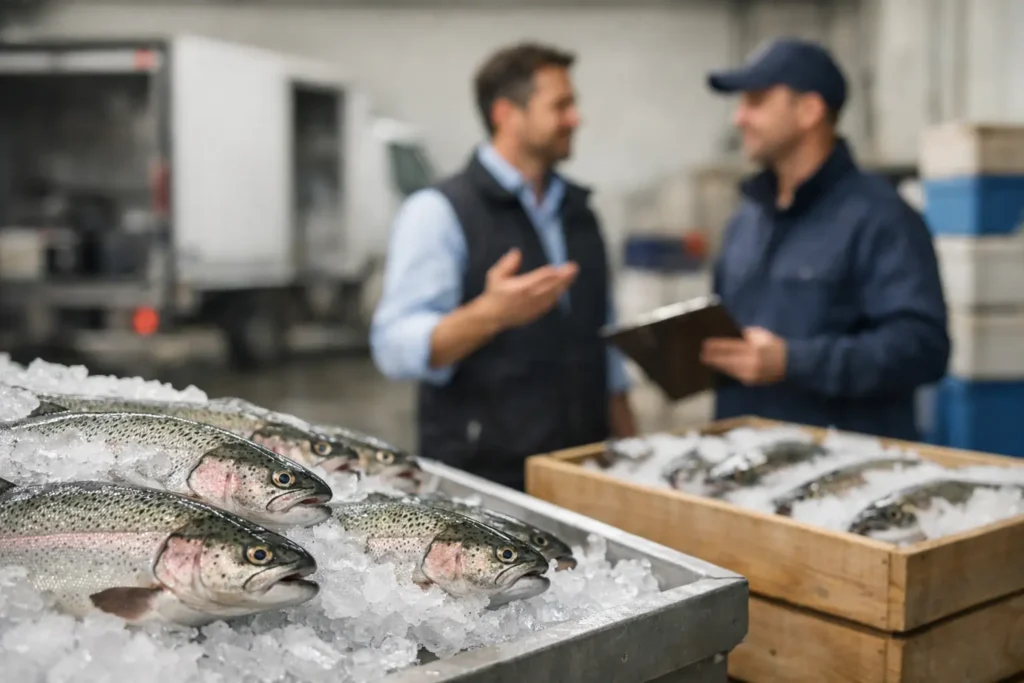

A missed seafood delivery does more than disrupt a menu or delay a production run. It creates purchasing risk, margin pressure, and avoidable operational cost. That is why choosing the right fresh trout wholesale supplier is not simply a sourcing decision. For importers, distributors, retail chains, and foodservice buyers, it is a supply chain decision with direct impact on product quality, shelf life, and profitability.
Fresh trout is a high-value category, but it is also a demanding one. Buyers need consistent sizing, reliable specifications, strong documentation, and cold-chain discipline from harvest to final destination. Price matters, but price without supply stability usually becomes expensive later. The right supplier should reduce procurement friction, not add to it.
What a fresh trout wholesale supplier should actually provide
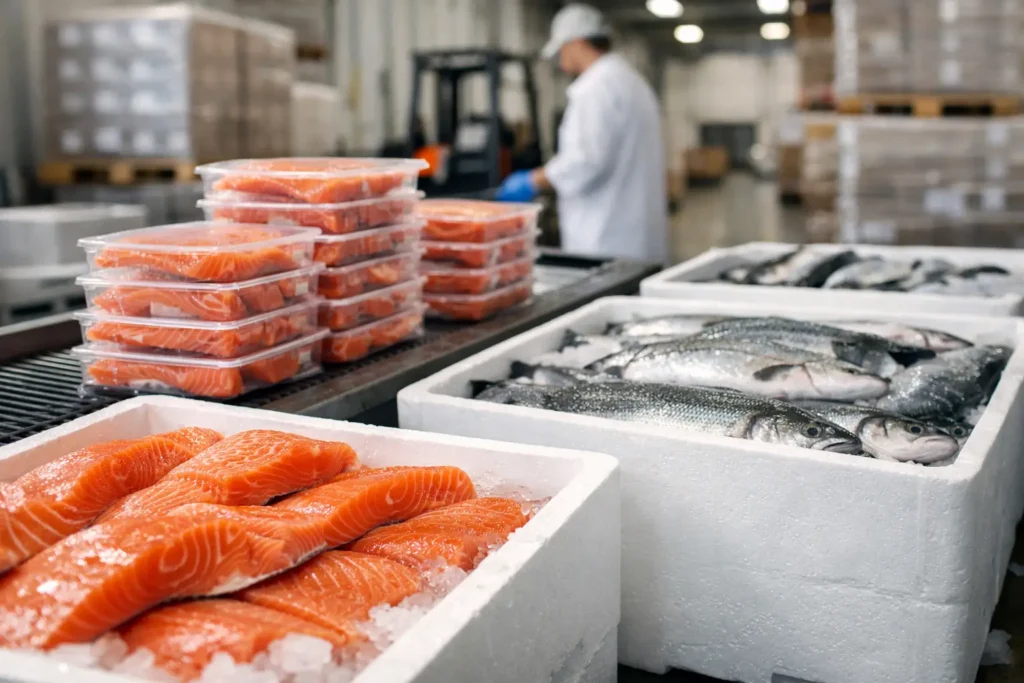
At the wholesale level, fresh trout procurement is about far more than access to fish. A qualified supplier should offer dependable volume, clear product specifications, and export competence. That includes support for the formats buyers actually need, whether whole fish, trimmed product, fillets, or HOG trout for further processing or resale.
Professional buyers also expect transparency around origin, farming standards, and processing. If a supplier cannot clearly explain where the trout is sourced, how it is handled, and what certifications or controls are in place, that is a commercial risk. Traceability is not a marketing feature in wholesale seafood. It is part of basic supply assurance.
A serious supplier should also understand how different buyers evaluate value. A supermarket chain may prioritize uniform size and retail-ready consistency. A distributor may care more about flexible volumes and predictable weekly allocation. A restaurant group may focus on freshness windows and fillet yield. An industrial buyer may prioritize stable raw material input and documentation for every shipment. The supplier needs to support those realities, not sell a one-size-fits-all offer.
Why sourcing model matters in fresh trout wholesale supply
Not all wholesale suppliers operate the same way. Some are traders working through multiple intermediaries. Others have direct access to farms and processing facilities. That difference affects price, product control, and response time.
A factory-direct sourcing model typically gives buyers better control over specification and more competitive pricing. Fewer intermediaries mean fewer markups and fewer handoffs across the supply chain. It also improves communication when there is a need to confirm harvest planning, packing details, or export documentation.
That said, the lowest-cost model is not always the best one if service reliability is weak. Fresh trout requires tight coordination. If a supplier offers aggressive pricing but struggles with shipment planning, packing integrity, or destination documentation, the savings can disappear quickly. For wholesale buyers, total landed value matters more than headline price.
Key quality factors buyers should evaluate
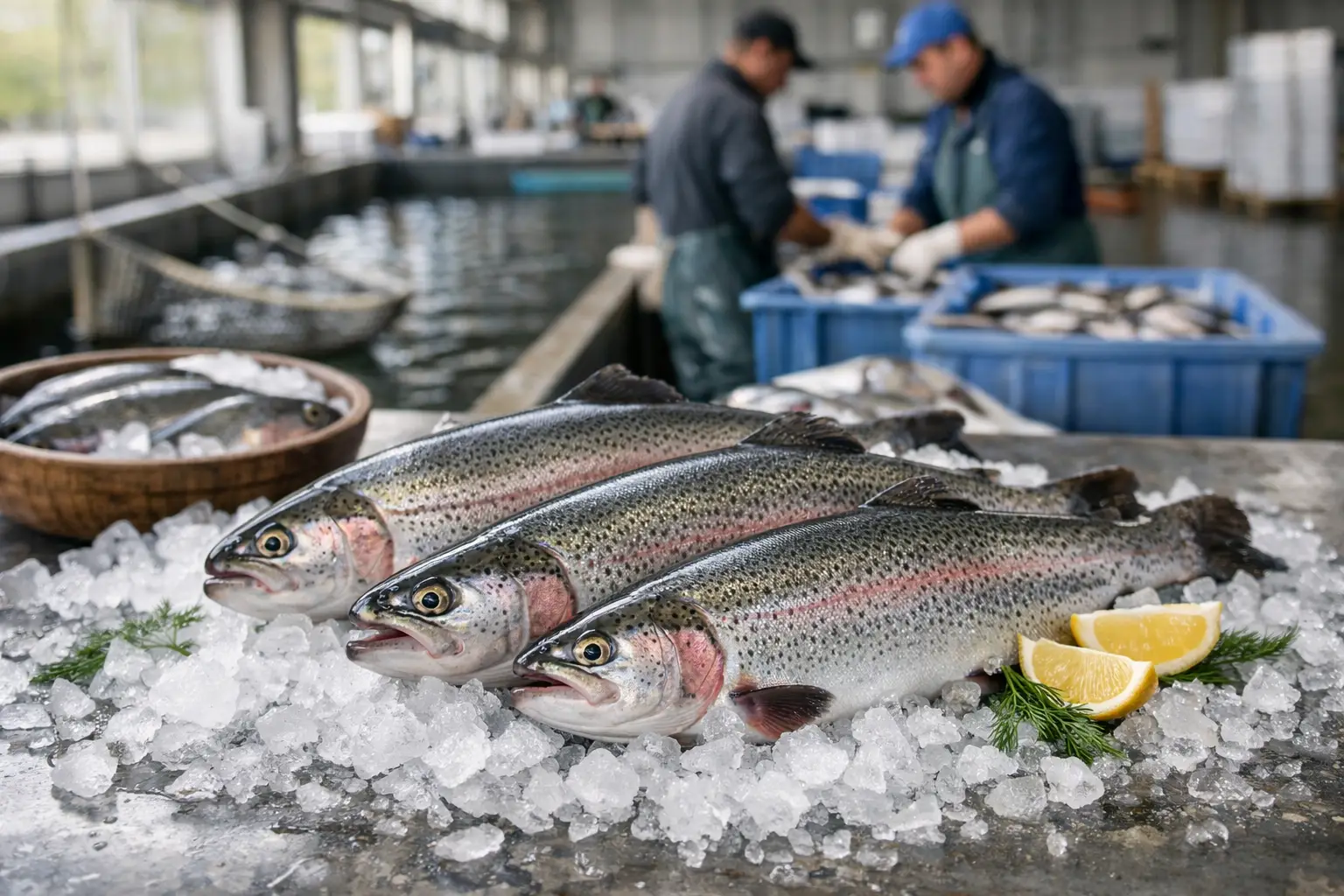
Fresh trout quality begins well before packing. Farming conditions, feed quality, harvesting practices, processing speed, and temperature control all affect the final product. By the time the fish reaches a buyer in the US or another international market, every upstream decision is visible in appearance, texture, shelf life, and performance.
Color consistency, firmness, clean trimming, and correct grading are all practical indicators. So is packaging quality. Fish packed for export should arrive with proper insulation, temperature stability, and labeling accuracy. A supplier that is serious about premium seafood will have standardized handling procedures and quality checks at multiple points.
Buyers should also ask how freshness is protected in transit. Airfreight planning, handover timing, and cold-chain continuity are not minor details. They are central to whether fresh trout arrives as a premium product or a compromised one. A capable wholesale partner should be able to explain its logistics model in commercial terms, including lead times, packing standards, and shipment coordination.
Fresh trout wholesale supplier options by product format
The right format depends on your business model. A fresh trout wholesale supplier should be able to support the form that matches your downstream operation instead of forcing you into a limited catalog.
Whole fresh trout is often preferred by markets and buyers who want maximum flexibility in further processing or presentation. HOG trout is a practical option for buyers who want reduced labor while maintaining a traditional whole-fish format. Trimmed and portion-ready products support retail and foodservice programs where labor efficiency and consistency are priorities.
The commercial question is not just what format is available, but whether the supplier can deliver that format consistently at scale. Occasional availability may work for spot purchasing. It does not work for regular procurement programs, supermarket promotions, or contract-based distribution.
Documentation, compliance, and export readiness
A supplier may have good fish and still be a poor wholesale partner if documentation is inconsistent. International seafood trade depends on accuracy. Commercial invoices, health certificates, packing lists, origin documentation, and product labeling all need to align.
For US buyers, compliance mistakes create delays, inspection risk, and extra cost. For buyers in other global markets, requirements can vary, but the need for precision does not. A supplier experienced in export operations should understand destination-specific requirements and prepare shipments accordingly.
This is one of the clearest differences between a local fish seller and a real export supplier. Bulk seafood procurement needs operational discipline. Buyers should expect a partner that can support both product quality and administrative accuracy on every shipment.
Pricing pressure and the value of direct supply
Wholesale buyers are under constant pressure to manage costs without sacrificing quality. In fresh trout, pricing can shift with seasonality, freight conditions, harvest planning, and market demand. A reliable supplier helps buyers manage those fluctuations through realistic pricing, transparent communication, and stable supply planning.
Direct supply can improve factory pricing by removing unnecessary layers in the chain. That creates room for better margin management, especially for distributors and retail buyers working with high-volume seafood programs. It also gives buyers a clearer line of visibility into what they are paying for – fish size, processing level, packing type, and logistics structure.
Still, pricing should always be evaluated against service consistency. A slightly higher unit cost may be justified if it delivers better fill rates, fewer claims, stronger shelf life, and lower operational disruption. Wholesale seafood is not a category where procurement can be judged on price per pound alone.
What long-term buyers look for in a supplier relationship
The strongest supplier relationships in seafood are built on predictability. Buyers want to know that product will be available, specifications will be respected, and communication will stay clear when market conditions tighten.
That is why long-term supply partnerships matter. A supplier that understands volume planning, recurring demand patterns, and buyer requirements can support more stable procurement than one that only reacts to spot inquiries. For importers and distributors, this often means better continuity during tight supply periods. For retailers and foodservice groups, it supports program planning and reduces purchasing volatility.
Nordpoll Seafood operates in this space as a factory-direct Norwegian seafood exporter focused on premium salmon and trout for bulk buyers who need quality, traceability, and dependable global delivery.
How to assess a fresh trout wholesale supplier before buying
The right evaluation process is straightforward. Ask about source, processing access, product formats, minimum order volumes, logistics options, and documentation capabilities. Request specification details, not generic claims. Confirm whether the supplier can support your required cadence, whether that is weekly, seasonal, or contract-based.
It also helps to assess how the supplier communicates. Serious wholesale partners answer commercial questions directly. They can explain size ranges, packing methods, lead times, and export procedures without vague language. That level of clarity usually reflects stronger internal control.
Finally, consider whether the supplier is built for your growth. A partner that can support one test shipment but not a scaled purchasing program may solve a short-term problem without supporting your long-term business.
Fresh trout is a premium category, but premium purchasing still comes down to discipline. The best supplier is the one that combines product quality with traceability, factory pricing, and export-ready execution so your operation can buy with confidence and plan ahead.