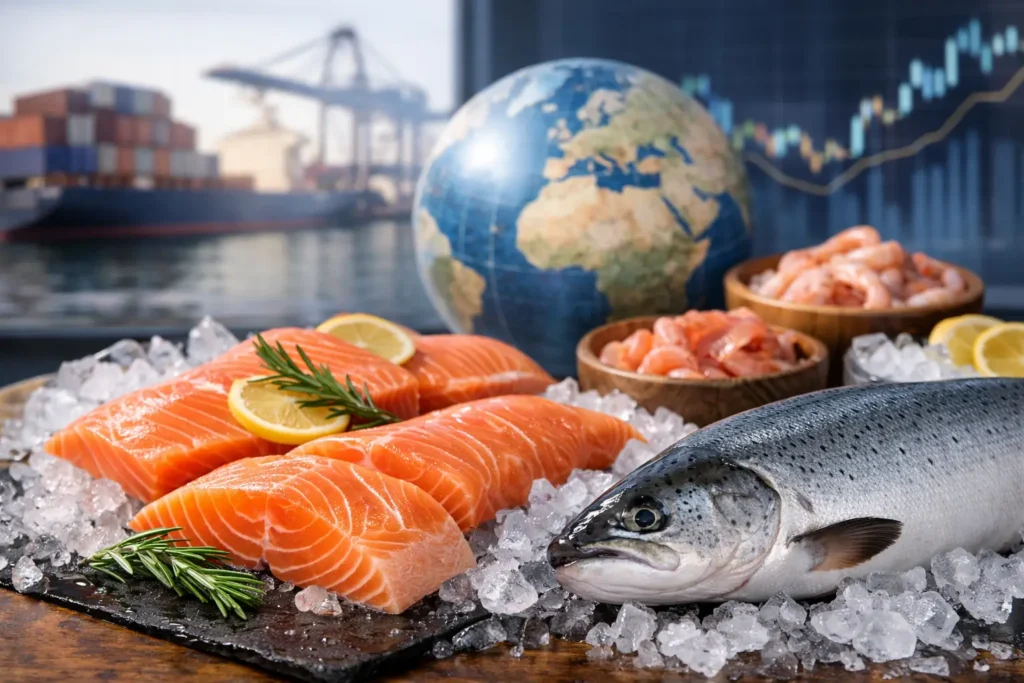

A salmon program can lose margin long before the product reaches a case, kitchen, or processing line. A late delivery, uneven trim, short shelf life, or poor thawing result can create waste that overwhelms a small difference in purchase price. For professional buyers, the frozen versus fresh salmon decision is therefore a supply-chain decision as much as a product decision.
Both formats can deliver premium Norwegian salmon when the fish is sourced from approved farms, processed to specification, and handled under a disciplined cold chain. The right choice depends on sales velocity, customer expectations, production requirements, storage capacity, delivery geography, and the level of inventory risk a business can carry.
Frozen Versus Fresh Salmon: The Commercial Difference
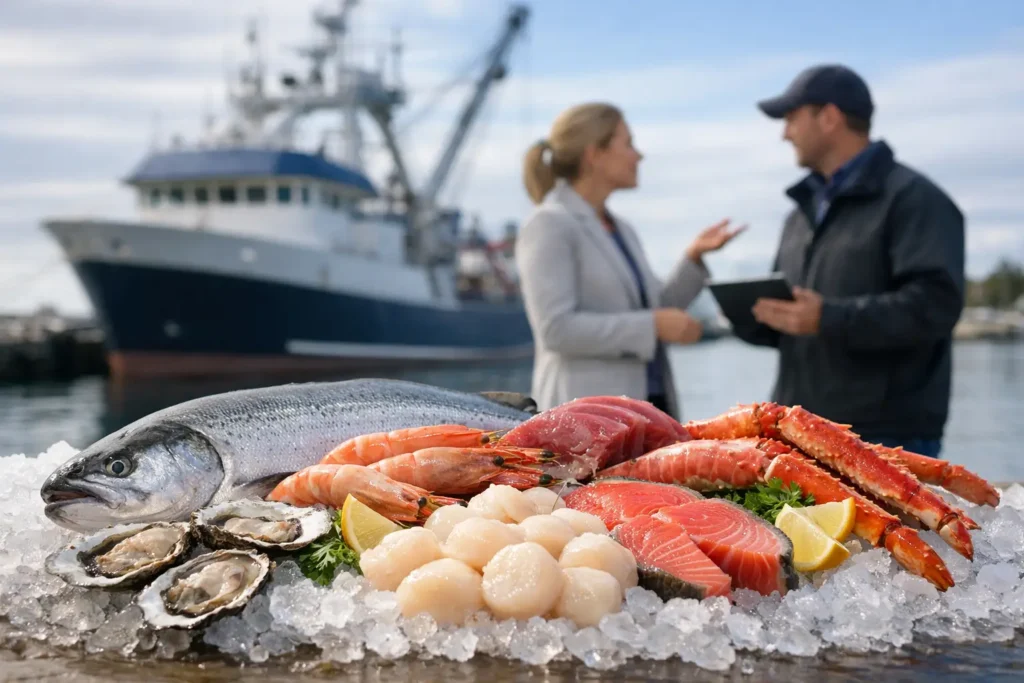
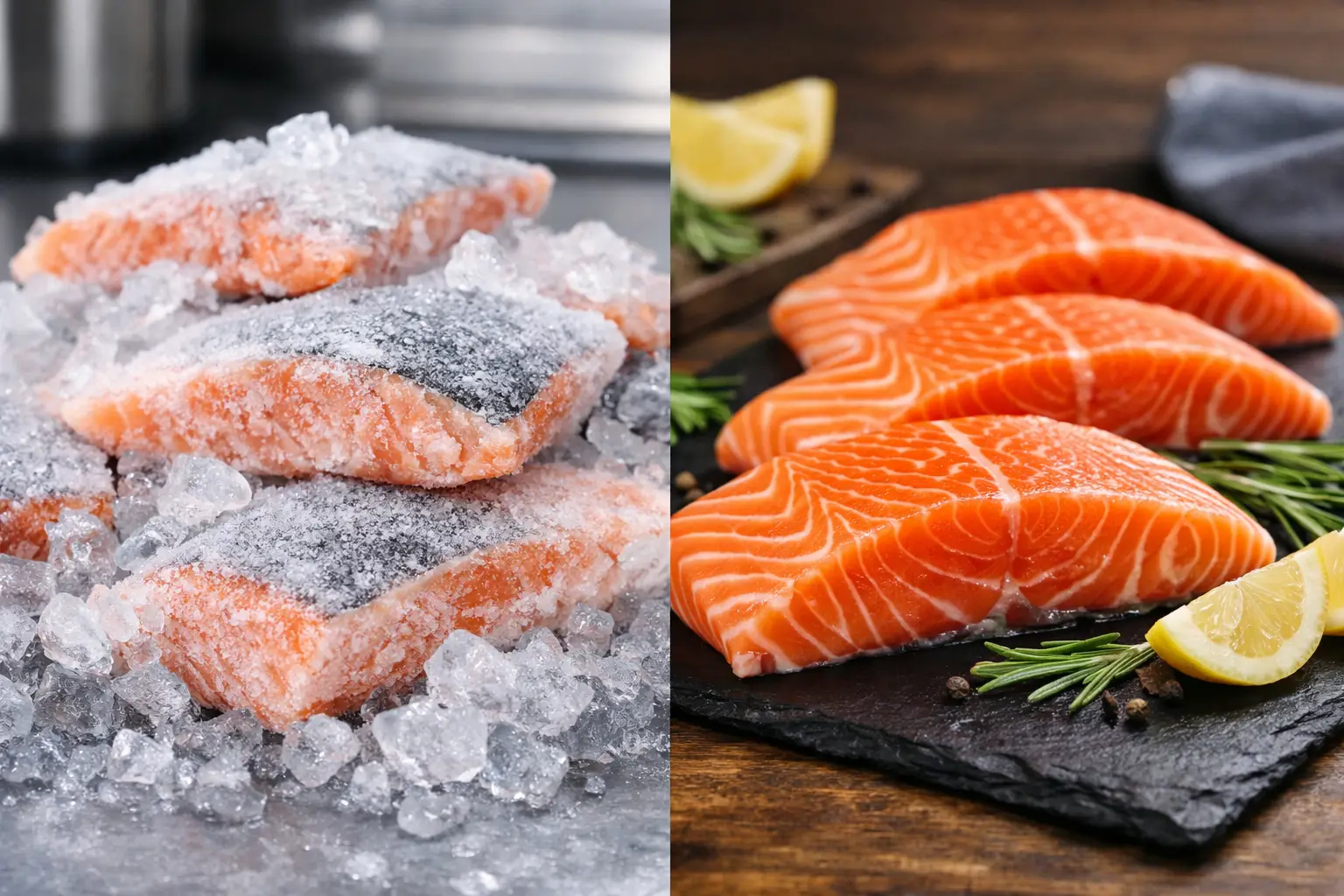
Fresh salmon is generally selected for programs where appearance, near-term delivery, and a chilled product position are central to the sale. It is well suited to supermarket seafood counters, foodservice operators with predictable weekly demand, and distributors serving customers that expect chilled fish. Fresh whole fish, HOG salmon, fillets, and trimmed portions can move quickly through these channels when ordering and logistics are tightly coordinated.
Frozen salmon is processed and frozen rapidly to preserve quality for longer storage and broader distribution planning. It gives buyers more flexibility to build inventory, serve distant markets, manage seasonal demand, and reduce exposure to short-term disruptions in transportation or harvest availability. For industrial users, distributors, and retail programs with variable volume, this flexibility can be commercially valuable.frozen versus fresh salmon
Neither format is automatically superior. Fresh product provides a strong chilled-market proposition, but it requires accurate forecasting and reliable delivery windows.Buyer comparing formats should start with the final use, not with a general assumption about quality.
Quality Starts Before the Format Choice
For B2B purchasing teams, the key questions are practical: What is the farm origin? How quickly was the fish processed? What are the trim specifications? What temperature controls apply during storage and shipment? Is the supplier able to provide consistent lot documentation and export paperwork? These details affect color, texture, yield, food safety management, and customer acceptance.
. However, country of origin alone is not a purchasing specification. Buyers should define the required species, product form, size range, trim level, packing format, glazing where applicable, and delivery temperature before comparing offers.
What Fresh Salmon Requires
Fresh salmon is a time-sensitive product. Its value depends on keeping the supply chain moving from processing facility to destination with minimal delay and controlled chilled temperatures. For importers and distributors, that means aligning harvest schedules, flight or road freight capacity, customs clearance, warehouse receiving, and onward customer delivery.
Fresh supply works best when demand is visible and turnover is fast. A supermarket buyer with established weekly volume or a distributor with committed restaurant accounts can use fresh salmon efficiently because inventory does not need to sit for extended periods. The product arrives ready for immediate chilled distribution, portioning, or display.
The operational risk is shelf-life pressure. Forecasting errors can lead to markdowns, disposal, or rushed sales. Buyers also need contingency planning for weather delays, freight interruptions, and receiving constraints. Fresh salmon is a premium commercial tool, but it rewards disciplined planning.frozen versus fresh salmon
What Frozen Salmon Requires
Frozen salmon provides a different form of control. Once product is frozen under the correct conditions and maintained in an unbroken cold chain, buyers can hold inventory longer and release it against demand. This can stabilize supply for retail promotions, production schedules, institutional contracts, and international distribution routes.
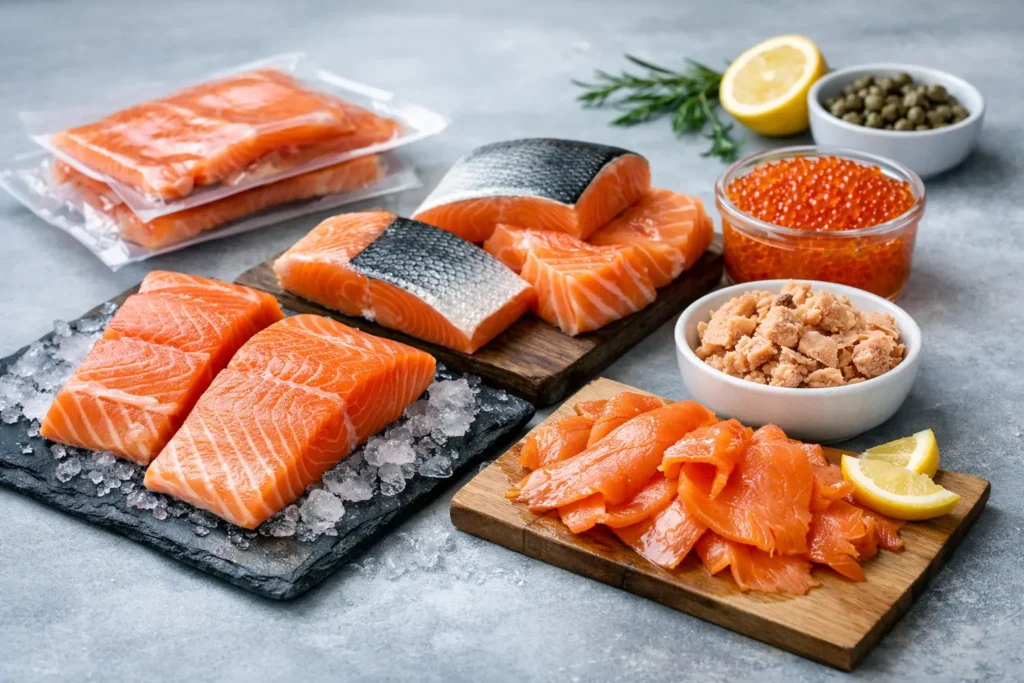
Frozen formats are especially useful when customers are geographically dispersed, demand fluctuates, or production relies on a dependable buffer stock. Whole frozen salmon, frozen fillets, portions, and value-added cuts can be planned around warehouse capacity rather than a narrow fresh delivery window.
The central requirement is thawing discipline. Improper thawing can affect drip loss, texture, appearance, and handling performance. Buyers should establish clear procedures for refrigerated thawing, timing, packaging integrity, and post-thaw use. Frozen fish is not a shortcut around quality management. It is a format that moves quality management from rapid turnover to controlled storage and preparation.
Yield, Specifications, and Menu Performance
Purchase price per pound is only one part of the cost calculation. The more useful comparison is usable yield after trimming, portioning, thawing, and customer handling. A lower-priced product may become more expensive if it creates excessive trim loss, inconsistent portions, or avoidable labor requirements.
Fresh whole and HOG salmon can be attractive for processors, specialty retailers, and buyers with in-house cutting capacity. These formats allow greater control over fabrication and presentation, but they require labor, skill, and a clear plan for byproducts. Pre-trimmed fresh fillets can simplify operations for customers that prioritize speed and uniformity.
Frozen salmon can offer strong yield predictability, particularly in portion-controlled or specification-driven programs. For foodservice groups and industrial users, standard weights and repeatable cut profiles can reduce labor variability and support more accurate food-cost calculations. The buyer should confirm net weight, glaze percentage if relevant, trim definition, bone specification, and acceptable size tolerance in the purchase agreement.frozen versus fresh salmon
For restaurant operators, the decision may come down to menu design. A high-volume location with frequent deliveries may favor fresh fillets for a chilled, premium presentation. A multi-unit group managing variable covers may prefer frozen portions to protect consistency and reduce waste. Both approaches can support premium salmon dishes when the product specification matches the kitchen workflow.
Pricing Should Reflect Total Landed Cost
Factory prices are meaningful only when evaluated against the full landed-cost picture. . Frozen salmon may require more storage capacity and freezer management, but it can reduce write-offs and support larger, more economical shipment planning.
A complete cost model should include product price, packing configuration, freight, insurance, import handling, customs requirements, warehouse charges, expected yield, labor, and waste exposure. For international buyers, currency movement and seasonal supply patterns may also influence the final cost position.
Price stability can matter as much as the lowest spot quote. A procurement team buying for a recurring retail or foodservice program needs continuity of specification and dependable fulfillment. An interrupted supply program can cost more in lost customer confidence than a modest difference in unit price.
Matching the Format to Your Supply Model
Fresh salmon is usually the stronger option when a buyer has rapid turnover, reliable chilled logistics, and customers who specifically require chilled product. It is particularly effective for premium seafood counters, short-distance distribution, and planned foodservice volume.
Frozen salmon is often the more efficient option when inventory must travel farther, demand is irregular, or a buyer needs production flexibility. It can support national distribution,
Many successful seafood programs use both. Fresh product supports high-velocity and premium chilled accounts, while frozen inventory protects continuity during demand peaks, logistical disruptions, or market shifts. This dual-format approach can reduce dependence on a single delivery model and give sales teams more options across customer segments.
Documentation and Cold-Chain Control Matter in Both Formats
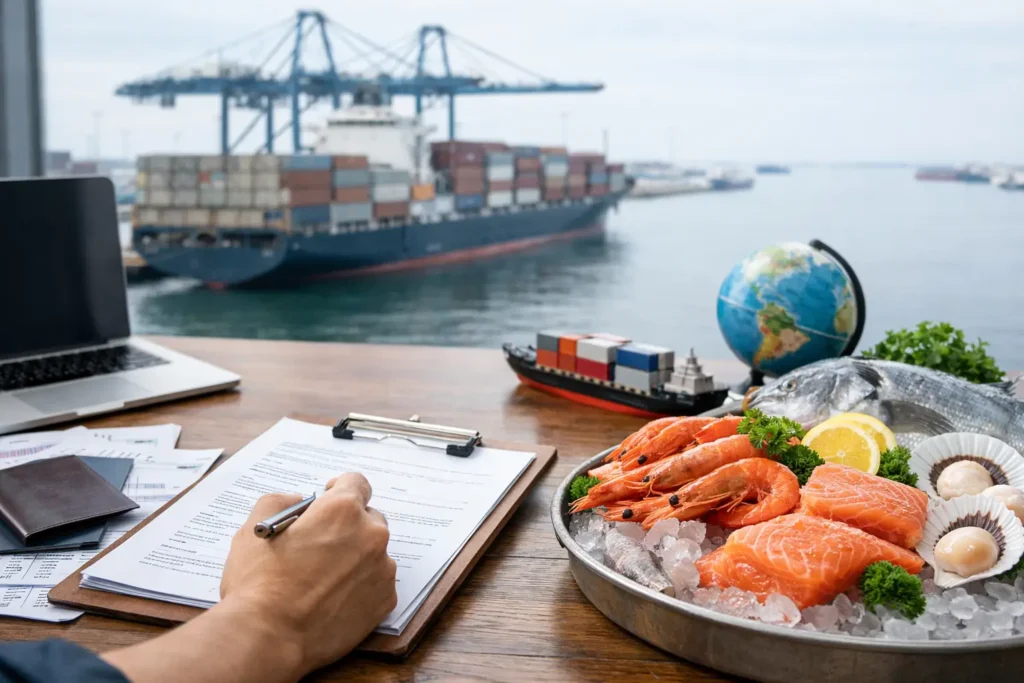
Whether salmon is shipped fresh or frozen, buyers need documentation that supports traceability, import compliance, and customer assurance. Product specifications should be aligned with invoices, packing lists, health certificates where required, origin records, and temperature-management procedures.
Cold-chain performance should be treated as a supplier qualification issue, not only a freight issue. The supplier must understand packaging, loading, transit planning, export documentation, and communication across the handoff points that protect product condition. Nordpoll Seafood works with certified farms and processing facilities to provide factory-direct Norwegian salmon and trout for buyers who require export-ready supply and clear product traceability.
Before placing a large order, buyers should confirm product form, Incoterms, lead times, minimum order requirements, pallet configuration, temperature expectations, and claims procedures. Clear specifications reduce disputes and help both parties plan efficiently.
The best purchasing decision is the one that protects quality at the point of sale while fitting the realities of your operation. Build the program around turnover, yield, logistics, and customer requirements, then choose the salmon format that gives your business the most dependable path to margin.