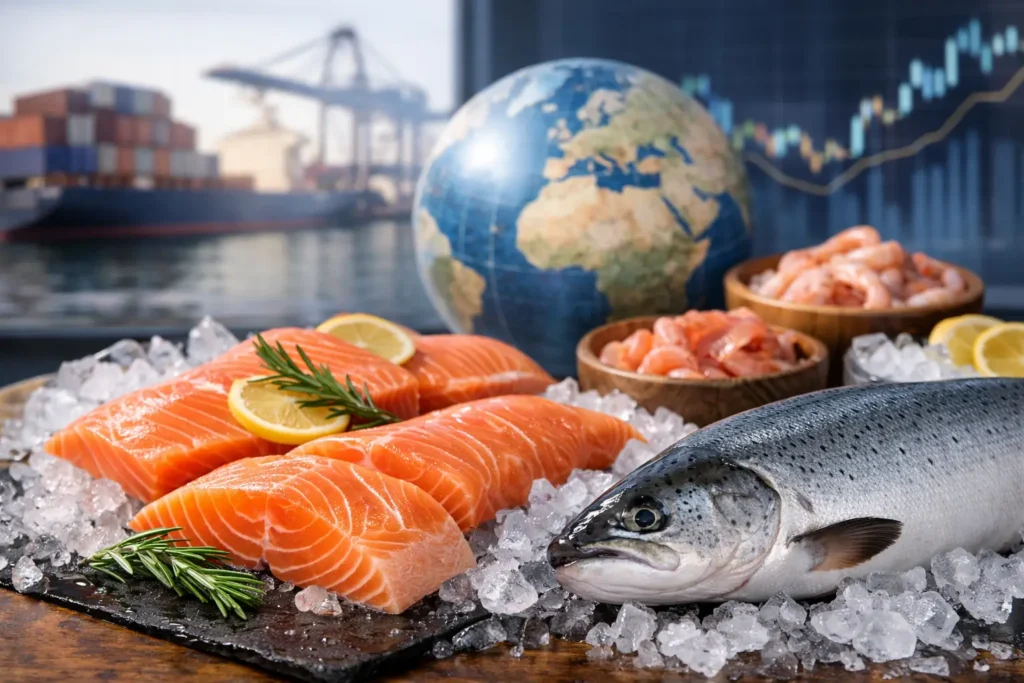


A missed delivery, an undocumented origin claim, or a temperature deviation can turn a profitable seafood program into a costly exception. This seafood procurement guide is designed for commercial buyers who need more than a quoted price. They need predictable volume, verified product specifications, compliant export documentation, and cold-chain performance that protects quality through delivery.seafood procurement guide
For importers, distributors, retail buyers, restaurant groups, and industrial processors, seafood procurement is a supply-chain decision as much as a purchasing decision. The right supplier relationship reduces avoidable cost while giving your business a reliable basis for forecasting, menu planning, production scheduling, and customer commitments.
Start With the Product Specification
A usable specification removes uncertainty before an order is placed. “Norwegian salmon” is not a complete procurement requirement. The buyer and supplier should agree on species, origin, farming standard, harvest timing, processing method, trim level, weight range, packing format, shelf-life requirement, and fresh or frozen condition.
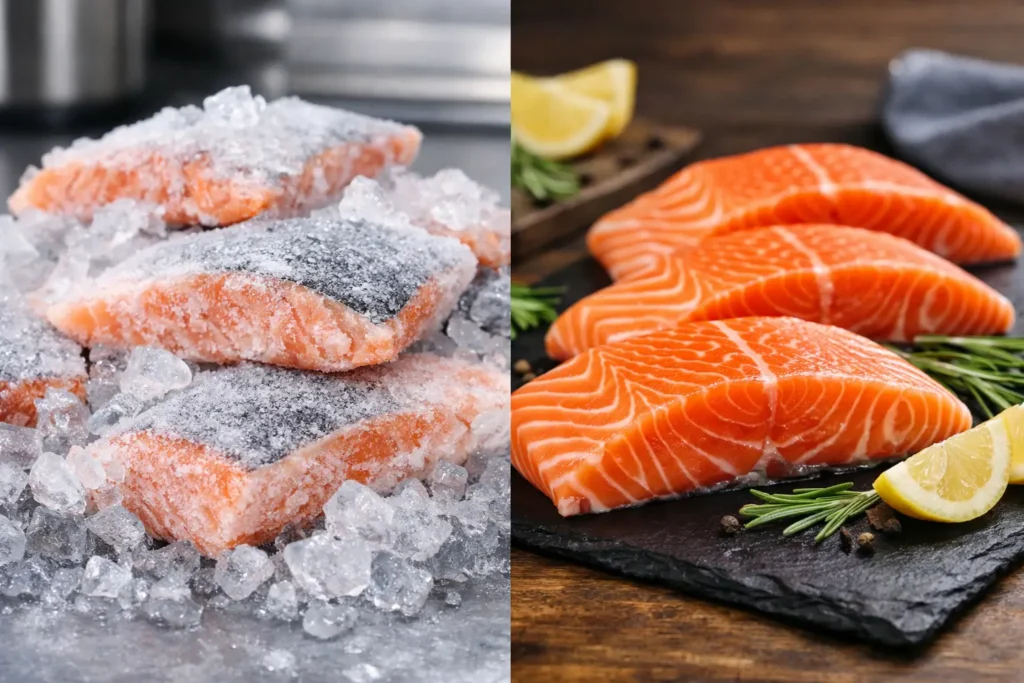
For salmon and trout, format has a direct effect on yield, freight efficiency, handling time, and intended use. Whole fish may offer the best fit for processors and customers with in-house fabrication. HOG fish can support buyers that want operational flexibility while reducing labor at origin. Trimmed fillets are often preferred by retail, foodservice, and portioning operations that require consistent presentation and reduced preparation time. Frozen formats can support longer inventory cycles and distant markets where fresh delivery windows are less practical.
The correct format depends on where value is added. A lower factory price for whole fish does not automatically produce the lowest total cost if your facility must absorb labor, yield loss, and waste handling. Conversely, paying for extensive processing at origin may be efficient when it improves consistency and reduces downstream operational cost.
Define quality in measurable terms
Quality language should be converted into acceptance criteria. Specify expected color, texture, fat content where relevant, pin bone standard, glaze percentage for frozen products, packaging integrity, temperature range, and maximum allowable defects. Include minimum remaining shelf life upon delivery for fresh products and storage requirements for frozen inventory.
Buyers should also establish a clear inspection process. Define when product is inspected, what records are required, how claims are documented, and the time window for reporting a nonconformance. This protects both parties and prevents subjective disputes after delivery.
Evaluate Source, Traceability, and Processing Control
A premium seafood program begins at the source. Procurement teams should be able to identify the farm or production area, processing facility, lot information, harvest date or production date, and applicable certifications. Traceability is not simply a marketing claim. It is the operational record that allows a buyer to validate origin, respond to customer questions, and manage a recall or quality issue quickly if one occurs.
Direct access to certified farms and processing facilities can improve both visibility and cost control. Every additional intermediary can add margin, delay communication, and create distance between the buyer and the source of the product. Factory-direct procurement gives commercial buyers a clearer view of available volume, processing capability, and product condition before export.
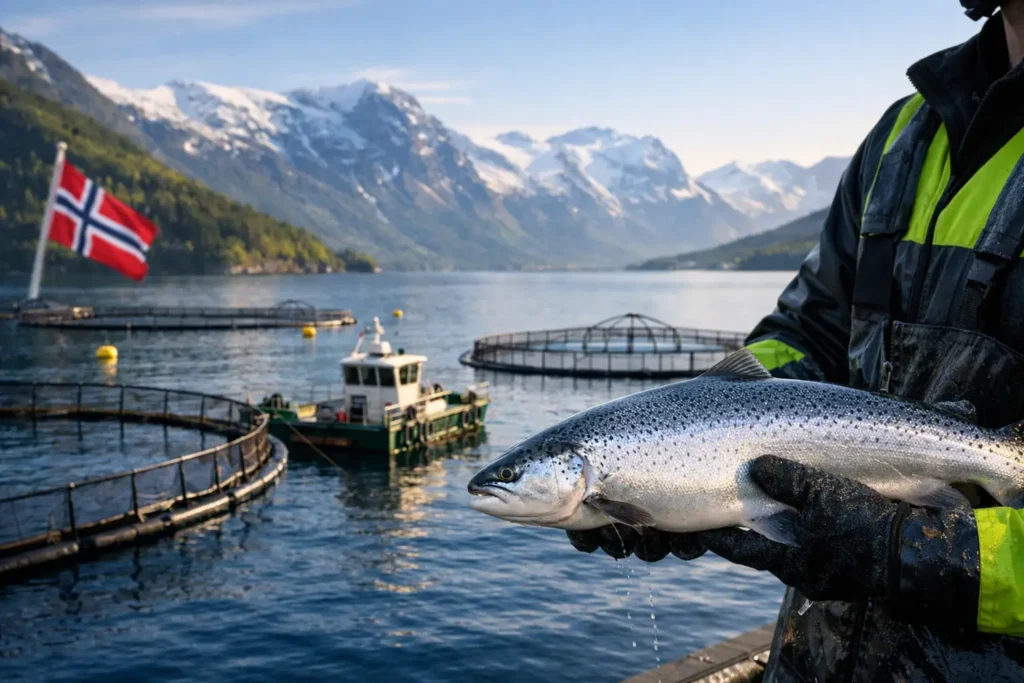
For Norwegian salmon and trout, ask suppliers how they manage farm sourcing, processing capacity, seasonal availability, and lot segregation. A supplier with established production relationships can often provide more dependable planning than a trader sourcing opportunistically from multiple channels. That does not mean every direct supplier is automatically the right choice. The supplier must also demonstrate export experience, documentation discipline, and a realistic understanding of the destination market.
Compare Landed Cost, Not Just the Quoted Price
The lowest unit price can be misleading. A seafood procurement decision should compare landed cost across suppliers and formats, including product price, processing, packaging, freight, insurance, customs-related expenses, inspection exposure, storage, and expected yield.
Fresh seafood requires particular attention because transit time, temperature control, and delivery timing directly affect usable shelf life. A lower-priced shipment that arrives late or with insufficient remaining shelf life can create markdowns, waste, or rejected deliveries. For frozen supply, assess freight configuration, pallet utilization, storage charges, and container scheduling alongside the factory price.
A simple landed-cost model should account for four commercial questions:
- What is the net cost per usable pound after trim, yield, and handling?
- What costs are fixed per shipment versus variable by volume?
- What is the financial impact of delayed delivery or reduced shelf life?
- Does the supplier’s order structure support your forecast and inventory cycle?
Volume matters. Larger, planned orders can improve factory pricing and freight efficiency, but only if inventory turnover and storage capacity support the commitment. For buyers with variable demand, a supply agreement with scheduled releases may be more practical than purchasing large quantities without a defined destination plan.
Verify Food Safety and Export Documentation Early
Documentation should be reviewed before commercial terms are finalized, not after product is packed. Requirements vary by destination, customer channel, and product form, but buyers commonly need commercial invoices, packing lists, health certificates, certificates of origin where applicable, catch or farm documentation, lot traceability records, and temperature-related shipment data.
US buyers should confirm that the supplier understands the documentation and regulatory expectations relevant to imported seafood. The importer remains responsible for ensuring that its program, broker, and receiving process are aligned with applicable requirements. A capable exporter can support this process with accurate documentation and consistent product records, but procurement teams should not treat paperwork as an administrative afterthought.
Food safety credentials are equally relevant. Ask what controls are used at the processing facility, how quality assurance is documented, how product is held before dispatch, and how deviations are handled. The goal is not to collect certificates for a file. The goal is to understand whether the supplier operates a controlled system that can consistently meet your specification.
Build Cold-Chain Accountability Into the Purchase
Seafood quality is protected or lost during handling. Fresh salmon and trout need disciplined temperature management from processing through airport handling, customs clearance, domestic transfer, and final receiving. Frozen products require a different logistics plan, but the same principle applies: temperature integrity must be maintained from factory to destination.
Procurement teams should agree on the shipping method, packaging configuration, handoff points, estimated transit time, temperature-monitoring approach, and escalation process if a delay occurs. Make responsibilities visible. Who books freight? Who manages export clearance? Who provides shipment updates? Who handles a claim if temperature records show an exception?
A supplier’s logistics capability should be judged by execution, not by general assurances. Ask for a clear description of the export process and confirm that the proposed route fits the product’s shelf-life requirement. Fresh programs are especially sensitive to weekend handling, holiday schedules, and capacity constraints at airports or distribution centers.seafood procurement guide
Set Supply Terms That Support Continuity
Seafood availability, input costs, currency movements, and logistics conditions can change quickly. A transactional purchase model may work for occasional buying, but it often leaves high-volume buyers exposed when demand rises or market supply tightens. For recurring demand, procurement should focus on a structured supply relationship.
Discuss forecast periods, minimum order quantities, lead times, price-review mechanisms, approved substitutions, and allocation practices. A supplier cannot guarantee every market variable, but a transparent agreement clarifies how both parties respond when conditions change. This is especially valuable for supermarket programs, foodservice chains, and processors that must maintain continuity for their own customers.
Nordpoll Seafood supports this model through factory-direct Norwegian salmon and trout supply, export-ready documentation, and global delivery planning for qualified commercial buyers. The value is not only access to premium seafood. It is a purchasing structure built around consistency, traceability, and fewer unnecessary layers between source and destination.
Use Supplier Reviews to Improve Performance
A supplier review should be based on performance data, not only relationship history. Track order fill rate, on-time delivery, temperature exceptions, shelf life at receiving, specification compliance, claim resolution time, and documentation accuracy. Over time, these measures show whether the supplier is delivering the commercial result promised at the quotation stage.
seafood procurement guide
Review performance at regular intervals and share the findings directly. If a recurring issue appears, identify whether the cause is product specification, forecast quality, processing, freight handling, or receiving procedures. The most valuable supplier relationships improve through this level of operational feedback rather than through repeated spot-price negotiations.
Reliable seafood procurement is built before the shipment leaves the factory. When specifications, source records, landed costs, documentation, logistics, and supply terms are aligned, buyers can purchase with greater confidence and protect the margins that depend on every delivered pound.