
Factory Direct Versus Seafood Broker: Which Option Delivers Better Value for Salmon Importers?
Choosing between factory direct versus seafood broker is one of the most important decisions for seafood importers. Whether you supply supermarkets, wholesalers, restaurants, or food service companies in California, the United States, or international markets, your sourcing strategy affects product quality, pricing, and customer satisfaction. Working with a reliable frozen salmon exporter or an experienced broker can both offer benefits. However, understanding the differences helps buyers make profitable purchasing decisions. This guide explains the advantages of each model while highlighting why quality, traceability, sustainability, and dependable logistics remain essential for long-term success.
Factory Direct Versus Seafood Broker: Understanding the Difference
When evaluating factory direct versus seafood broker, buyers should first understand how each sourcing model works.
A factory-direct supplier owns or partners closely with seafood processing facilities. These companies oversee production, freezing, packaging, and export logistics. Buyers communicate directly with the supplier, allowing faster quotations and better control over specifications.
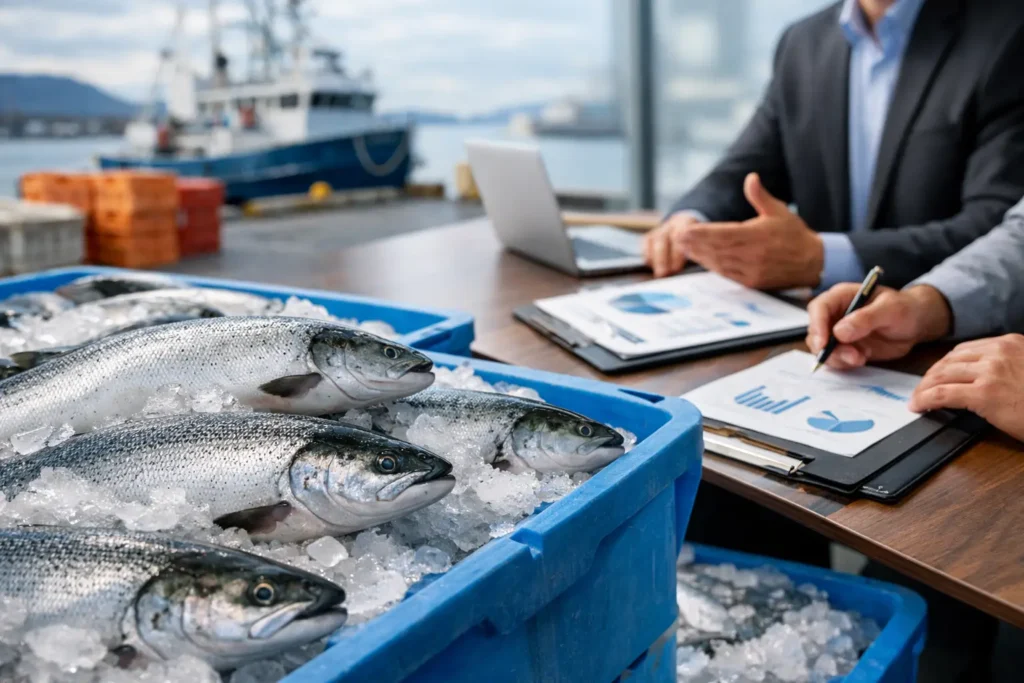
A seafood broker acts as an intermediary. Brokers connect buyers with processors and exporters while handling negotiations and order coordination. This option may suit companies seeking access to multiple suppliers through one contact.
Both approaches can succeed. However, the right choice depends on your purchasing volume, quality requirements, and long-term business goals.
Benefits of Buying Factory Direct
Many importers prefer factory-direct sourcing because it improves communication and reduces unnecessary costs.
Key advantages include:
- Competitive wholesale pricing
- Direct communication with production teams
- Greater product consistency
- Flexible packaging options
- Better production scheduling
- Faster order updates
- Improved quality control
A trusted Atlantic salmon supplier also provides detailed specifications, helping buyers maintain consistent retail standards.
When a Seafood Broker Adds Value
Although factory-direct purchasing offers many benefits, brokers also play an important role.
Experienced brokers can:
- Source products from multiple factories
- Compare pricing quickly
- Locate seasonal inventory
- Support new importers
- Coordinate mixed product shipments
For businesses purchasing small quantities, a broker may simplify the buying process. However, buyers should confirm the origin, certifications, and quality standards before placing orders.
Product Quality Should Always Come First
Price alone should never determine your supplier.
Professional exporters focus on:
- Fresh appearance
- Firm texture
- Consistent grading
- Proper trimming
- Hygienic processing
- Reliable freezing methods
A reputable premium salmon supplier maintains strict quality inspections throughout processing and packaging.
Sustainability Creates Long-Term Business Value
Consumers increasingly demand responsibly sourced seafood. Therefore, retailers and distributors should partner with a sustainable salmon supplier committed to environmental responsibility.
Responsible suppliers invest in:
- Sustainable aquaculture practices
- Resource conservation
- Responsible feed management
- Waste reduction
- Environmental monitoring
These efforts strengthen consumer confidence while supporting future seafood production.
Traceability Improves Food Safety
Modern seafood businesses require complete traceability.
Reliable suppliers document every production stage, including harvest dates, batch numbers, processing facilities, and shipping records. This transparency helps retailers respond quickly if product verification becomes necessary.
Traceability also supports regulatory compliance in the United States and many international markets.
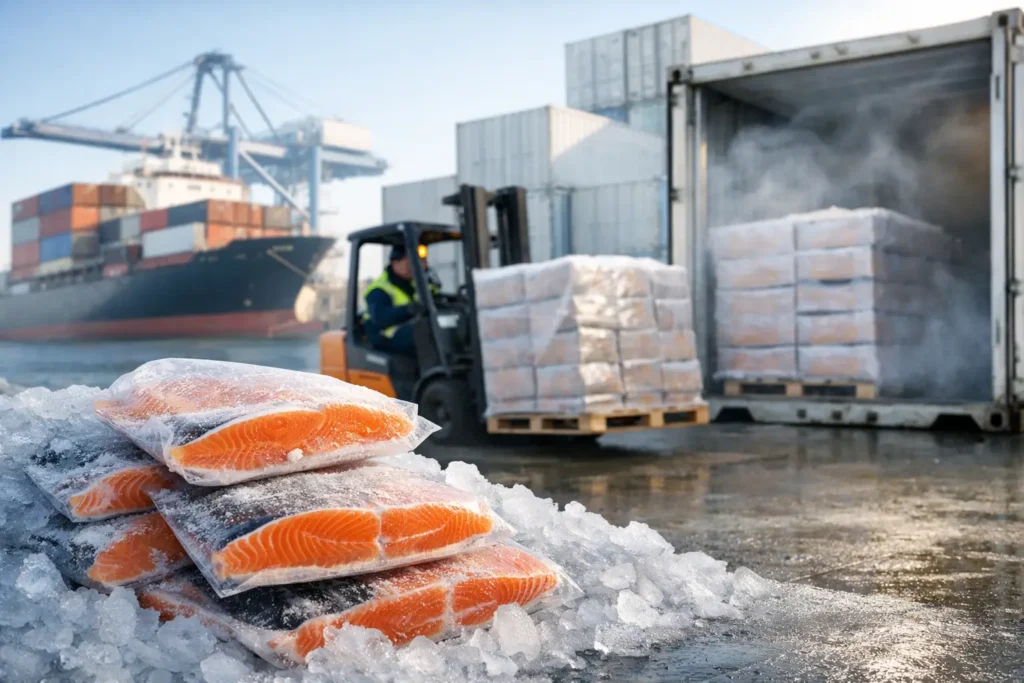
Cold Chain Management Protects Salmon Quality
Cold chain management remains one of the most important factors in seafood exports.
Professional suppliers maintain controlled temperatures during:
- Processing
- Blast freezing
- Cold storage
- Container loading
- Ocean freight
- Final delivery
An experienced frozen salmon exporter protects product freshness by preventing temperature fluctuations throughout transportation.
European Standards Support Global Buyers
Many buyers work with seafood exporters in Europe because European processors follow strict hygiene and food safety regulations.
Leading exporters maintain:
- Modern processing facilities
- Advanced freezing technology
- Continuous quality monitoring
- International food safety systems
- Consistent production standards
These practices help importers receive products that meet customer expectations and regulatory requirements.
Packaging Options for Retail and Wholesale Markets
Packaging influences product protection, shelf presentation, and transportation efficiency.
Common packaging formats include:
- Vacuum-packed fillets
- Whole frozen salmon
- Portion-controlled packs
- Skin packs
- Bulk export cartons
- Retail-ready consumer packaging
Professional exporters customize packaging to meet importer requirements while protecting product integrity during international shipping.
Essential Certifications Every Buyer Should Request
Food safety certifications demonstrate supplier commitment to quality.
Ask suppliers for documentation such as:
- HACCP
- BRCGS Certification
- ISO Food Safety Management
- EU Export Approval
- Health Certificate
- Certificate of Origin
These certifications support smoother customs clearance and stronger buyer confidence.
Export Documentation Simplifies International Trade
Successful seafood exports depend on complete documentation.
Reliable suppliers provide:
- Commercial Invoice
- Packing List
- Bill of Lading
- Health Certificate
- Certificate of Origin
- Export Declaration
Accurate paperwork reduces customs delays and protects international shipments.
Why USA Buyers Choose Trusted Salmon Suppliers
Importers across California and the United States seek dependable partners that deliver consistent quality and reliable service.
Commercial buyers frequently search for:
- Fresh salmon supplier USA
- Frozen salmon supplier USA
- Atlantic salmon wholesaler USA
- Salmon wholesale distributor USA
Suppliers targeting these markets should maintain year-round availability, flexible packaging, competitive pricing, and dependable logistics.
Buy Frozen Salmon Online with Confidence
Today, many businesses prefer to buy frozen salmon online because the process is faster and more efficient.
Online sourcing allows buyers to:
- Request quotations quickly
- Compare product specifications
- Review certifications
- Confirm packaging options
- Track export shipments
Before placing an order, verify the supplier’s production capacity, export experience, and customer references.
Choosing the Right Wholesale Salmon Company
A dependable wholesale Salmon company offers more than competitive pricing.
Look for a supplier that provides:
- Consistent production
- Certified food safety systems
- Sustainable sourcing
- Reliable cold chain logistics
- Complete traceability
- Export documentation
- Responsive customer support
- Flexible retail packaging
Strong supplier relationships often lead to better inventory planning and long-term business growth.
Frequently Asked Questions
Is factory direct better than using a seafood broker?
Factory-direct purchasing often provides greater pricing transparency, direct communication, and stronger quality control. Brokers may offer flexibility when sourcing from multiple suppliers.
Why is traceability important for salmon imports?
Traceability improves food safety, supports regulatory compliance, and builds customer confidence through transparent production records.
What certifications should salmon exporters have?
Reliable exporters commonly maintain HACCP, BRCGS, ISO Food Safety certification, EU export approval, and official health certificates.
Why is cold chain management essential?
Cold chain management preserves freshness, texture, nutritional value, and product safety throughout international transportation.
How can I buy frozen salmon online safely?
Choose experienced exporters with verified certifications, transparent documentation, established export experience, and reliable customer support.
Conclusion
Choosing between factory direct versus seafood broker depends on your purchasing strategy, business size, and sourcing priorities. Many high-volume importers benefit from direct relationships with a trusted Atlantic salmon supplier, while brokers can provide flexibility for specialized requirements. Regardless of your approach, prioritize quality, sustainability, traceability, certifications, secure cold chain management, professional packaging, and complete export documentation. Partnering with a reputable frozen salmon exporter, premium salmon supplier, or established wholesale Salmon company positions your business for reliable supply, stronger customer satisfaction, and sustainable growth in competitive global seafood markets.