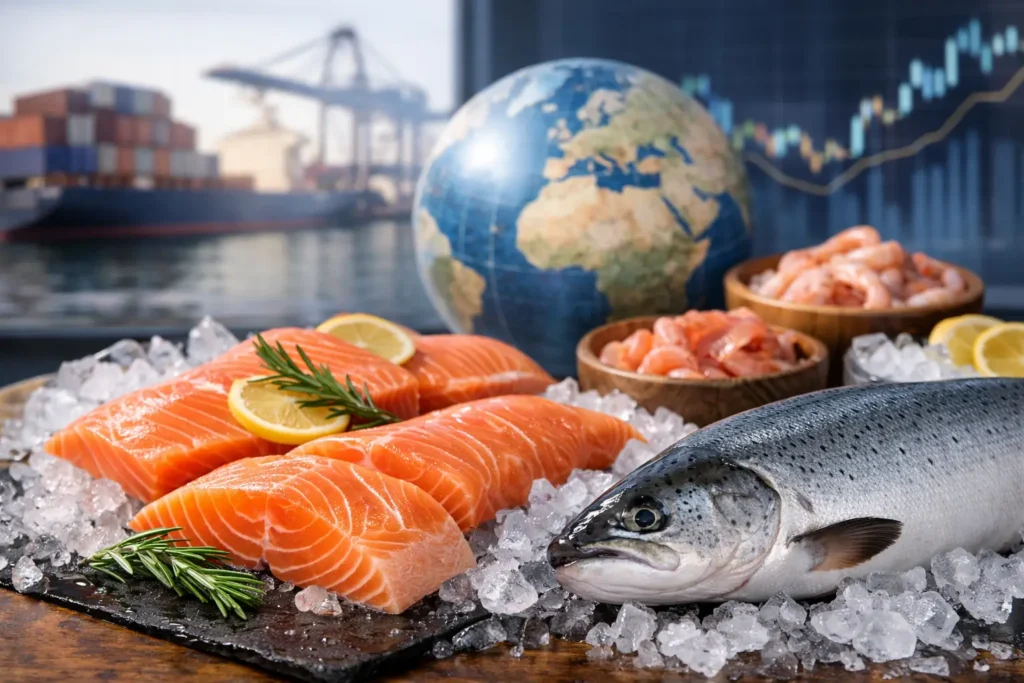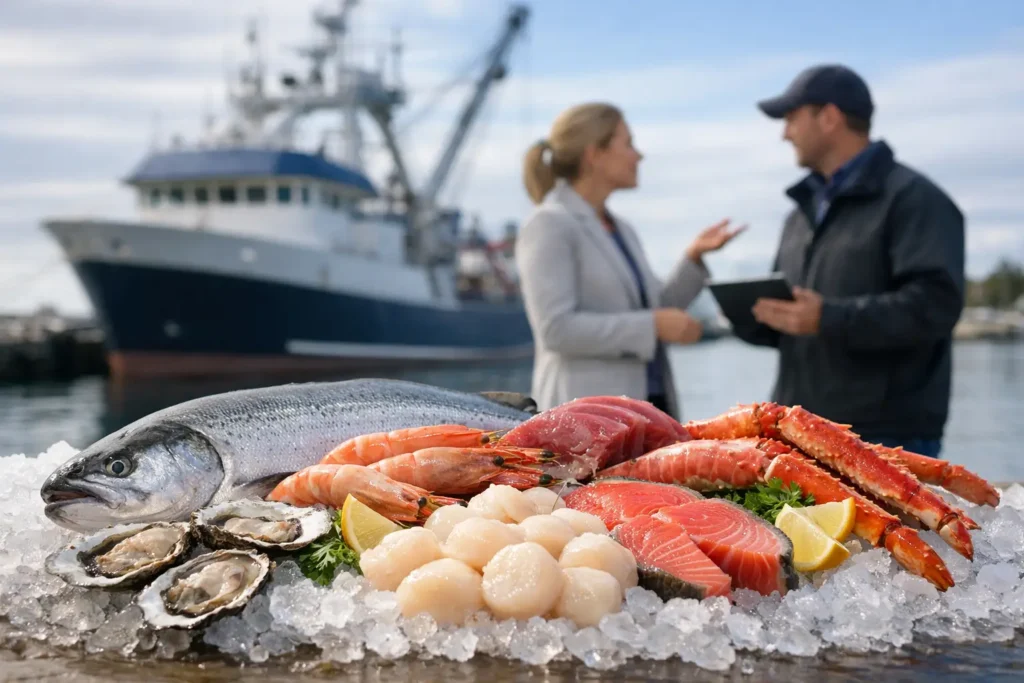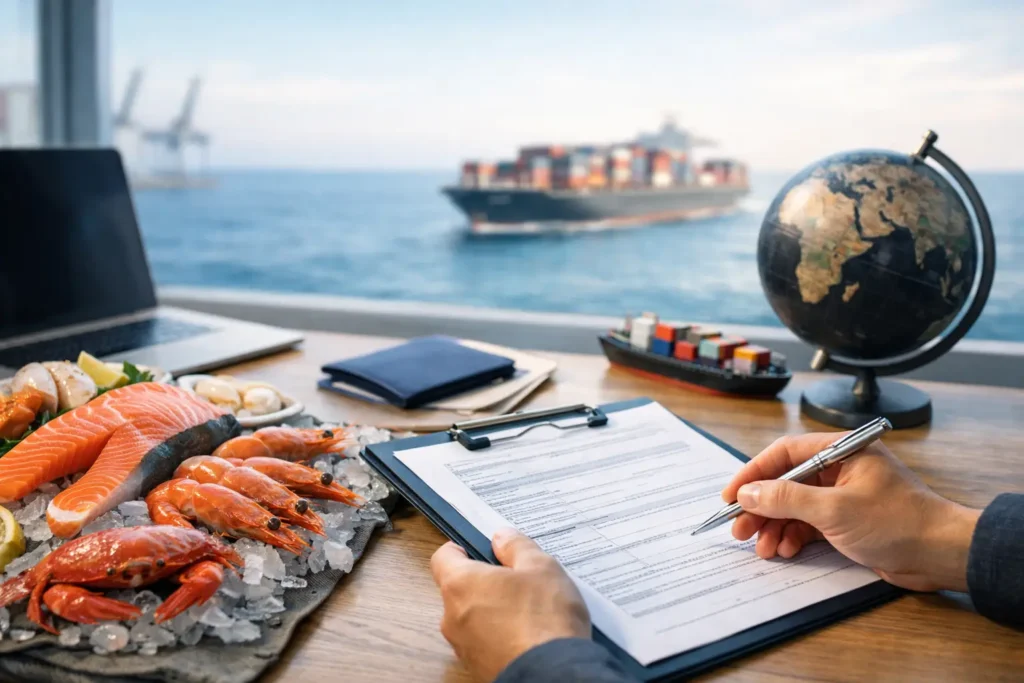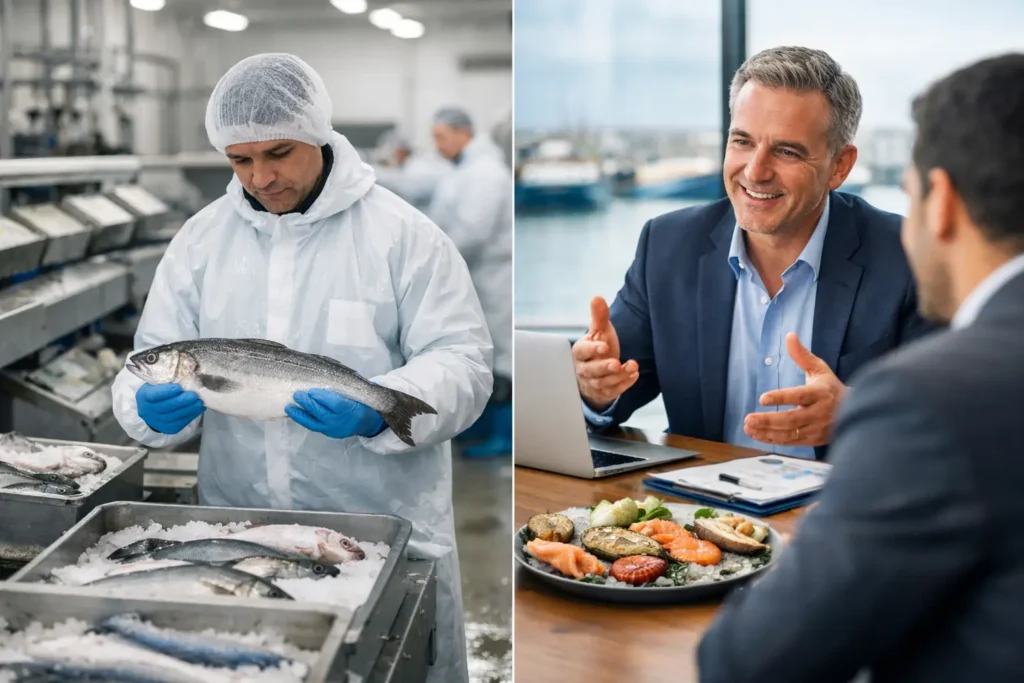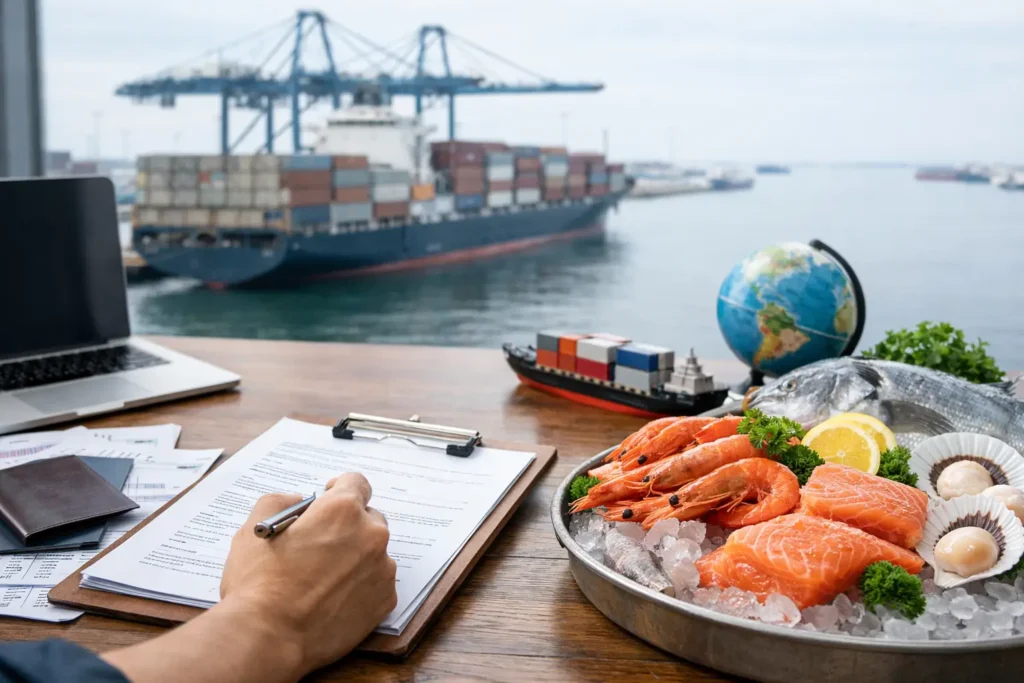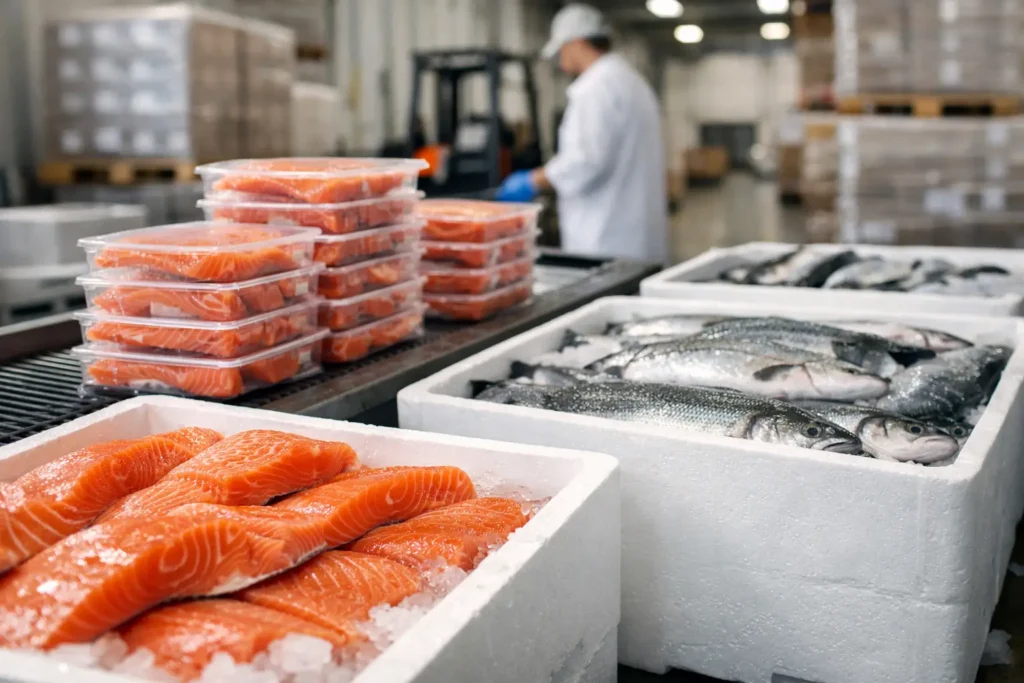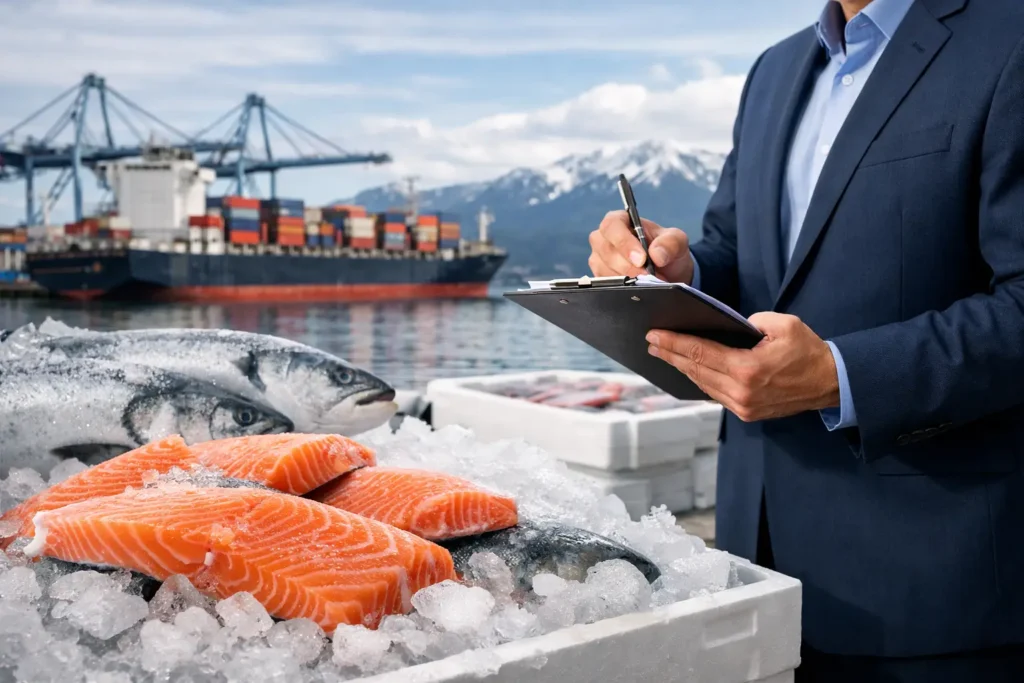

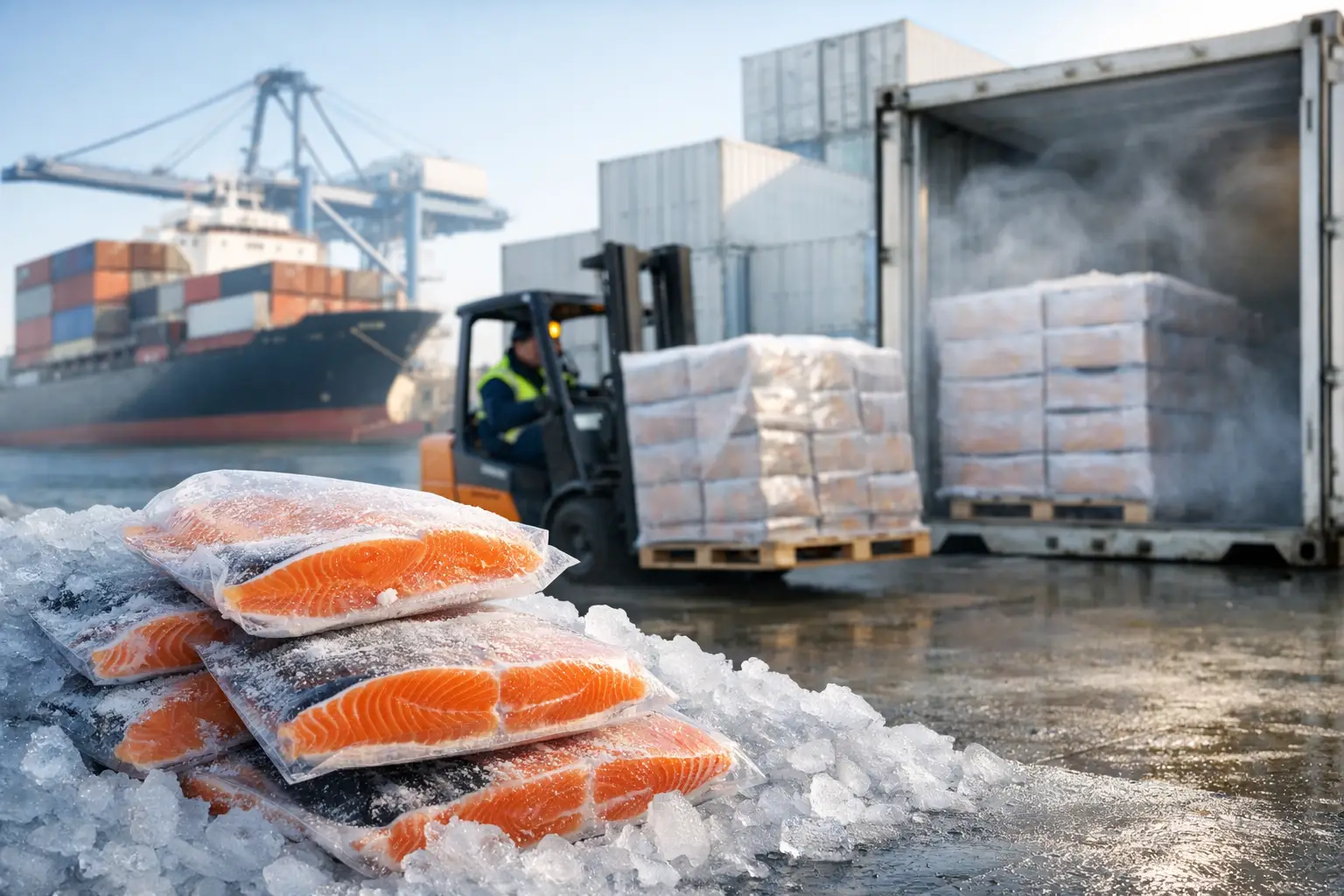
A frozen salmon shipment can leave Norway in excellent condition and still become a costly problem if the cold chain, export paperwork, or destination handoff is poorly managed. Frozen salmon export logistics is therefore not simply a freight task. For wholesale buyers, it is a controlled process that protects product integrity, shelf life, compliance, and the landed cost of every carton.
For supermarkets, distributors, foodservice operators, and industrial processors, dependable supply begins before a container is booked. Product format, freezing method, packing specification, documentation, and transit planning must work together. When they do, frozen Norwegian salmon can reach global markets with stable quality and predictable commercial performance.
Why frozen salmon logistics requires operational control
Frozen salmon offers clear advantages for buyers managing long lead times, promotional demand, seasonal menus, or inventory across multiple locations. Properly frozen product gives purchasing teams more flexibility than fresh fish, especially when ocean freight is the most cost-efficient option for high-volume orders.
That advantage depends on temperature discipline. Frozen salmon is normally held and transported at -18°C or below, with the target temperature and handling requirements defined in the product specification and shipping plan. A reefer container is not a substitute for process control. Product must be frozen correctly before loading, cartons must allow appropriate airflow, and the container must be pre-cooled and set to the required operating conditions.
Temperature excursions can affect texture, drip loss, color, and product appearance after thawing. Even where a shipment remains technically frozen, inconsistent handling can reduce the quality expected from premium Norwegian seafood. Buyers should therefore evaluate logistics providers and suppliers on their ability to manage the full chain, not only the port-to-port freight rate.
Start with the right frozen product specification
Export performance is influenced by decisions made at processing. Whole frozen salmon, HOG salmon, fillets, portions, and trimmed formats have different packing profiles, pallet configurations, and intended uses. The best specification depends on whether the buyer is supplying a retail program, further-processing facility, restaurant distribution network, or wholesale counter.
For example, HOG salmon may offer strong value for processors with in-house capability, while frozen trimmed fillets can reduce labor and yield uncertainty for foodservice and retail customers. Carton weights, glazing requirements, vacuum packaging, label language, production dates, and lot coding should be agreed before production. These details affect warehouse handling, customs clearance, inventory rotation, and downstream traceability.frozen salmon export logistics
A reliable supplier should confirm the commercial specification in writing before shipment. This reduces common disputes over net weight, size range, trim standard, or packaging. It also gives the buyer a consistent basis for comparing factory prices and calculating landed cost.
Freezing method and pack integrity
The freezing process matters because it affects how the salmon performs after thawing. Rapid freezing helps preserve the natural structure of the fish, while secure primary packaging and durable export cartons protect against dehydration, crushing, and freezer burn during long-distance transport.
Palletization deserves equal attention. Pallets must be stable enough for port handling and destination warehousing, while carton placement should support reefer airflow. Overloading or poorly distributed cargo can create uneven temperatures within a container. For premium seafood programs, that risk is not worth taking to gain a small amount of extra volume.
Building a cold chain from factory to destination
A successful frozen salmon export shipment moves through several custody points: processing facility, cold store, inland transport, export terminal, ocean carrier, destination port, customs process, and final refrigerated delivery. Each transfer introduces risk if responsibilities are unclear.
The most effective model is to establish a documented cold-chain plan before cargo collection. It should identify the required temperature set point, loading window, reefer settings, container inspection procedures, seal control, temperature-monitoring approach, and escalation process if an exception occurs. Data loggers can provide independent evidence of conditions during transit and support faster resolution if a claim arises.frozen salmon export logistics
Container availability is also a planning issue. Reefer equipment can be constrained during peak export seasons, at congested ports, or on routes with limited carrier capacity. Buyers with recurring volume benefit from forward planning and forecast sharing. A supplier with export experience can reserve capacity earlier, align production dates with vessel schedules, and avoid unnecessary cold-storage exposure.
Ocean freight versus air freight
For large-volume frozen salmon orders, ocean freight is generally the commercial choice. It supports competitive freight cost per kilogram and suits inventory programs that can plan around transit schedules. The trade-off is longer lead time and greater exposure to port delays, transshipment changes, and documentation timing.
Air freight can be appropriate for urgent replenishment, small high-value orders, or markets where speed outweighs cost. However, it is rarely the best long-term solution for frozen bulk supply. Buyers should assess the full landed-cost equation, including freight, insurance, storage, financing, potential stockouts, and required safety inventory.
Export documentation is part of the product
For international seafood buyers, paperwork is as critical as product quality. Missing or inaccurate documents can delay release, generate demurrage and storage charges, or disrupt a planned delivery to a distribution center. Documentation requirements vary by market, product format, origin, and buyer program, so they should be confirmed before order placement.frozen salmon export logistics
A typical frozen salmon export file may include the commercial invoice, packing list, bill of lading, health certificate where required, certificate of origin where applicable, catch or traceability information when relevant, and product or label documentation requested by the destination market. US importers must also ensure that their own regulatory responsibilities, entry filings, facility requirements, and food safety controls are properly addressed.
The key point is coordination. Product descriptions, carton counts, net and gross weights, lot references, consignee details, and tariff classifications must be consistent across the document set. Small discrepancies can become major clearance issues when a container is waiting at port.
Traceability protects buyers beyond customs clearance
Traceability is not only a regulatory requirement. It is a commercial safeguard for distributors, retailers, and foodservice buyers that need confidence in origin, farming standards, processing history, and lot-level control. In the event of a quality inquiry or customer request, traceable supply allows the buyer to identify the relevant production lot quickly rather than investigating an entire inventory position. frozen salmon export logistics
Norwegian farmed salmon is supported by an established production and control environment, but buyers should still ask practical questions. Can the supplier provide lot identification? Are farm and processing details available when required? Is the product sourced from certified farms and approved facilities? Does the packaging support efficient warehouse rotation?
Direct factory access can make these answers clearer. Fewer intermediaries generally mean fewer handoffs, better visibility into specifications, and a more direct route for resolving production or logistics questions. That can also improve pricing by removing layers that add cost without adding operational value.
How buyers can reduce logistics risk before ordering
Before confirming a frozen salmon order, buyers should agree on the product specification, Incoterms, delivery point, vessel schedule, insurance responsibility, payment terms, and required export documents. These points determine who controls key decisions and who carries cost if a delay occurs.
It is also sensible to discuss destination handling. A container that clears efficiently can still face quality risk if it waits at an unrefrigerated dock or if the receiving warehouse cannot accept the delivery on time. Procurement, logistics, customs brokerage, and warehouse teams should work from the same arrival plan.
For recurring business, forecast-based purchasing is more effective than spot buying alone. It gives the exporter time to coordinate processing capacity, allocate the required sizes and formats, and plan reefer bookings. It gives the buyer a steadier supply position and less exposure to short-term price movement or equipment shortages.
Choosing an export partner for frozen Norwegian salmon
The right supplier should combine access to premium seafood with practical international shipping knowledge. Price matters, but the lowest quoted price can become expensive if documentation is incomplete, product specifications are vague, or the supplier has limited control over production and logistics.
Nordpoll Seafood works with certified farms and processing facilities to supply frozen salmon and trout directly to professional buyers. This factory-direct approach supports traceability, consistent specifications, and competitive pricing for wholesale and industrial volumes, while export planning is aligned with each destination market and delivery requirement.
A trusted long-term seafood partner should be able to discuss product quality and logistics in the same conversation. That includes pack style, freezing standard, container loading, documentation, delivery timing, and the commercial risks that affect landed cost.
They gain inventory confidence, clearer margins, and a supply base that can support the next order before the current shipment reaches the warehouse.