

For a wholesale buyer, selecting a trout export supplier is not simply a product decision. It is a supply-chain decision that affects margins, menu consistency, retail presentation, food safety compliance, and customer confidence. A lower quote has limited value if product specifications change between shipments, documentation arrives late, or the cold chain is not managed to the destination.
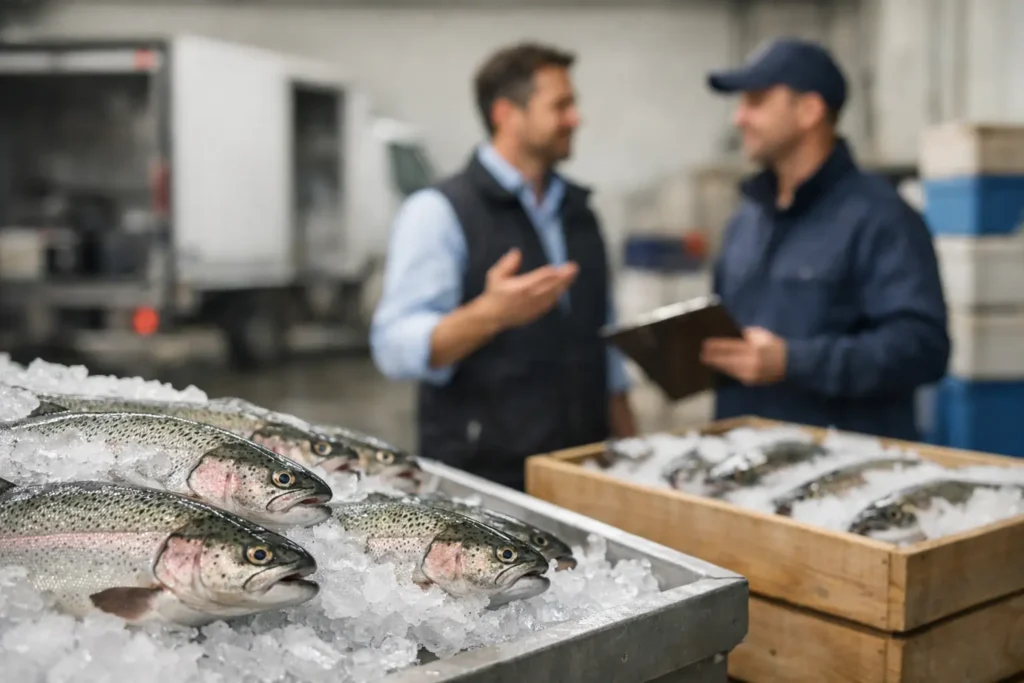
Norwegian trout is a premium commercial product with strong demand across retail, foodservice, distribution, and processing. Its color, texture, clean flavor, and reliable farming standards make it suitable for fresh seafood counters, sushi programs, smoked products, portioning operations, and restaurant kitchens. The supplier behind the fish determines whether those advantages translate into dependable business results.Trout export supplier
What a Trout Export Supplier Must Deliver
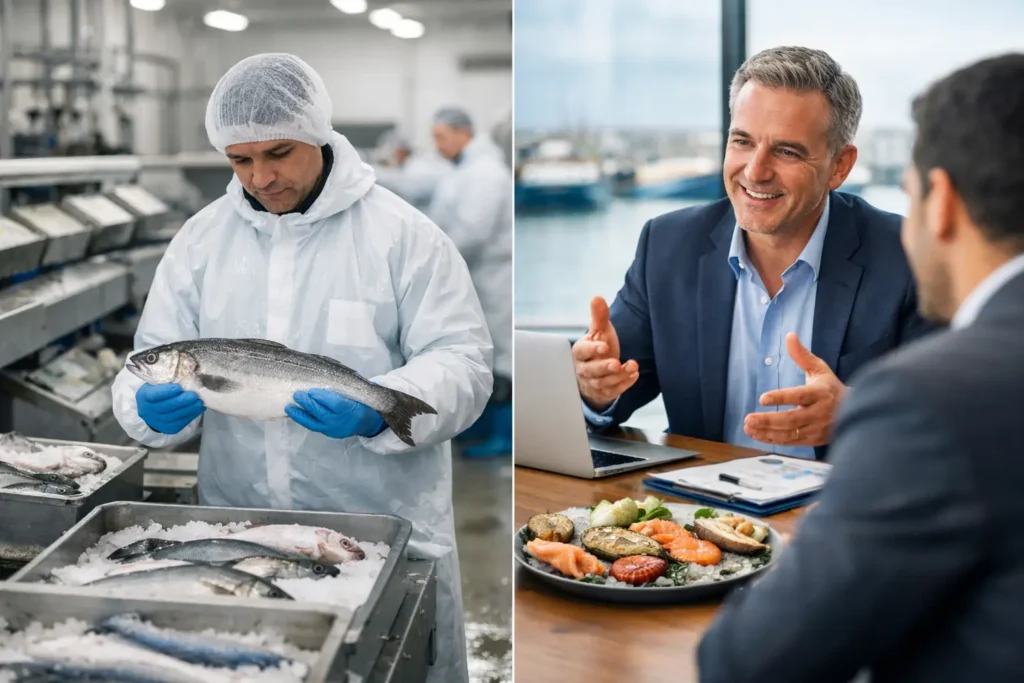
A capable export supplier should provide more than access to fish. Professional buyers need a partner that can coordinate sourcing, processing, documentation, packing, and international delivery around an agreed specification.
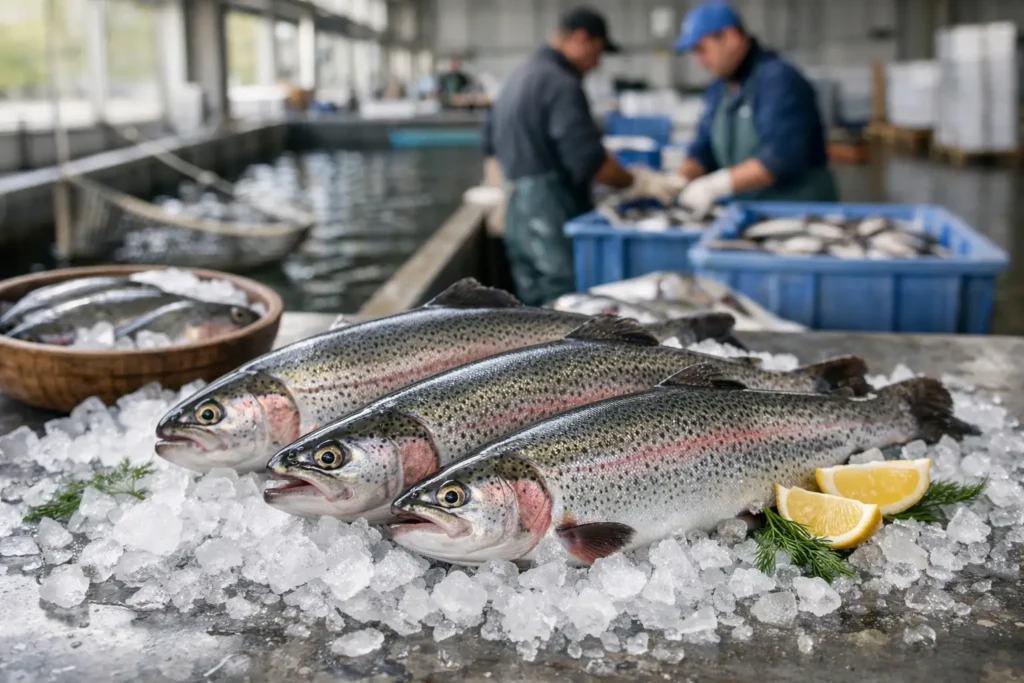
The first requirement is consistent product quality. Trout should be sourced from established farms and processed under controlled conditions that preserve freshness, appearance, and shelf life. Buyers should be able to define their preferred size range, trim level, packing method, and fresh or frozen requirement before the order is confirmed.
The second requirement is traceability. For importers, supermarket buyers, and foodservice distributors, origin information cannot be vague. Each shipment should be supported by clear records connecting the product to its farm, processing facility, production lot, and export documentation. This level of control helps buyers meet internal quality requirements and respond quickly if a customer requests product information.
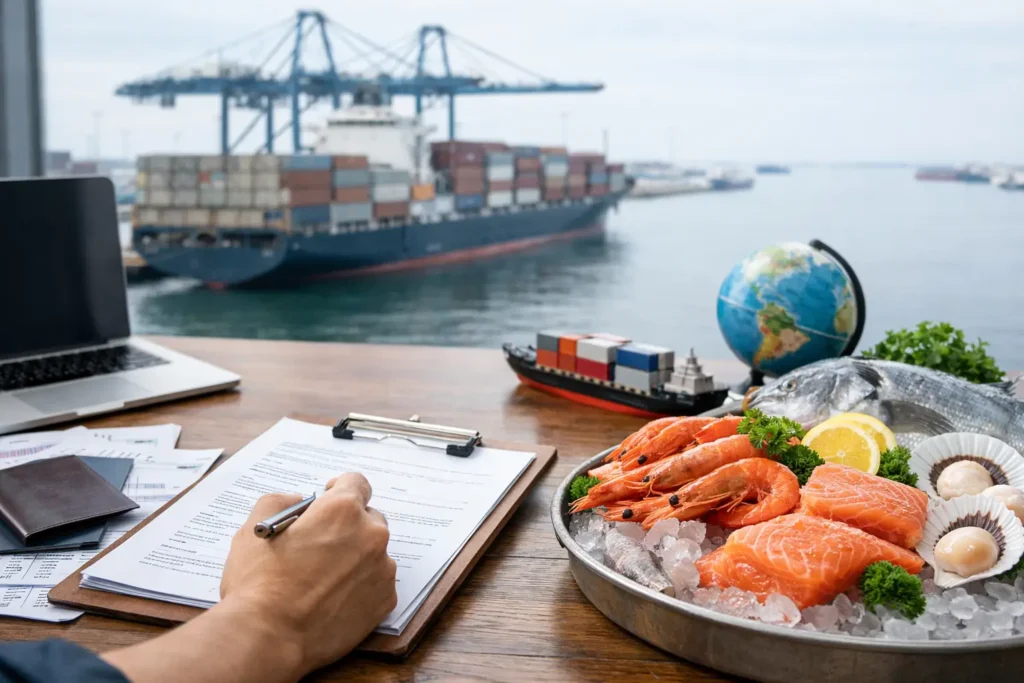
The third requirement is export competence. International seafood trade involves more than booking freight. Product labeling, health certificates, customs requirements, temperature control, and delivery timing must be managed accurately. A supplier with practical export experience reduces the operational burden on the buyer and helps prevent avoidable delays at destination.
Factory-Direct Trout Supply Creates Better Buying Conditions
The route between farm and buyer has a direct effect on both cost and control. When trout passes through several intermediaries, each party adds a margin and may add uncertainty around inventory, handling, and product details. This can make it harder to secure stable pricing or maintain the same specification over time.
Factory-direct sourcing gives buyers a clearer connection to production. It supports factory prices for volume orders while allowing specifications to be discussed closer to the processing stage.
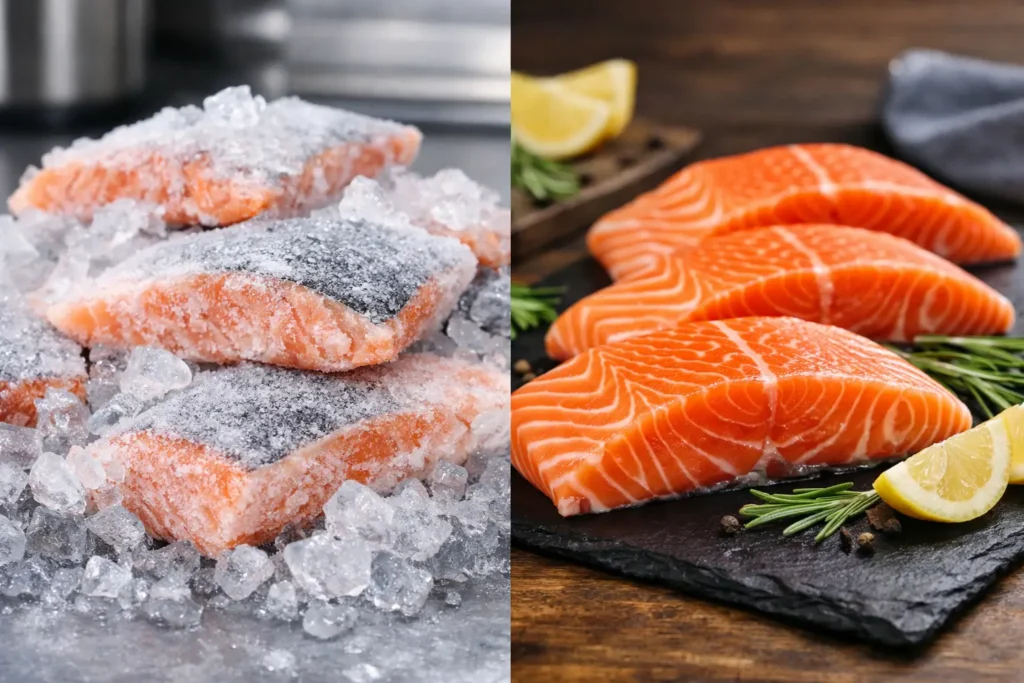
Direct access does not mean every order is identical. The correct supply model depends on destination, sales channel, storage capacity, and forecast accuracy. Fresh trout can support premium positioning and rapid turnover, but it requires disciplined logistics and realistic delivery planning. Frozen trout offers longer inventory flexibility and can be more practical for distant markets or buyers managing variable demand.
Nordpoll Seafood works with certified Norwegian farms and processing facilities to provide direct-from-source salmon and trout for commercial buyers requiring export-ready volume supply.
Select the Right Product Format for Your Market
Trout should be purchased according to how it will be handled, processed, or sold after arrival. A reliable supplier will confirm the commercial purpose of the product before proposing a format.
Whole HOG trout is commonly used by buyers with their own processing capacity or customers that value whole-fish presentation. It can offer efficient raw material economics, but receiving teams must be prepared for cutting, waste management, and cold storage requirements.
Trimmed trout is suitable for buyers that need a more finished product with less handling at destination. The exact trim specification should be defined in writing, including head status, gutting, fin treatment, and acceptable tolerance. Small differences in processing language can affect yield and customer expectations.
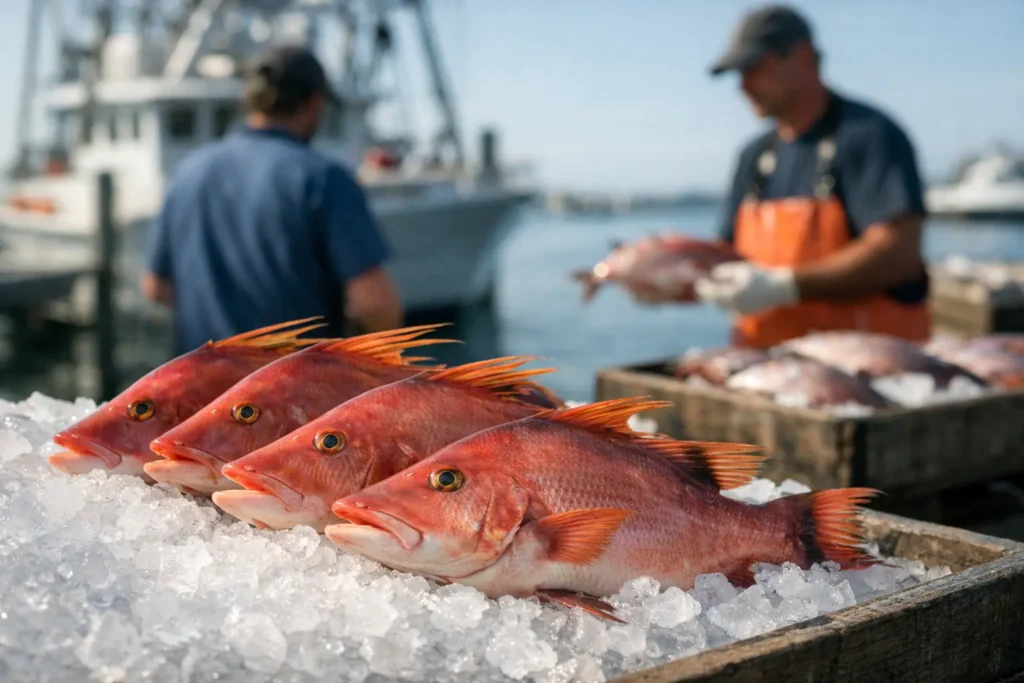
Fresh trout is often selected for supermarket seafood counters, premium restaurants, and distributors supplying fast-turn foodservice accounts. The commercial advantage is a high-quality, fresh product proposition. The trade-off is a shorter sales window and a greater need for dependable flight or road connections, receiving procedures, and temperature monitoring.
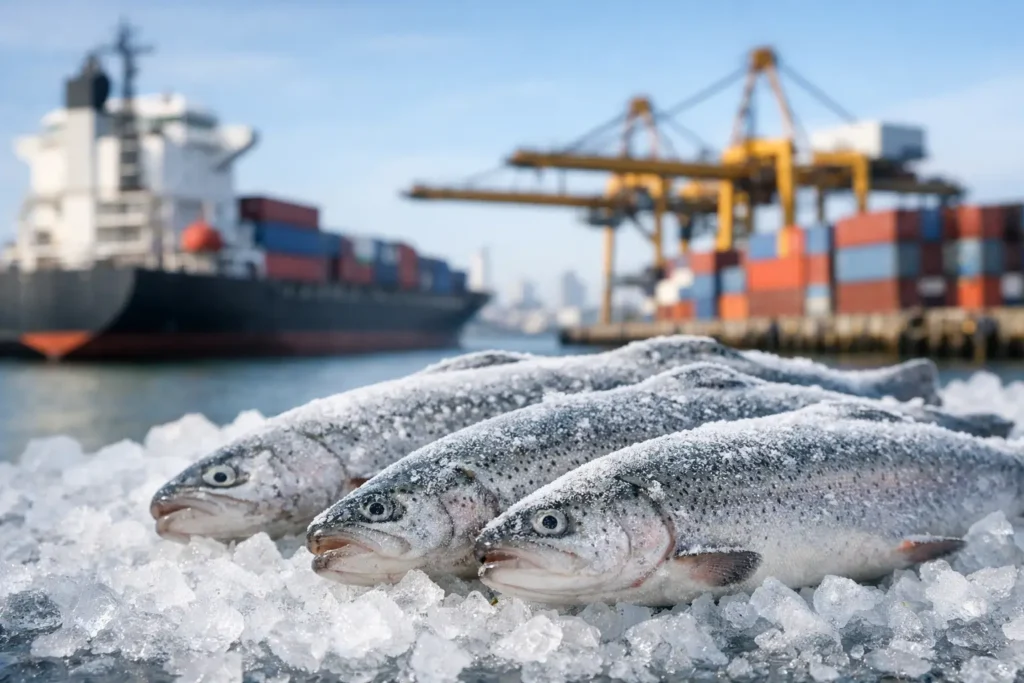
Frozen trout is a practical option for industrial buyers, regional wholesalers, and importers that need inventory resilience. Properly frozen and packed product can help buyers plan around demand cycles, reduce exposure to short-term freight disruptions, and serve customers farther from major seafood gateways. The right choice depends on the buyer’s route to market, not on a general assumption that one format is better.
Questions to Ask Before Appointing a Trout Export Supplier
Commercial seafood purchasing works best when product and logistics details are agreed before the first shipment. Buyers should ask how the supplier sources trout, which processing formats are available, and whether production capacity can support recurring volumes rather than a single spot order.
It is equally important to confirm documentation requirements early. US and international import programs may require health certificates, invoices, packing lists, certificates of origin, catch or farm documentation where applicable, and labeling that matches destination rules. Requirements vary by market and product type. An experienced supplier should be able to identify the documentation process and coordinate the necessary paperwork without leaving critical work to the final day before dispatch.
Buyers should also ask how product temperature is protected from factory to destination. Cold-chain performance involves insulated packaging, refrigerant or temperature-controlled freight, transfer time, shipment scheduling, and communication when conditions change. No supplier can remove every freight risk, particularly on international routes, but a professional exporter should have procedures for planning, monitoring, and escalation.
Pricing should be evaluated in the same disciplined way. Factory price is a meaningful advantage, but the full landed cost matters more than a single product quote. Compare product price, processing level, packaging, freight terms, documentation support, customs costs, and expected shrink. A lower purchase price can become expensive if the shipment does not arrive in the required condition or requires additional processing after delivery.
Traceability and Sustainability Support Long-Term Sales
Many professional buyers now need to demonstrate more than product quality. Retail customers, restaurant groups, and industrial clients increasingly ask where seafood was produced, how it was handled, and which standards apply to farming and processing.
Norwegian aquaculture is recognized for structured production controls and oversight. Still, buyers should request documentation relevant to their own procurement policy rather than relying on broad claims. This may include farm origin, processing information, food safety controls, and certifications available for the relevant product and facility.
Traceability also protects the buyer’s reputation. If a quality question arises, documented lot information allows the supply chain to identify the affected product quickly. That is far more effective than working with a broker that cannot provide a clear path back to the source.
Sustainability requirements should be handled with the same precision. A buyer may need specific certification status, responsible sourcing evidence, or reporting information for a customer program. These requests should be raised during quotation and product approval, not after stock is already in transit.
Build Supply Around Forecasts, Not Emergency Orders
Spot buying has a place when demand changes suddenly, but it is rarely the strongest foundation for a premium trout program. Fish availability, processing schedules, freight capacity, and seasonal demand all influence price and delivery options. Buyers that share realistic forecasts are in a better position to secure planned production and consistent supply.
For recurring programs, establish expected monthly volume, preferred product format, delivery window, and substitute options if a specific size range is temporarily limited. This does not require an inflexible contract in every case. It creates a working framework that lets both buyer and supplier prepare for demand instead of reacting to shortages.Trout export supplier
A trusted long-term seafood partner should communicate clearly when market conditions change. If raw material supply tightens, freight schedules shift, or an agreed size is unavailable, early notice gives the buyer time to adjust promotions, purchasing plans, or customer commitments. Reliability is not the claim that nothing will ever change. It is the ability to manage change professionally.
Choose a Supplier Built for Commercial Continuity
The best trout export supplier combines premium Norwegian product with practical execution. Look for direct processing access, defined specifications, documented traceability, export-ready paperwork, cold-chain knowledge, and a commercial approach to recurring volume. These elements protect product quality while supporting better cost control and fewer supply surprises.
When your trout program is built around verified source, clear specifications, and disciplined delivery planning, procurement becomes less reactive and your customers receive a product they can order with confidence.