
frozen seafood wholesale .Frozen vs Fresh Seafood: What Restaurant Buyers Need to Know Before Purchasing
The global seafood industry continues to evolve. Restaurant owners, hotel chains, importers, distributors, and food service buyers now face an important purchasing decision: should they buy fresh seafood or frozen seafood?
For buyers in the United Arab Emirates, Saudi Arabia, the United States, and international markets, selecting the right seafood supply model directly affects profitability, food quality, inventory management, and customer satisfaction. As global supply chains become more efficient, many buyers increasingly rely on frozen seafood wholesale suppliers to secure premium seafood products throughout the year.
This comprehensive seafood purchasing guide explains the differences between frozen and fresh seafood, highlights the advantages and disadvantages of each option, and helps restaurant buyers make profitable sourcing decisions.
Whether you operate a luxury restaurant in Dubai, manage a seafood distribution company in Saudi Arabia, or purchase seafood for a restaurant chain in the United States, this guide will help you optimize your seafood procurement strategy.
Understanding the Difference Between Fresh and Frozen Seafood
Before purchasing seafood products, buyers should understand what the terms “fresh” and “frozen” actually mean.
Fresh seafood refers to fish, shellfish, and other marine products sold without undergoing a freezing process. Suppliers transport these products under refrigerated conditions to maintain freshness.
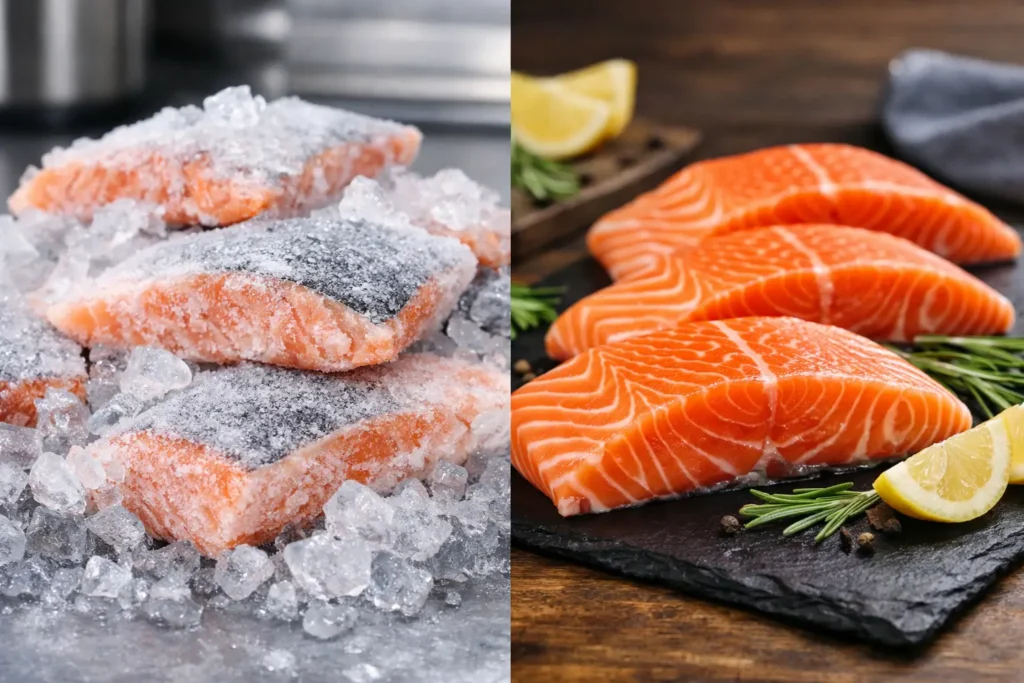
Frozen seafood, by contrast, undergoes rapid freezing shortly after harvest. This process preserves freshness, nutritional value, texture, and taste while extending shelf life significantly.
Modern freezing technologies, including individual quick freezing (IQF) and blast freezing, allow suppliers to preserve seafood quality at levels that often rival fresh products.
As a result, many restaurants now combine both purchasing methods to maximize efficiency and profitability.
Why Restaurant Buyers Are Choosing Frozen Seafood Wholesale
Restaurant buyers increasingly prefer frozen seafood wholesale sourcing because it offers consistent quality, predictable pricing, and reduced operational risk.
Several factors drive this shift:
- Stable year-round supply
- Longer product shelf life
- Reduced food waste
- Lower transportation costs
- Greater product availability
- Easier inventory management
- Improved profit margins
Restaurants operating multiple locations especially benefit from wholesale frozen seafood programs because they ensure standardization across all outlets.
Furthermore, international seafood buyers can access premium products regardless of seasonal fishing restrictions.
The Advantages of Buying Fresh Seafood
Fresh seafood continues to attract restaurants that prioritize premium dining experiences and daily menu specials.
Superior Perception Among Customers
Many consumers associate fresh seafood with luxury dining experiences. Upscale restaurants often leverage this perception to justify premium menu pricing.
Fresh seafood presentations also enhance customer confidence and strengthen brand positioning.
Ideal for Certain Culinary Applications
Some culinary preparations benefit from extremely fresh products, including:
- Sushi and sashimi
- Oysters on the half shell
- Fresh ceviche
- Carpaccio
- Live shellfish dishes
Executive chefs often prefer fresh seafood for signature dishes requiring delicate textures.
Greater Flexibility for Daily Specials
Restaurants receiving daily deliveries can adjust menus according to seasonal catches and market availability.
This flexibility creates exclusivity and encourages repeat customers.
The Challenges of Purchasing Fresh Seafood
Despite its advantages, fresh seafood presents several operational challenges.
Short Shelf Life
Fresh seafood deteriorates quickly. Most products remain suitable for only a few days after harvest.
Restaurants must therefore maintain strict inventory control systems to avoid spoilage.
Higher Logistics Costs
Fresh seafood transportation requires:
- Continuous refrigeration
- Faster delivery schedules
- Specialized packaging
- Frequent shipments
These requirements increase procurement expenses significantly.
Seasonal Supply Fluctuations
Many seafood species experience seasonal harvesting restrictions. Consequently, prices can rise dramatically during low-supply periods.
This volatility complicates restaurant budgeting and menu planning.
Increased Food Waste
Restaurants frequently discard unsold fresh seafood inventory.
Food waste directly impacts profitability and sustainability goals.
Benefits of Frozen Seafood for Restaurants and Importers
Frozen seafood technology has transformed the global seafood industry.
Today’s premium frozen products maintain exceptional quality while providing numerous commercial advantages.
Extended Shelf Life
Frozen seafood remains usable for several months when stored properly.
This extended lifespan allows restaurants to:
- Reduce purchasing frequency
- Lower spoilage rates
- Improve inventory turnover
- Increase operational efficiency
Better Cost Control
Price stability represents one of the strongest advantages of frozen seafood sourcing.
Unlike fresh seafood markets, frozen seafood prices remain relatively predictable throughout the year.
Restaurants therefore gain better control over:
- Food costs
- Budget planning
- Menu pricing
- Procurement forecasting
Global Product Availability
Restaurants and importers can source seafood species from multiple international markets.
Examples include:
- Norwegian salmon
- Atlantic cod
- Alaskan pollock
- Canadian lobster
- Argentine red shrimp
- King crab
- Yellowfin tuna
- Black tiger shrimp
This access enables restaurants to diversify menus without seasonal limitations.
Reduced Food Waste
Frozen inventory allows restaurants to thaw products according to demand.
This practice dramatically reduces spoilage and improves profit margins.
Consistent Quality Standards
Professional seafood processors maintain strict quality control systems.
Modern freezing technologies preserve:
- Texture
- Flavor
- Nutritional value
- Appearance
- Food safety standards
Consequently, many chefs cannot distinguish properly frozen seafood from fresh alternatives.
Frozen Seafood Wholesale: The Strategic Choice for Global Restaurant Chains
For international buyers, frozen seafood wholesale sourcing offers strategic advantages that fresh seafood cannot consistently provide.
Large restaurant groups require:
- Predictable inventory
- Standardized products
- Reliable supply chains
- Global logistics support
- Stable pricing structures
Frozen seafood suppliers satisfy these requirements while reducing operational complexity.
This advantage explains why many multinational hotel groups, cruise operators, and restaurant chains increasingly prioritize frozen seafood procurement programs.
Nutritional Comparison: Fresh vs Frozen Seafood
Many buyers assume fresh seafood provides superior nutritional benefits.
Scientific evidence suggests otherwise.
When seafood undergoes rapid freezing shortly after harvest, nutritional degradation remains minimal.
Frozen seafood generally retains:
- Protein content
- Omega-3 fatty acids
- Vitamins
- Minerals
- Antioxidants
In some cases, frozen seafood preserves nutrients better than fresh seafood transported over long distances.
Therefore, nutritional concerns rarely justify avoiding frozen seafood products.
Food Safety Considerations for Seafood Buyers
Food safety remains a critical concern for restaurants and importers.
Fresh Seafood Risks
Fresh seafood introduces several challenges:
- Short holding periods
- Temperature fluctuations
- Transportation delays
- Higher bacterial growth risks
Restaurants must implement strict cold chain management procedures.
Frozen Seafood Safety Benefits
Frozen seafood offers several safety advantages:
- Controlled processing environments
- Reduced microbial activity
- Extended storage stability
- Traceability systems
- Standardized handling procedures
Many wholesale fish distributors provide extensive documentation supporting regulatory compliance.
This documentation proves especially valuable for importers operating in the UAE, Saudi Arabia, and the United States.
Cost Comparison Between Fresh and Frozen Seafood
Restaurant profitability depends heavily on food cost management.
The following comparison highlights key financial considerations.
| Factor | Fresh Seafood | Frozen Seafood |
|---|---|---|
| Initial purchase price | Higher | Lower |
| Transportation cost | High | Moderate |
| Shelf life | Short | Long |
| Food waste | High | Low |
| Inventory flexibility | Limited | Excellent |
| Seasonal price volatility | High | Lower |
| Storage efficiency | Moderate | High |
Although some premium fresh products justify their costs, frozen seafood frequently delivers superior overall value.
How Restaurants Should Choose Between Fresh and Frozen Seafood
No single purchasing strategy works for every business.
Restaurant buyers should evaluate several factors before making sourcing decisions.
Consider Your Restaurant Concept
Different restaurant models require different seafood procurement strategies.
Examples include:
Luxury Fine Dining
- Prioritize premium fresh seafood
- Supplement with frozen specialty products
Casual Dining
- Emphasize frozen seafood inventory
- Maintain selected fresh offerings
Hotel Operations
- Utilize mixed procurement strategies
- Optimize inventory efficiency
Quick Service Restaurants
- Rely heavily on frozen seafood products
Evaluate Customer Expectations
Customer demographics influence purchasing decisions.
Premium customers often expect fresh seafood presentations, while value-conscious consumers prioritize taste and consistency.
Analyze Operational Capacity
Restaurants with limited storage and purchasing resources often benefit more from frozen seafood programs.
Conversely, businesses with sophisticated supply chains may successfully integrate both sourcing methods.
What to Look for in Fresh Seafood Suppliers
Selecting the right supplier directly impacts product quality and profitability.
When evaluating fresh seafood suppliers, buyers should consider:
Product Traceability
Reliable suppliers provide:
- Harvest origin information
- Catch dates
- Processing details
- Regulatory certifications
Quality Certifications
Look for suppliers holding certifications such as:
- HACCP
- BRCGS
- MSC
- ASC
- FDA compliance
- EU approval
Logistics Capabilities
Strong suppliers maintain:
- Cold chain integrity
- International shipping expertise
- Rapid delivery networks
- Inventory management systems
Product Consistency
Restaurants require dependable quality standards throughout the year.
Consistent suppliers reduce operational uncertainty.
How Wholesale Fish Distributors Support International Buyers
Professional wholesale fish distributors play a critical role in global seafood trade.
They provide:
- International procurement services
- Consolidated shipments
- Customs support
- Product sourcing expertise
- Quality assurance programs
- Inventory management solutions
Importers in Dubai, Riyadh, Jeddah, New York, Houston, and Los Angeles increasingly rely on experienced distributors to simplify seafood procurement.
These partnerships reduce purchasing risks and improve supply chain efficiency.
Restaurant Seafood Sourcing Best Practices
Successful restaurant seafood sourcing requires strategic planning.
Buyers should follow several best practices.
Diversify Supply Sources
Avoid dependence on a single supplier.
Multiple sourcing channels improve resilience during supply disruptions.
Forecast Demand Accurately
Demand forecasting helps restaurants:
- Reduce waste
- Improve purchasing decisions
- Increase profitability
Balance Fresh and Frozen Inventory
Many successful restaurants use hybrid purchasing strategies.
This approach provides:
- Product flexibility
- Cost control
- Menu diversity
- Operational efficiency
Prioritize Supplier Relationships
Long-term supplier partnerships often provide:
- Better pricing
- Priority inventory allocation
- Improved service quality
- Enhanced supply reliability
Regional Seafood Buying Trends in UAE, Saudi Arabia, and the USA
Global seafood purchasing trends continue to evolve.
United Arab Emirates
The UAE remains one of the world’s largest seafood import markets.
Restaurants increasingly favor frozen seafood due to:
- International sourcing requirements
- Tourism demand
- Supply consistency
- Inventory efficiency
Saudi Arabia
Saudi food service operators continue expanding seafood consumption.
Importers increasingly prioritize:
- Frozen shrimp
- Salmon
- Lobster
- Crab
- Premium fish fillets
United States
American restaurants increasingly adopt hybrid seafood purchasing models.
Operators seek:
- Sustainable sourcing
- Supply chain stability
- Reduced food waste
- Improved profitability
These market trends support continued growth in international seafood imports.
Final Thoughts: Which Option Is Best for Restaurant Buyers?
Choosing between fresh and frozen seafood depends on business objectives, customer expectations, and operational requirements.
Fresh seafood offers premium positioning and culinary flexibility. However, it also introduces higher costs, increased waste, and supply uncertainty.
Conversely, frozen seafood wholesale sourcing provides consistency, scalability, predictable pricing, and operational efficiency. These advantages explain why restaurants, importers, distributors, and hospitality groups increasingly depend on frozen seafood supply chains.
The most successful seafood buyers rarely choose only one approach. Instead, they combine fresh products with strategic frozen inventory management to maximize profitability, maintain quality, and ensure uninterrupted supply.
For restaurant owners, importers, and distributors worldwide, the smartest seafood purchasing strategy balances quality, reliability, customer expectations, and long-term business growth.