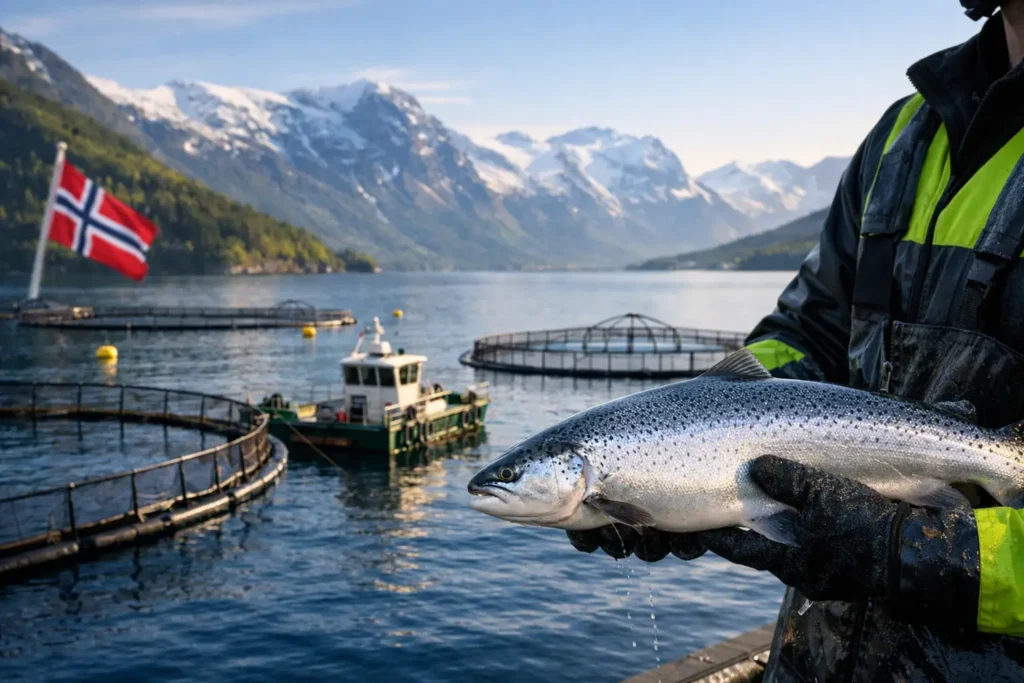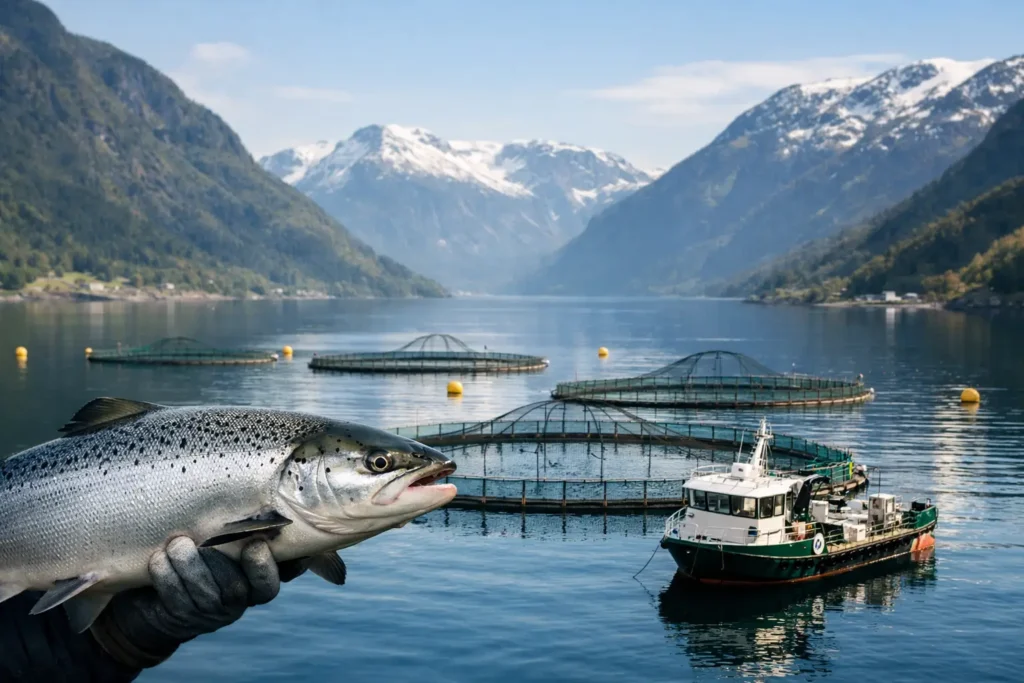

A salmon carton marked “Norwegian” is not, by itself, proof of origin. For a professional buyer, the real question is whether the supplier can connect that product to a documented farm, harvest event, processing facility, export record, and shipment lot. Knowing how to verify seafood origin protects your business from compliance gaps, inconsistent quality, substitution risk, and costly supply-chain disputes.
For importers, distributors, retailers, and foodservice operators, origin verification should be part of supplier qualification and every recurring purchase program. It is not simply a marketing claim about where fish was raised. It is a controlled record of where the fish came from, how it moved through the supply chain, and whether the documentation matches the product delivered.
What seafood origin actually means
Seafood origin can refer to several different points in the supply chain. A purchase specification should distinguish among the country of origin, country of harvest or farming, processing location, and shipping origin. These may be the same, but they are not always the same.
For farmed salmon and trout, the most relevant starting point is the country and farm area where the fish was raised and harvested. Buyers should then confirm the approved processing facility that handled the fish, whether it was packed as whole fish, HOG, trimmed fillets, or another format, and the export point used for international shipment.
This distinction matters when comparing suppliers and pricing. Fish may be processed, repacked, frozen, or consolidated in a country other than where it was farmed. That does not automatically reduce quality, but it must be transparent. A supplier that cannot clearly explain the chain of custody creates unnecessary commercial and compliance risk.
How to verify seafood origin through documents
The most reliable verification method is a document review tied to a specific lot or shipment. Ask for records before placing a large-volume order, then require the same controls in each shipment. Product claims should match across the purchase order, specification sheet, labels, packing list, health documentation, and commercial invoice.
For Norwegian farmed salmon and trout, buyers commonly expect documentation that identifies the exporter, producing or processing establishment, product description, species, quantity, lot or batch reference, and destination details. Depending on the market, shipment and customer requirements, supporting records may also include health certificates, catch or harvest documentation, certificates of origin, and sustainability or farm certification records.
A certificate alone is not enough if it cannot be tied to the physical product. The lot number is the connection point. Confirm that the lot code on master cartons, pallet labels, and product labels corresponds to the lot referenced in the supplier documentation. If a supplier provides broad certificates but cannot map them to the shipment, traceability is incomplete.
Start with the product specification
A complete specification sheet should state the scientific and commercial species name, production method, origin, product form, size range, trim standard, glazing where applicable, storage condition, packaging configuration, and shelf-life requirements. For example, “Atlantic salmon” should be supported by the scientific designation Salmo salar, not only a generic product description and how to verify seafood origin
The specification should also identify whether the product is fresh or frozen and whether it is whole, HOG, filleted, portioned, or value-added. These details help procurement and quality teams ensure that origin records relate to the exact item purchased rather than a similar product in the supplier’s catalog.
Check labels and carton markings
Physical packaging is a practical first-line control at receiving. Cartons and pallet labels should provide clear product identification, production or packing date where required, storage instructions, net weight, lot code, and establishment information. The information should align with shipping documents and your approved product specification.
Label requirements vary by destination market and customer program, so buyers should not rely on one universal carton format. Instead, define the information your receiving team needs to accept, quarantine, or reject a shipment. If labels are missing lot references, contain inconsistent dates, or show an establishment that does not match the documentation, escalate the issue before product enters inventory.
Verify the supplier, not only the fish
Origin claims are only as reliable as the supplier’s control of the supply chain. A direct exporter with established factory relationships can provide clearer documentation than a trader that has limited visibility into farming, processing, and logistics. This does not mean every intermediary is unsuitable. It means the buyer should understand who owns each stage of the transaction and who is accountable for traceability.
During supplier approval, request the legal exporter name, processing facility details, food safety certifications, traceability procedure, recall process, and examples of shipment documentation with commercially sensitive data removed. Ask who issues product certificates, how lots are segregated, and how the supplier manages mixed loads or consolidated containers. how to verify seafood origin
A credible supplier should answer these questions directly. They should also be able to explain where their salmon or trout is sourced, which approved facilities process it, and how the cold chain is maintained from packing through delivery. Vague phrases such as “European origin” or “premium Atlantic salmon” are not sufficient for a serious procurement program.
Use certifications correctly
Third-party certifications can support origin and responsible production claims, but they do not replace lot-level verification. Certifications may address farm management, environmental standards, food safety systems, chain of custody, or social requirements. Their value depends on their scope, validity, and connection to the actual supplier and product.
Check that certificates are current, issued to the correct legal entity or facility, and relevant to the product being purchased. A farm certification does not automatically prove that a specific fillet lot came from that farm. Likewise, a processor certification does not prove the fish was raised in the country stated on a sales sheet. Use certification as one layer in a broader verification process.
For retail and foodservice programs with sustainability commitments, establish in advance which certifications or supplier declarations are required. Doing this after a shipment is booked can create delays, relabeling costs, or rejected inventory.
Build origin checks into receiving and purchasing
The strongest systems do not depend on a one-time audit. They create repeatable checks at ordering, shipping, receiving, and inventory release. Your purchase order should require agreed origin statements, document submission timing, lot-level traceability, and a process for handling discrepancies.
At receiving, quality teams should compare the purchase order, packing list, labels, temperatures, quantities, and lot codes. For frozen product, verify that carton condition and storage history support the stated product status. For fresh salmon and trout, receiving controls should also account for packing date, remaining shelf life, ice condition, transit duration, and temperature records.
When discrepancies occur, isolate the affected lot and request corrective documentation immediately. Do not assume that a paperwork mismatch is minor because the product appears acceptable. A mislabeled carton may be a simple administrative error, but it can also indicate a break in traceability that becomes much harder to resolve after distribution.
Questions to ask before approving a seafood supplier
Before committing to a supply agreement, procurement teams should be able to get clear answers to the following questions:
- Where was the fish farmed or harvested, and can this be documented by lot?
- Which facility processed and packed the product?
- What lot code appears on cartons, pallets, invoices, and export documentation?
- Which food safety and sustainability certifications apply to the facility or supply chain?
- How are lots segregated during processing, storage, and container loading?
- Who is responsible for export documents, cold-chain records, and corrective action if a discrepancy is found?
The goal is not to create unnecessary paperwork. It is to make sure the supplier can provide the evidence your customers, regulators, and internal quality team will expect when a question arises.
Why direct sourcing improves origin transparency
Factory-direct sourcing can reduce the number of handoffs between farm, processor, exporter, and buyer. Fewer handoffs do not eliminate the need for verification, but they can make records easier to access and discrepancies easier to resolve. This is particularly valuable for buyers managing high volumes, multiple product formats, or recurring international deliveries abd how to verify seafood origin
Nordpoll Seafood works with certified Norwegian farms and processing facilities to supply export-ready salmon and trout with the traceability, product consistency, and documentation professional buyers require. Whether the requirement is fresh whole fish, HOG salmon, trimmed fillets, or frozen formats, the origin record should travel with the commercial transaction from source to delivery.
A dependable origin program starts before the first container is loaded. Choose suppliers that can show the path from farm and facility to lot code and final shipment, then make that evidence a standard condition of every order.