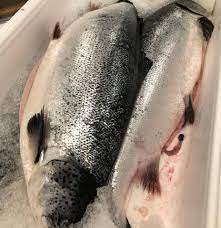


A bulk salmon procurement strategy is tested long before product reaches a receiving dock. A low quote has little value if the delivered fish does not meet agreed trim standards, arrives outside the required shelf-life window, or lacks the documentation needed for import and customer approval. For supermarket buyers, distributors, foodservice groups, and industrial processors, procurement must control the full supply chain: source, specification, price, packing, compliance, and cold-chain execution.
Norwegian salmon remains a strong choice for high-volume buyers because it offers established farming standards, consistent processing capacity, and global export infrastructure. However, the right sourcing model depends on your sales channel, production schedule, inventory exposure, and tolerance for price volatility. The objective is not simply to purchase salmon in bulk. It is to secure a dependable supply program that protects margin and supports consistent customer delivery.
Start the Bulk Salmon Procurement Strategy With Demand
Forecasting should begin with the product your customers actually sell, not with the volume a supplier has available this week. Separate demand by sales channel, pack size, species, format, and delivery period. Fresh whole salmon for a retail service counter has different requirements from frozen portions for a restaurant chain or raw material for a further-processing plant.
Use historical movement, seasonal promotions, menu cycles, and confirmed customer contracts to establish a base forecast. Then create an expected upside range and a downside range. This gives procurement teams a practical volume corridor for supplier discussions rather than a single number that may create unnecessary exposure.
For fresh salmon, order timing matters as much as annual volume. Demand can increase sharply around holidays, retail promotions, and seasonal foodservice events. A supplier that understands your loading calendar and inventory turns can help align harvest, processing, and flight or ocean schedules with your receiving requirements.
A sound forecast also identifies where flexibility is possible. If a buyer can accept more than one weight range, packing configuration, or frozen alternative during tight supply periods, the procurement program is less vulnerable. Flexibility should be documented in advance, not negotiated after a shortage appears.
Define Specifications Before Requesting a Price
A quote is only comparable when every supplier is pricing the same specification. Broad requests for “premium Norwegian salmon” invite inconsistent offers. One supplier may quote HOG fish, another may quote trimmed fillets, and a third may include a different weight range, glaze level, or packing method.
Build a written specification for each item you intend to purchase. It should cover the commercial details that affect yield, quality, and downstream handling, including:
- Species and origin requirements
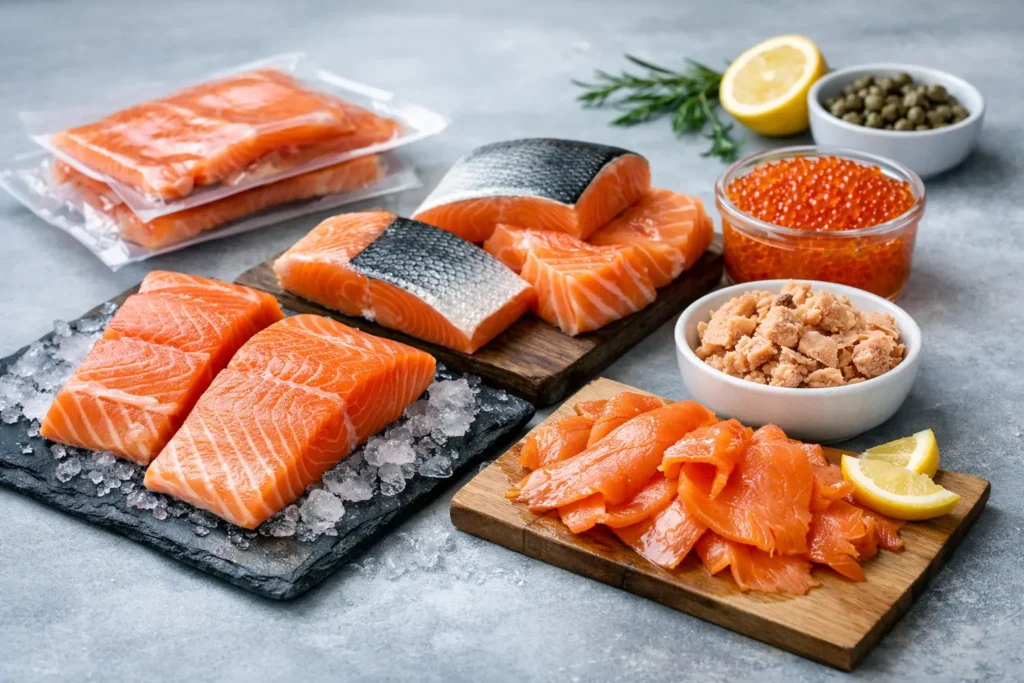
- Product form, such as whole, HOG, fresh fillet, trimmed fillet, or frozen product
- Target weight range and acceptable tolerances
- Trim level, pin-bone status, skin condition, color expectations, and defect limits
- Pack weight, carton configuration, labels, pallet pattern, and storage temperature
- Required shelf life at delivery and approved delivery windows
For industrial users, yield is often more valuable than a small difference in price per pound. A lower-priced fillet with inconsistent trim or excessive variation can raise labor costs and reduce finished-product consistency. Retail buyers may prioritize presentation, uniform sizing, and dependable shelf life. Restaurant distributors may place greater weight on portion suitability and weekly availability. The specification should reflect these different commercial realities.
Choose a Sourcing Model That Matches Your Risk Profile
The best buying structure depends on how predictable your demand is and how much exposure your business can carry. Spot purchasing can work for opportunistic volume, short-term promotions, or buyers with flexible product needs. It also leaves the buyer more exposed to market swings, limited availability, and inconsistent weekly allocations.
For recurring programs, a supply agreement with planned volumes is usually the stronger approach. It gives the supplier visibility to plan harvest, processing, and logistics, while giving the buyer a more reliable allocation. The agreement does not need to fix every pound for a full year. Many successful programs combine committed base volumes with scheduled call-offs and an agreed mechanism for additional demand.
Pricing should be discussed with the same discipline. A fixed price can protect a buyer from sudden market increases but may become less favorable if market prices decline. A market-indexed or periodically reviewed price can provide transparency, although it requires the buyer to manage fluctuations in resale pricing and margin. Some organizations use a blended structure: fixed pricing for contract commitments and market-based pricing for incremental volume.
The key is to avoid treating price as a standalone decision. Payment terms, minimum order quantities, freight, storage, product yield, lead time, and claim procedures all affect total landed cost.
Buy Directly From the Processing Source When Volume Supports It
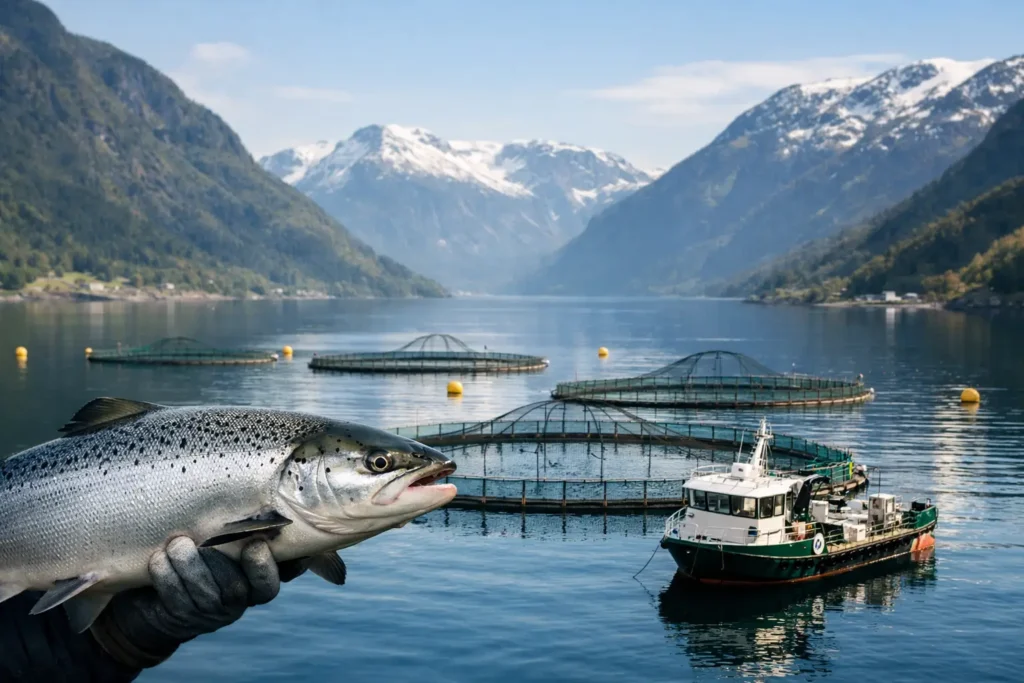
Each additional intermediary can add cost, reduce visibility, and complicate issue resolution. Factory-direct sourcing gives qualified buyers a clearer view of processing standards, available formats, production scheduling, and export documentation. It can also improve price efficiency when annual or recurring volume justifies direct supply.
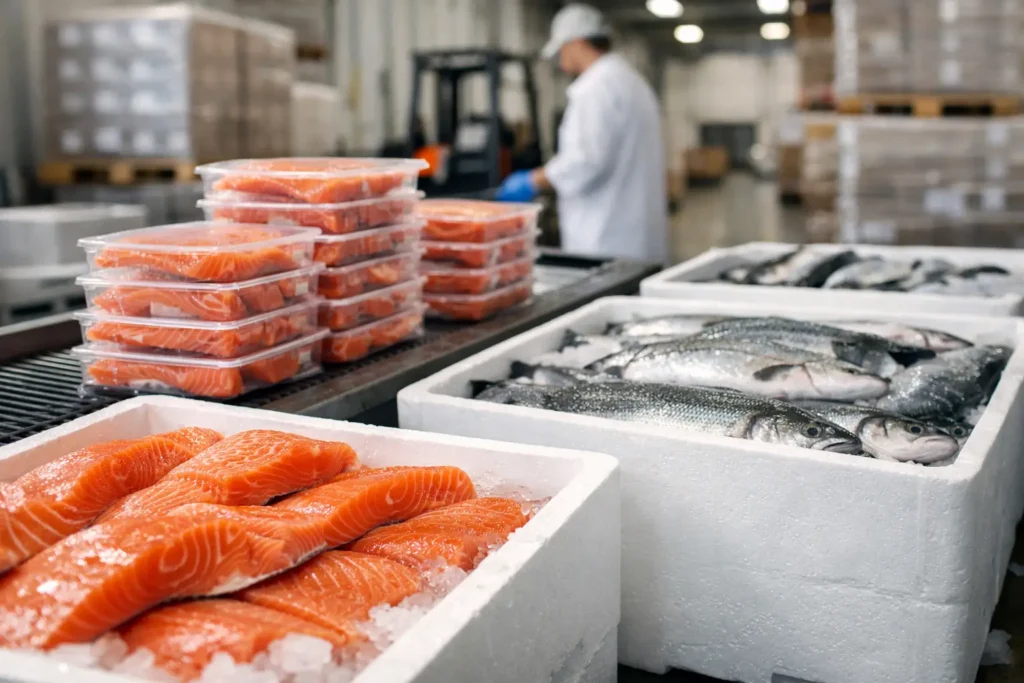
Direct sourcing is not simply about finding the lowest factory price. Buyers should confirm that the export partner can coordinate the complete commercial process: farm and processing access, product specifications, packing, documentation, booking, cold-chain handling, and communication during transit. A processor may produce excellent salmon but may not have the export experience or operational support required for complex international deliveries.
For US buyers, this capability is especially relevant when product is moving across long distances and multiple handlers. Clear ownership of each stage reduces confusion when a shipment is delayed, a document needs correction, or a receiving team identifies a quality concern.
Make Traceability and Compliance Part of the Purchase Order
Traceability should be available at lot level and supported by documentation that matches the product shipped. Buyers need confidence in origin, production source, processing date, lot identification, and handling records. This is essential for food safety programs, customer audits, recall readiness, and retailer approval processes.
Ask suppliers how they manage farm certifications, processing-facility approvals, health documentation, labeling, and export records. Requirements may vary by product format and destination, so a generic statement of compliance is not enough. Your internal quality team should review documentation requirements before the first commercial shipment, especially for a new supplier or a new product line.bulk salmon procurement strategy
Sustainability claims deserve the same scrutiny. For many retail and foodservice customers, responsibly sourced seafood is a purchasing requirement rather than a marketing advantage. Procurement teams should define which certifications, farming practices, or chain-of-custody standards are necessary for their customer base and confirm availability at the start of the program.
Treat Cold-Chain Planning as a Procurement Decision
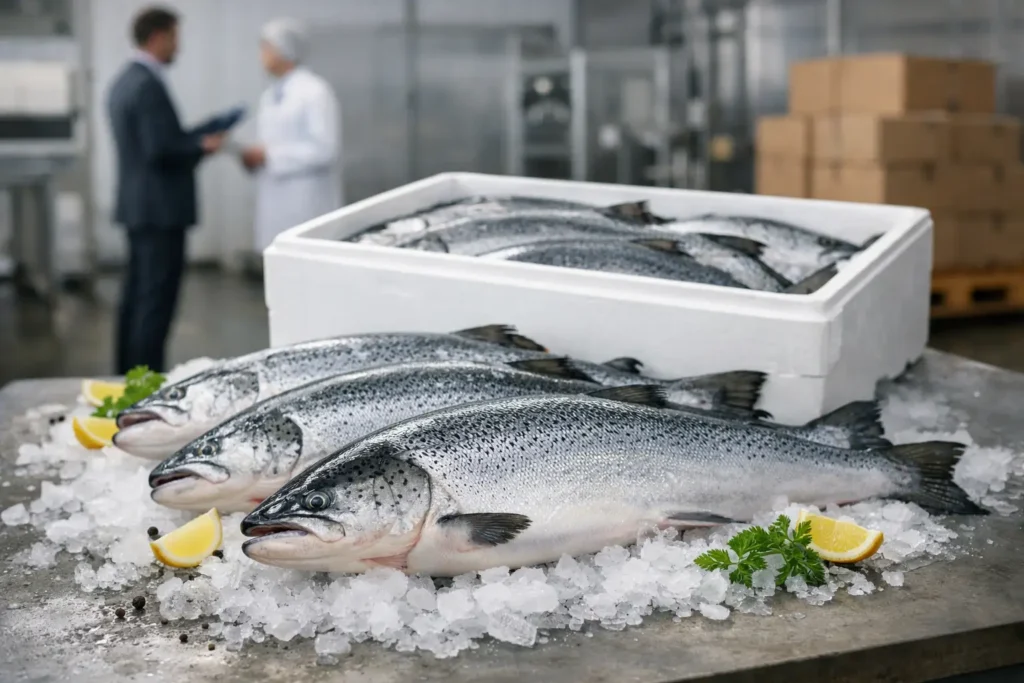
Premium salmon is highly perishable, and cold-chain performance affects the final value of every shipment. Procurement cannot hand logistics to another department after the purchase order is issued. The product format, transit time, shipping method, temperature monitoring, and receiving appointment must be aligned from the beginning.
Fresh airfreight is often appropriate when shelf life, rapid replenishment, and premium presentation are priorities. It generally carries higher freight costs and requires precise coordination at both ends. Frozen product can offer greater inventory flexibility, broader shipment options, and lower risk of spoilage, but it requires freezer capacity and may not fit every retail or foodservice application.
Define the temperature expectations, data-monitoring requirements, delivery terms, and escalation process before shipping. Receiving teams should inspect cartons, verify temperatures, check labels and lot codes, and record any discrepancies immediately. A clear claims process protects both buyer and supplier by establishing what evidence is needed and how quickly concerns must be reported.
Measure Supplier Performance Beyond Price
A procurement program improves when supplier performance is reviewed consistently. Track fill rate, on-time delivery, temperature compliance, shelf life on arrival, specification conformity, documentation accuracy, and claim frequency. These measures reveal whether a supplier is supporting your business or simply completing transactions.
Quarterly reviews are useful for strategic suppliers, particularly when volumes are large or service requirements are complex. Discuss forecast accuracy, upcoming promotions, expected market pressure, product feedback, and corrective actions. The purpose is not to create unnecessary administration. It is to address risks before they become missed deliveries or customer complaints.
A trusted long-term seafood partner should also provide realistic market guidance. Salmon supply and pricing can be affected by biological conditions, harvest planning, feed costs, currency movements, logistics capacity, and global demand. No supplier can remove every market risk, but an experienced exporter can help buyers make earlier, better-informed decisions.
Build Procurement Around Commercial Continuity
The strongest bulk salmon programs are designed for continuity. They combine clear demand forecasts, exact product specifications, factory-direct access, verified traceability, practical pricing terms, and dependable cold-chain execution. This approach gives buyers more control over landed cost and helps protect the quality their customers expect.
Nordpoll Seafood supports high-volume buyers with premium Norwegian salmon and trout, export-ready product formats, and direct processing relationships built for global delivery. The most useful next step is to turn your forecast and specification into a defined purchasing schedule, then evaluate suppliers on their ability to deliver it consistently – not merely on the first price offered.