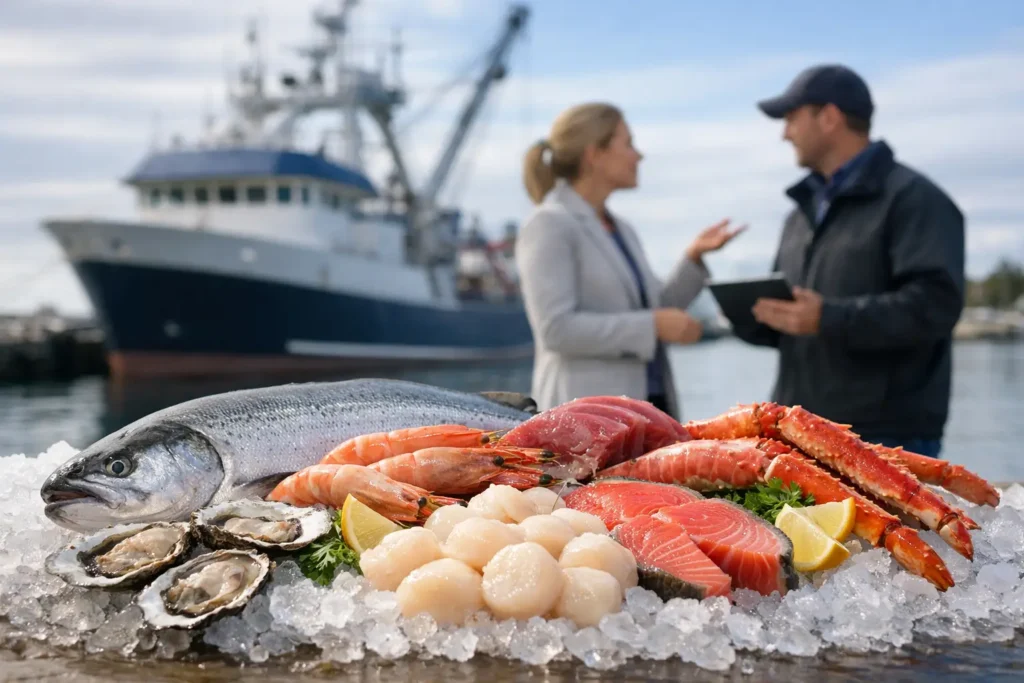


A missed delivery window on fresh fish does more than disrupt inventory – it affects retail promotions, foodservice planning, processing schedules, and margin. That is why whole salmon bulk orders are not just a purchasing decision. For serious seafood buyers, they are a supply chain decision tied directly to product consistency, landed cost, and fulfillment reliability.
For distributors, supermarket programs, restaurant groups, and industrial processors, buying whole salmon in volume often creates better control than buying smaller lots through multiple intermediaries. The commercial logic is straightforward. When product comes from a factory-direct export model, buyers gain clearer traceability, more stable specifications, and stronger price discipline across recurring orders.
Why whole salmon bulk orders make commercial sense
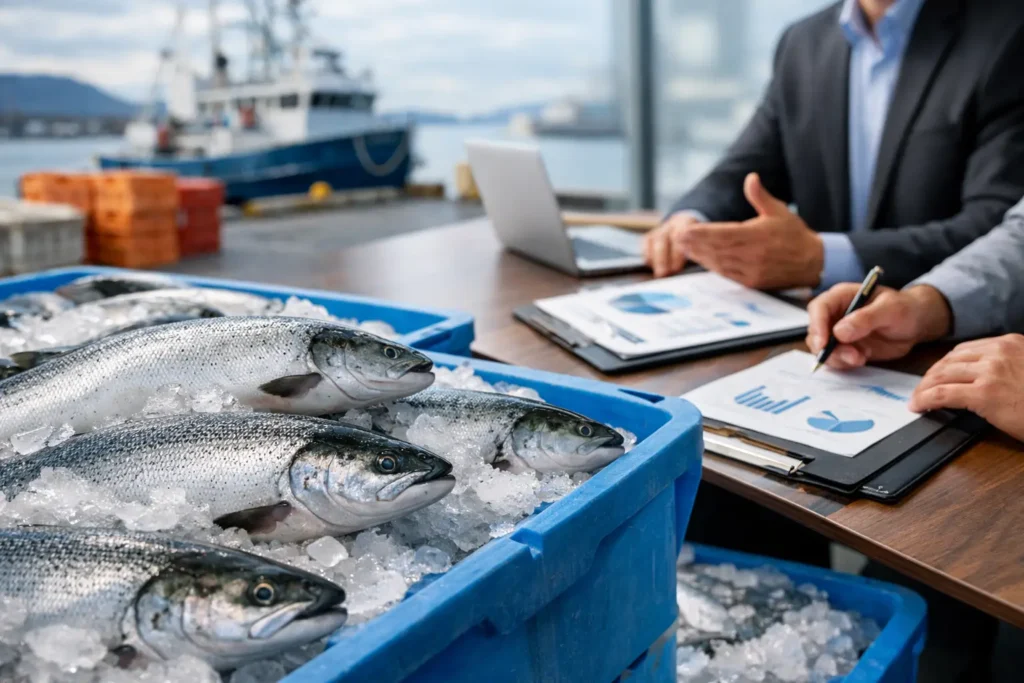
Whole salmon remains one of the most practical formats for high-volume seafood purchasing because it supports flexibility across channels. A buyer serving retail counters may prefer whole fish for in-house processing and presentation. A distributor supplying mixed accounts may use whole fish to allocate inventory by grade, size, or end use. Industrial buyers may require whole fish for downstream cutting, smoking, portioning, or value-added production.
The main advantage is control. With whole fish, the buyer retains more options after arrival. That matters when demand changes by customer segment, when yield targets differ across programs, or when pricing conditions shift between fresh and processed formats.
There is also a cost dimension. Whole fish can reduce the markup layers that come with secondary processing and repacking before export. That does not mean whole salmon is automatically the lowest-cost option in every case. If a buyer lacks processing capacity, labor efficiency, or cold storage discipline, trimmed or HOG formats may be more economical in practice. The right format depends on the buyer’s operating model, not just the per-kilo invoice price.
What professional buyers should evaluate before placing whole salmon bulk orders
Volume purchasing works best when specifications are defined early and documented clearly. Many supply issues begin not with product quality but with vague assumptions between seller and buyer.
Product format and size range
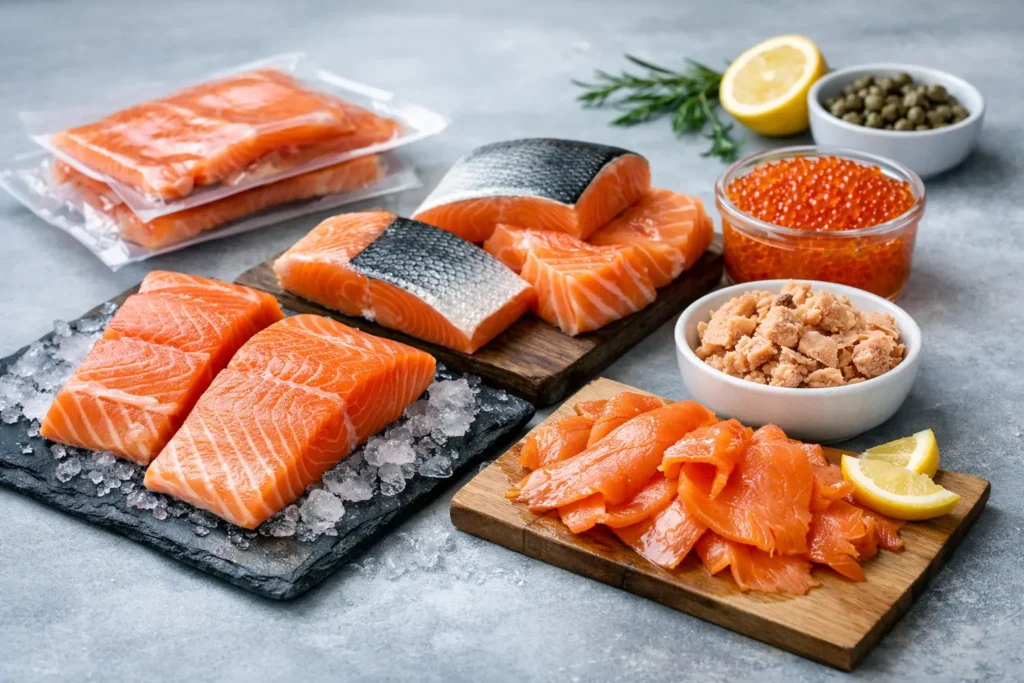
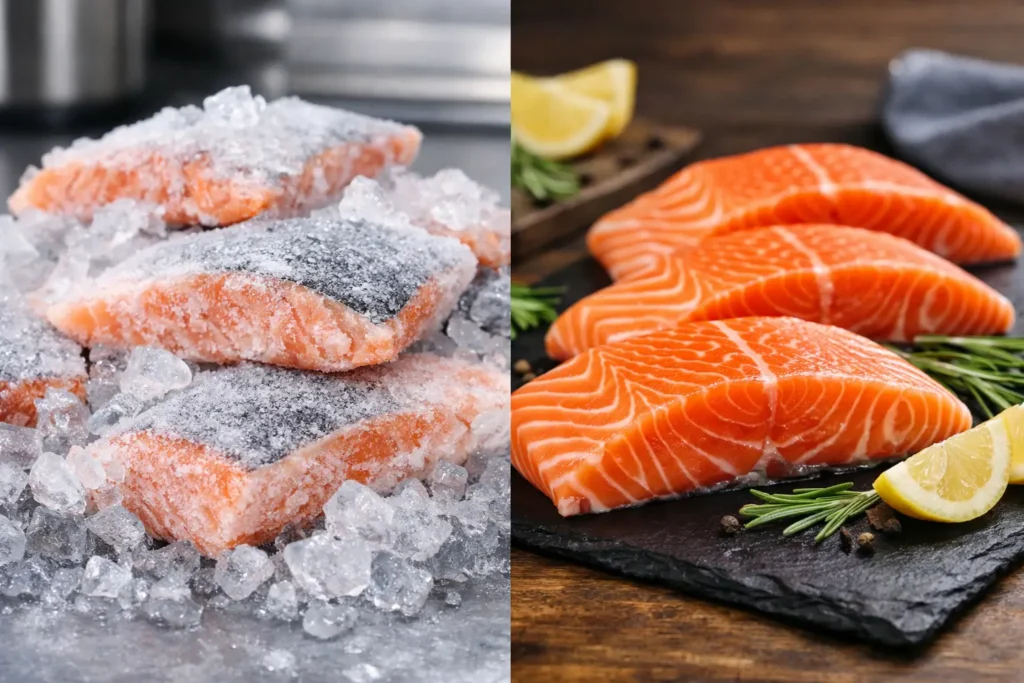
Whole salmon can be supplied fresh or frozen, and specifications should go well beyond that basic distinction. Buyers typically need alignment on weight range, farming origin, grading standard, harvest timing, and whether fish are whole round or HOG. If the product is intended for retail display, visual quality and uniformity may matter more. If it is intended for further processing, consistency in size and fat profile may be the stronger priority.
A broad size range may create a lower entry price, but it can increase sorting time and reduce production efficiency at the destination. Tighter specifications usually improve downstream handling, although they may narrow availability during certain periods.
Cold chain and transit planning
For international seafood buyers, logistics performance is as important as fish quality at origin. Fresh whole salmon requires disciplined temperature management, export coordination, and realistic transit timing. Frozen product offers more storage flexibility and can reduce exposure to short-term freight disruption, but it may not suit every sales channel.
The trade-off is simple. Fresh supports premium positioning and immediate distribution, while frozen supports inventory planning and broader shipping resilience. Many buyers use both depending on season, market demand, and freight conditions.
Documentation and traceability
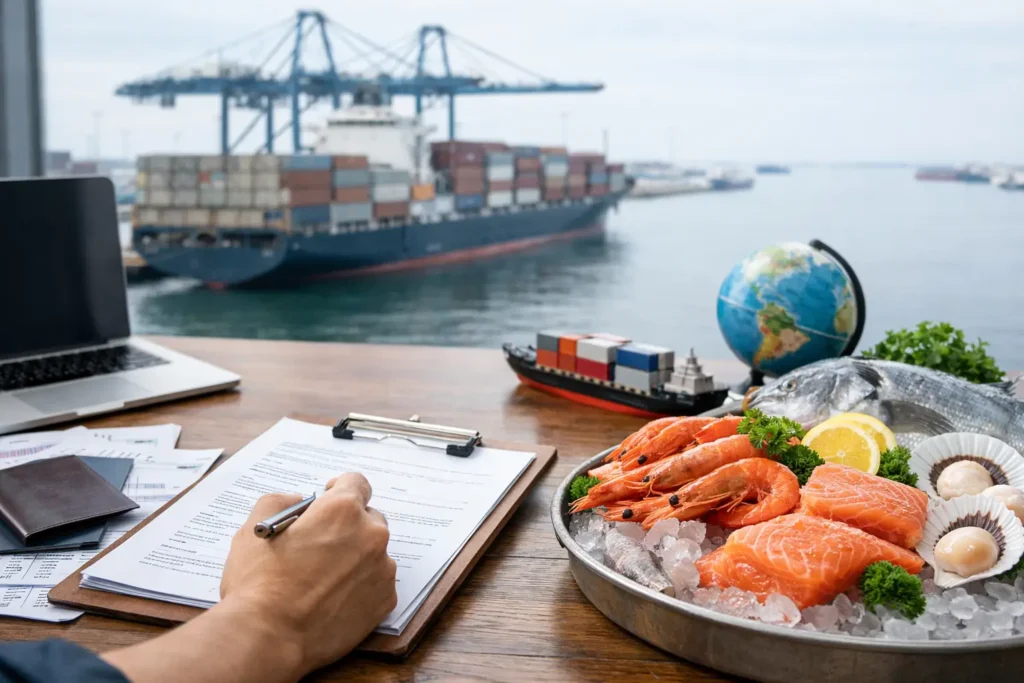
Large-volume seafood imports require more than a packing list and invoice. Buyers need confidence that the supplier can support export documentation, health certificates, origin records, and product traceability in line with destination market requirements. This is especially important for procurement teams managing compliance reviews, customer audits, or private label supply programs.
Traceability is also a commercial protection tool. When product origin, farm source, and processing pathway are clearly documented, buyers reduce the risk of disputes and strengthen their own position with downstream customers.
Sourcing whole salmon bulk orders from Norway
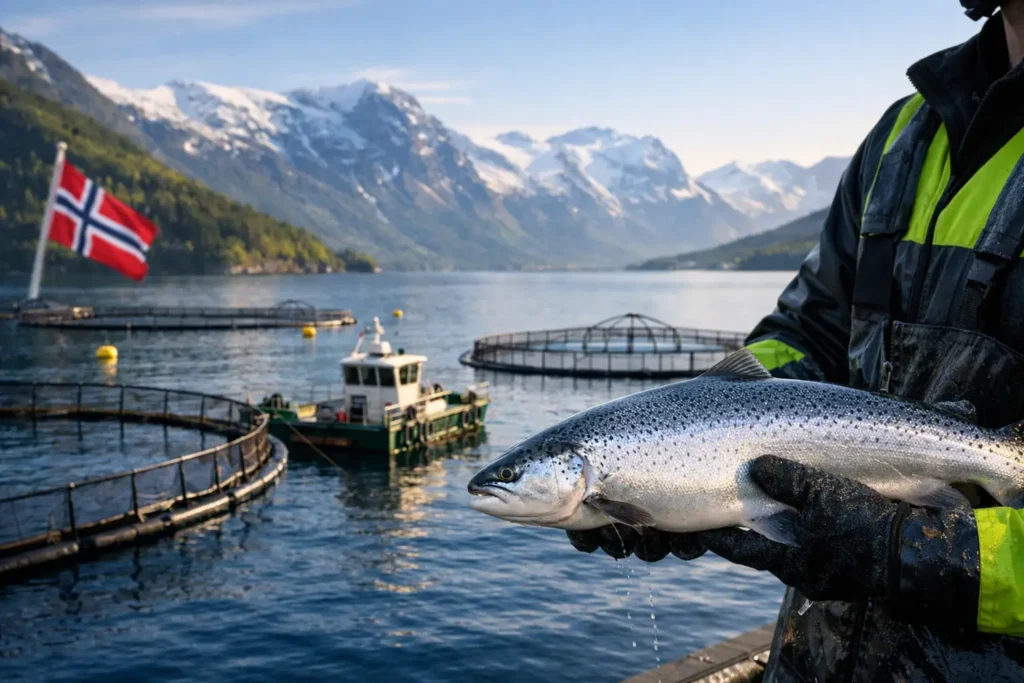
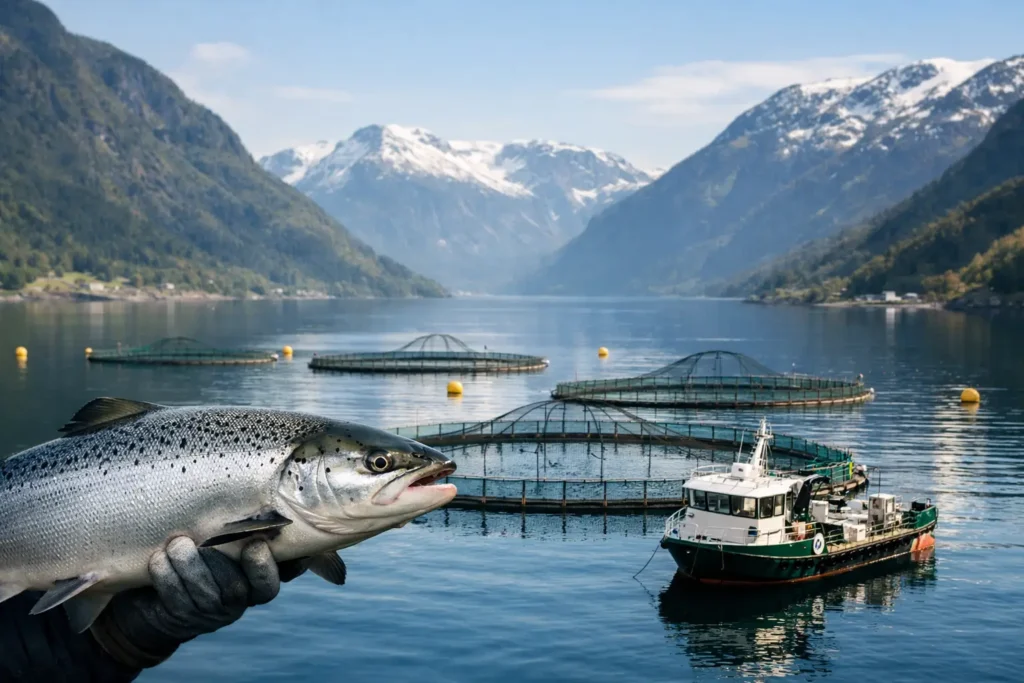
Norwegian salmon holds a strong position in international wholesale markets for a reason. Buyers associate it with consistent farming standards, mature processing infrastructure, and high export competence. For bulk purchasing, those strengths matter because scale only works when supply is predictable.
Factory-direct sourcing from Norway can improve both transparency and pricing structure. Instead of building a purchase through multiple traders, buyers can work closer to the production side and reduce intermediary costs. That often leads to clearer communication around harvest schedules, available volumes, and specification control.
This model is particularly relevant for US and global buyers that need stable recurring shipments rather than opportunistic spot purchases. A supplier with export experience and direct processing access can support continuity better than a marketplace-style seller that sources opportunistically from different channels.
Nordpoll Seafood operates in that direct wholesale model, which is why the conversation centers on volume, specifications, and delivery planning rather than retail-style product listings.
Pricing in whole salmon bulk orders
Price matters, but experienced procurement teams know that headline price alone can be misleading. The real question is landed value. That includes the product cost, freight profile, yield outcome, storage implications, and the operational impact of any inconsistency.
A lower unit price can become expensive if the shipment arrives with poor size uniformity, weak packaging performance, or incomplete paperwork. A slightly higher factory price may produce better net value when it reduces labor, shrink, claims, and supply interruptions.
Seasonality also plays a role. Salmon prices move with harvest patterns, demand cycles, global freight conditions, and market competition. Bulk buyers usually benefit from a supply relationship that allows planning over time instead of reacting to weekly price swings alone. In volatile periods, continuity can be more valuable than chasing the lowest available quote.
Common mistakes buyers make
One common mistake is treating whole fish as a commodity without enough attention to use case. The same salmon may perform differently for supermarket counters, fine dining kitchens, smokehouses, and industrial portioning lines. Buying without aligning format to application often creates avoidable waste.
Another mistake is underestimating logistics complexity. International seafood shipments require precise timing and handling. Buyers who focus only on source price without reviewing packaging method, transit route, temperature control, and customs readiness may expose themselves to more risk than expected.
A third issue is fragmented sourcing. Splitting volume across too many short-term suppliers can appear to create flexibility, but it often produces uneven quality and weaker accountability. For businesses with regular demand, a trusted long-term seafood partner usually delivers better operational results than a series of transactional purchases.
Building a reliable bulk salmon supply program
The strongest bulk purchasing programs are built around repeatability. That means clear specifications, agreed quality standards, realistic lead times, and communication that reflects how seafood logistics actually work. It also means choosing a supplier that understands both production realities and destination market expectations.
For B2B buyers, reliability is not only about receiving fish on time. It is about receiving the right fish, in the right format, with the right documentation, at a commercial level that supports the business over time. That is especially important when seafood is tied to retail promotions, contract supply, menu planning, or industrial production schedules.
When evaluating suppliers for whole salmon bulk orders, buyers should look for practical strengths rather than broad marketing claims. Direct sourcing capability, export documentation competence, traceability, sustainable sourcing standards, and stable cold-chain execution are the indicators that matter most.
Whole salmon remains a smart purchasing format for many commercial buyers because it keeps control closer to the buyer and can improve both pricing efficiency and supply flexibility. The key is not simply buying more volume. It is buying that volume through a supply structure that protects quality, margin, and continuity from origin to final market.
If your business depends on consistent premium seafood, the best purchasing decision is rarely the fastest quote on the table. It is the supplier relationship that keeps your program running when the market gets tight.