
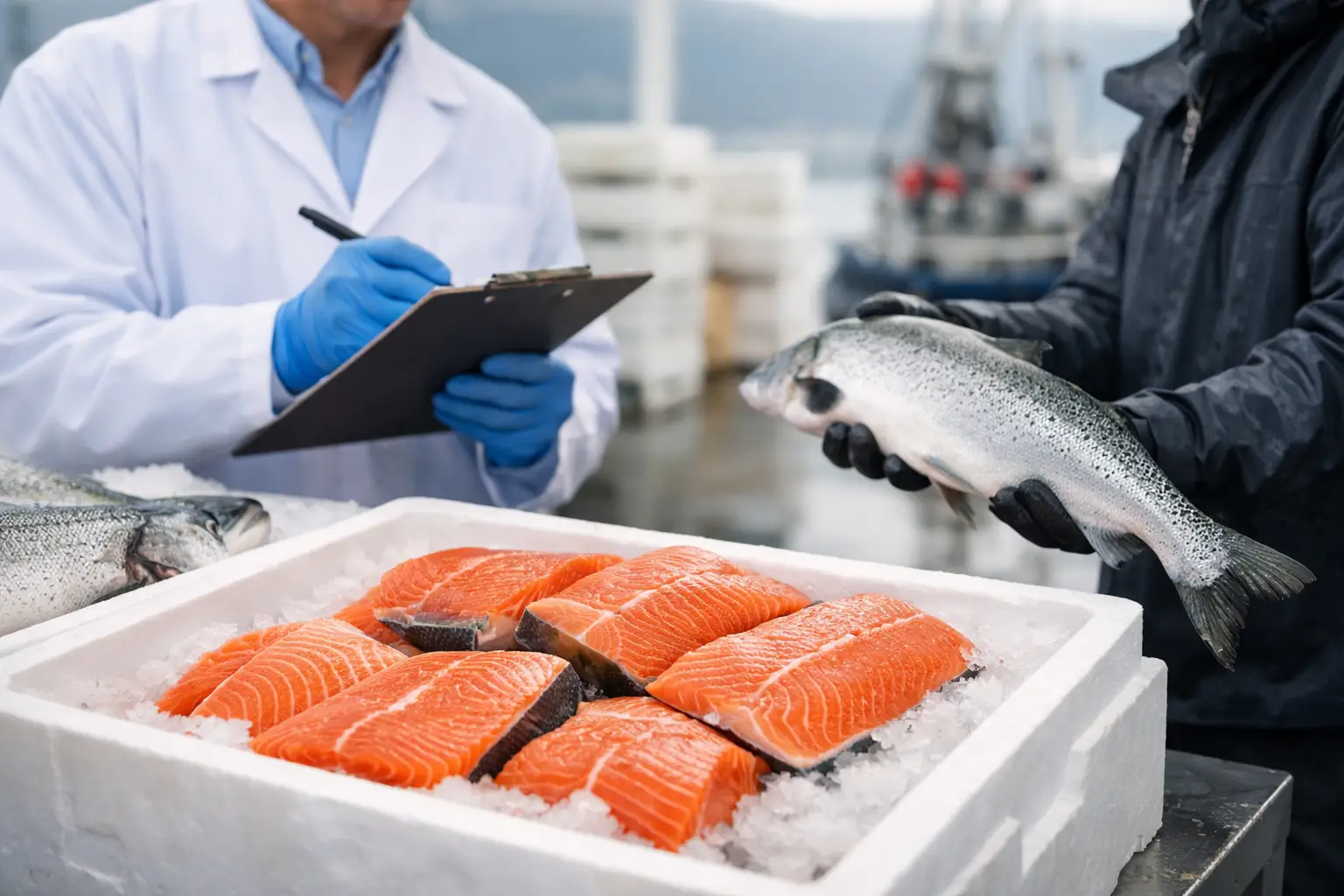
A seafood distributor sourcing salmon is not simply buying fish by species, size, and price. The purchase decision affects retail shelf performance, menu consistency, production yields, food safety compliance, and customer trust. For high-volume buyers, the right supplier must provide dependable product specifications and an export process that holds up from the Norwegian facility to the receiving dock.
Norwegian salmon remains a preferred choice for buyers who need premium quality, recognized origin, and year-round availability. Yet not every supply program offers the same control over farming standards, processing, documentation, and logistics. The difference becomes visible when orders scale, specifications tighten, or transport schedules change.
1. Start With Verified Origin and Farm Standards
Origin is a commercial requirement, not a marketing detail. Buyers should know seafood distributor sourcing salmon which facility processed it, and what documentation supports the product’s origin. Clear traceability makes it easier to manage customer audits, retailer requirements, import procedures, and quality claims.
A professional supplier should be able to identify the farming and processing chain behind each shipment. This includes harvest information, production batches, handling records, and relevant food safety documentation. When a distributor cannot verify these points quickly, it creates risk for everyone downstream.
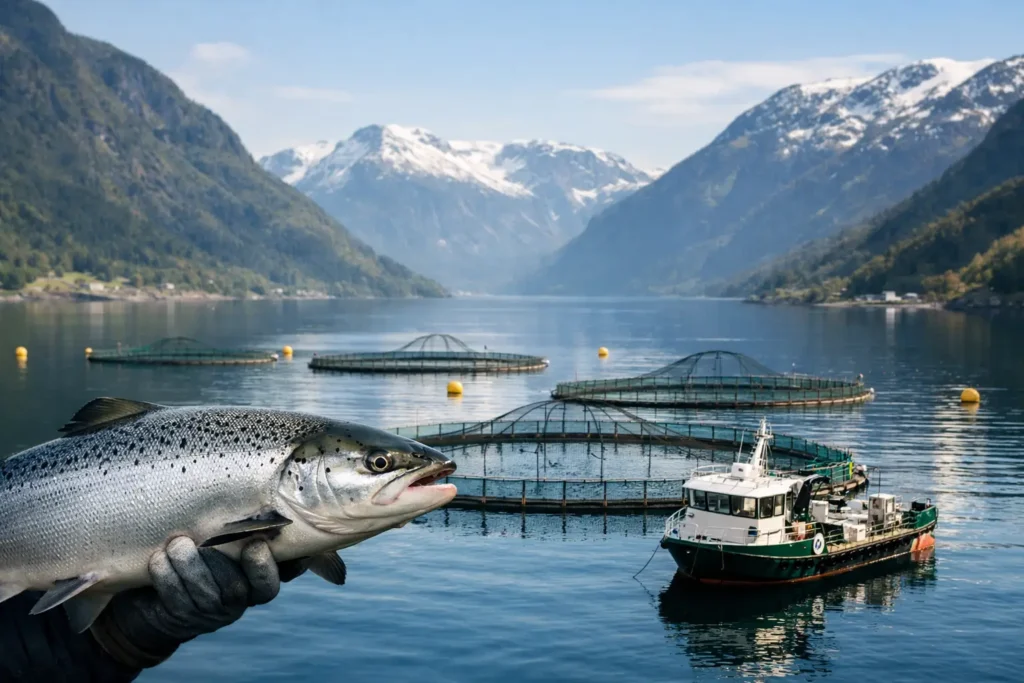
Norwegian farmed salmon is produced under established veterinary oversight and strict food safety controls. Still, buyers should confirm the standards attached to the specific source rather than relying on broad country-of-origin assumptions. Certification requirements can differ by customer, market, and intended use, especially for retail programs and institutional foodservice.
2. Define Product Format Before Comparing Prices
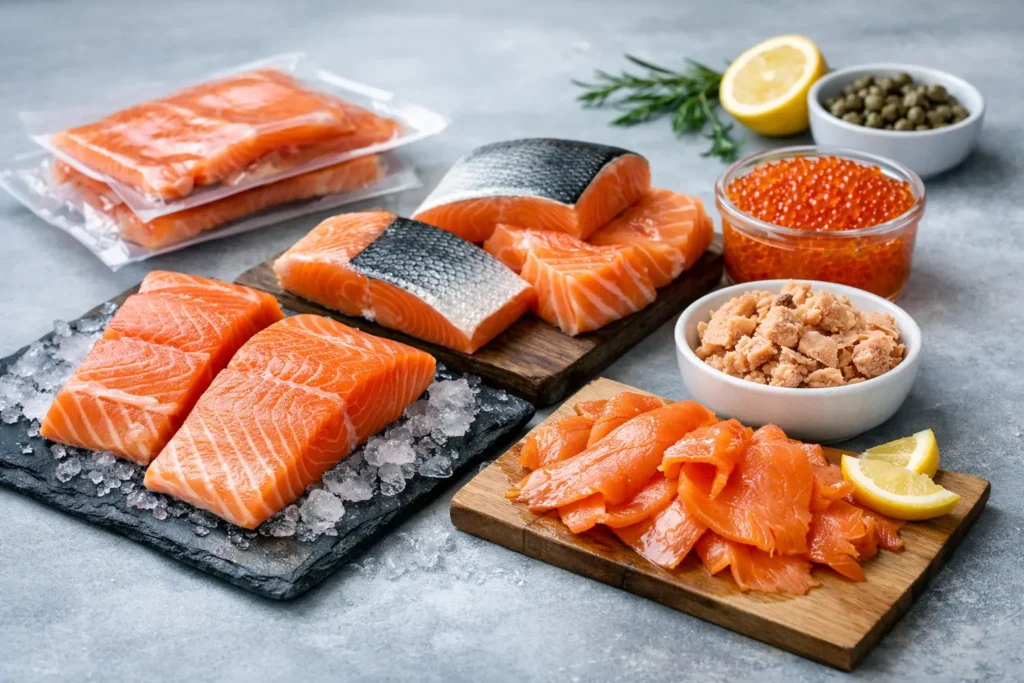
A low price is only competitive when it applies to the exact product format required. Whole fish, HOG salmon, trimmed fillets, portions, fresh product, and frozen product each have different yields, handling needs, shelf-life profiles, and freight economics.
For example, HOG salmon can be an efficient choice for processors and distributors with in-house cutting capability. It offers flexibility and may reduce purchase costs per pound, but it requires labor, equipment, and controlled processing capacity at destination. Trimmed fillets may carry a higher unit price, yet they can improve operational efficiency for foodservice buyers or retailers seeking ready-to-merchandise product.
Size grading deserves the same attention. A restaurant supplier may need a narrow size range for portion control, while an industrial buyer may prioritize volume and yield across a broader grade. The specification should state the format, weight range, trim standard, packaging configuration, fresh or frozen condition, and any customer-specific labeling requirements before a quote is evaluated.
3. Assess Quality Through Consistency, Not One Sample
A sample can confirm that a seafood distributor sourcing salmon. It does not prove that the supplier can deliver the same standard every week or every container. Consistency is the core quality measure for a wholesale supply program.
Buyers should ask how quality is checked at harvest, processing, packing, and dispatch. Relevant details include flesh appearance, fat distribution, color expectations, fillet trim, pinbone treatment where applicable, temperature control, packaging integrity, and net weight accuracy. These points are particularly important for supermarket and premium foodservice accounts, where inconsistency quickly becomes a complaint, claim, or rejected delivery.
Specifications should also account for normal biological variation. Salmon is a natural product, and no responsible supplier should promise identical fish in every shipment. The goal is controlled variation within an agreed commercial standard, backed by clear grading and quality assurance procedures.
4. Verify Processing Capacity and Factory Access
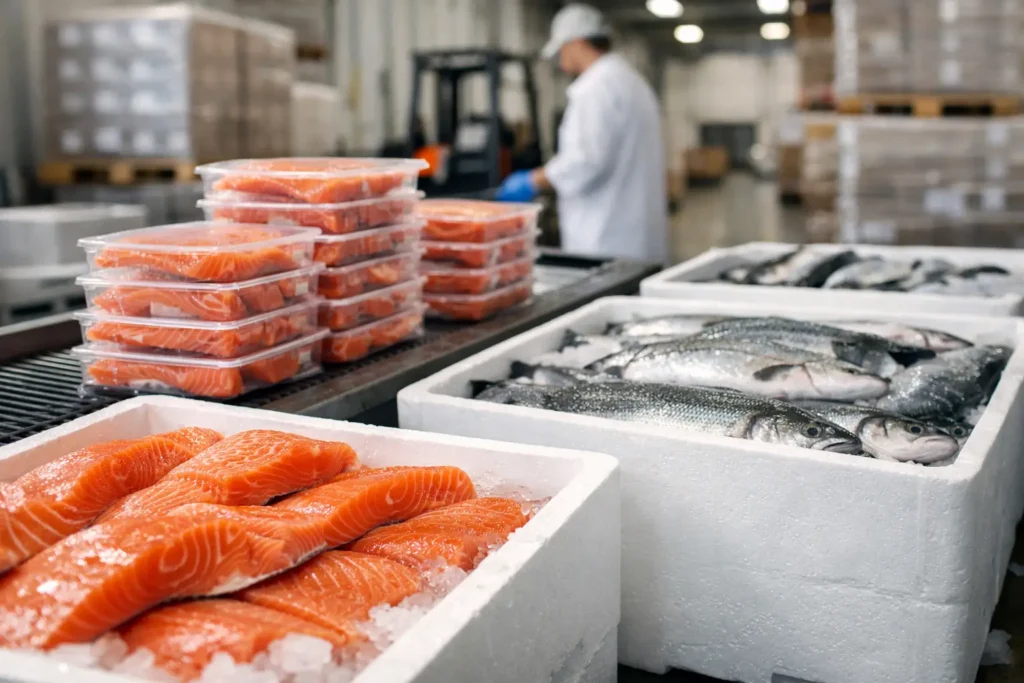
The supply chain often determines the final cost more than the farm-gate price. Multiple intermediaries can add margin, delay information flow, and make it harder to resolve a quality issue. Factory-direct sourcing gives buyers better visibility into production planning, available formats, and shipment status.
A supplier with direct access to certified farms and processing facilities can coordinate the product closer to its source. This matters when a buyer needs a specific cut, packing method, label, pallet configuration, or delivery window. It also improves the supplier’s ability to communicate realistic lead times instead of offering inventory that may not be available when the order is confirmed.seafood distributor sourcing salmon
For large-volume programs, ask whether the supplier manages direct factory relationships or purchases through layers of traders. There is nothing inherently wrong with using a trading company, particularly for small mixed orders or short-term spot requirements. However, long-term salmon sourcing benefits from direct production access, transparent specifications, and a clear party responsible for fulfillment.
5. Evaluate Cold-Chain Control From Plant to Destination
Fresh salmon has limited tolerance for poor temperature management. A product can leave the processing facility in excellent condition and still arrive with reduced shelf life if the cold chain is not managed correctly. Frozen salmon has more flexibility, but it still requires disciplined storage, loading, and transport controls to prevent damage and quality loss.
The supplier should be able to explain the cold-chain plan in practical terms: how product is packed, how temperatures are monitored, when it is dispatched, which transport mode is used, and how delivery timing is managed. For U.S. buyers, this should include familiarity with export procedures and documentation required for international seafood shipments.
Transit time is only one part of the equation. A fast shipment with poor coordination can create problems at customs, freight terminals, or the receiving warehouse. Reliable global delivery depends on export documentation, freight planning, customs readiness, and active communication when schedules change.
6. Review Export Documents Before the First Large Order
Documentation should be treated as part of the product. Missing or incorrect paperwork can delay cargo, create storage costs, and disrupt a customer’s production or retail plan. A dependable export supplier understands that invoices, packing lists, health certificates, origin information, product specifications, and labeling details must match the shipment exactly.
Requirements differ by destination and buyer type. A supermarket chain may request detailed traceability records and private-label packaging information. A distributor may need specific carton labels and pallet data for warehouse intake. An industrial buyer may focus on batch control, net weight, and production documentation. The supplier should confirm these requirements before production, not after the container is loaded.
For repeat business, documentation discipline becomes a significant efficiency advantage. Standardized records reduce receiving delays, improve audit readiness, and help procurement teams compare shipments over time.
7. Build the Supply Program Around Volume and Risk
The best salmon supply arrangement depends on volume, forecast accuracy, storage capacity, and market demand. Spot buying can work for opportunistic purchases or seasonal demand. It can also expose buyers to price swings, limited availability, and inconsistent product selection.
A structured supply program offers better planning. Buyers can align expected volume, preferred sizes, formats, shipment frequency, and delivery locations with the supplier’s production schedule. This approach is especially valuable for retail promotions, restaurant groups, and processors that cannot afford gaps in supply.
Price should remain transparent, but it should not be the only decision point. A lower invoice price can be offset by lower yield, short shelf life, late delivery, incomplete documents, or product that does not meet the agreed specification. Total landed value is a more useful measure: product quality, usable yield, freight performance, documentation accuracy, and service reliability all affect the final cost.
Choosing a Long-Term Salmon Supply Partner
A strong supplier relationship is built on clear specifications and direct communication. Buyers should expect accurate product information, realistic production timelines, and prompt responses when requirements change. In return, reliable forecasts and planned order volumes help suppliers reserve capacity and deliver more consistent results.
Nordpoll Seafood supports business buyers with factory-direct Norwegian salmon and trout in fresh, frozen, whole, HOG, and trimmed formats. The focus is premium seafood, traceable sourcing, factory prices, and export-ready global delivery for customers that require dependable volume.
For procurement teams, the practical next step is to put the requirements on paper before requesting a quote. Define the format, size grade, destination, order frequency, documentation needs, and acceptable delivery window. That clarity gives a qualified supplier the information needed to build a salmon program that protects quality, controls cost, and supports long-term growth.