

A salmon contract can look competitive when it is signed and still become expensive if supply timing, product specifications, or cold-chain execution fail later. For procurement teams, global salmon market trends are not abstract industry news. They directly affect delivered cost, menu planning, retail promotions, processing yields, and the ability to keep customers supplied with consistent premium seafood.
The market remains attractive because salmon has broad demand across retail, foodservice, sushi, smoked products, ready-to-cook meals, and industrial processing. At the same time, production is concentrated in a limited number of origins and depends on biological conditions that cannot be managed like a standard factory line. Buyers need to balance price opportunity with dependable access, documented quality, and export-ready logistics.
Global Salmon Market Trends Shaping Procurement
The defining feature of the salmon market is limited supply flexibility. Norway and Chile remain the primary producing regions, with additional volume from the United Kingdom, Canada, the Faroe Islands, Iceland, and other origins. New farming capacity takes time to permit, build, stock, and harvest. When demand rises faster than harvestable volume, prices can move quickly.
This makes salmon different from many center-of-plate proteins. A buyer cannot assume that a short-term price dip will remain available through the next purchasing cycle. Biomass development, sea temperatures, fish health, harvest schedules, processing capacity, freight availability, currency movements, and seasonal demand can all change the market balance.
For US importers and distributors, the practical question is not simply whether salmon prices are up or down. It is whether the offered product will arrive in the required format, weight range, and condition at the required time. A lower ex-works offer can lose its value if it creates inconsistent deliveries, excessive trim loss, late arrivals, or uncertain documentation.
Premium demand is spreading across channels
Salmon demand is no longer driven only by upscale restaurants and fresh seafood counters. Supermarkets continue to use salmon as a high-value protein in fresh displays, meal kits, portion packs, and private-label lines. Foodservice operators need dependable fillets for grill menus, bowls, sushi programs, and prepared foods. Industrial buyers require standardized raw material for smoking, marinating, portioning, and further processing.
This wider demand base supports long-term consumption, but it also means more buyers are competing for the same harvest periods and preferred specifications. Fresh superior-grade fish, large-size whole salmon, carefully trimmed fillets, and reliable frozen inventory may each follow different availability patterns. Procurement should therefore be organized by end use, not just by a single generic salmon price.
Value-added specifications carry greater importance
The gap between the price of whole fish and the effective cost of a finished usable portion can be substantial. Buyers increasingly evaluate yield, trim standard, pin-bone treatment, skin-on or skinless requirements, packing format, glaze level for frozen products, and portion consistency alongside the base price.
For a processor, HOG salmon may be the right purchase because in-house cutting capacity creates value. For a restaurant distributor or retail program, trimmed fillets can reduce labor, improve consistency, and simplify inventory handling. There is no universally best format. The best choice depends on labor costs, yield targets, customer specification, storage capacity, and production throughput.
Supply Constraints Will Continue to Influence Pricing
Salmon farming is highly regulated and biologically sensitive. Fish health management, sea lice controls, environmental limits, feed availability, and site-level production rules can restrict harvest volume. These constraints support the premium position of responsibly farmed salmon, but they also make supply less elastic than buyers may expect.
Norwegian salmon is especially relevant to international buyers because Norway combines large-scale production, established processing infrastructure, strict control systems, and extensive export experience. Yet Norwegian supply is not unlimited. Strong demand from Europe, North America, and Asia can tighten availability for specific sizes and fresh shipping windows.
Seasonality matters as well. Demand often strengthens around retail promotions, holiday periods, and foodservice peaks, while weather and logistics conditions can affect harvest and transport operations. Buyers that wait to cover requirements until a promotion is confirmed may face a smaller selection of specifications or a higher replacement cost.
Fresh and frozen sourcing require different planning
Fresh salmon delivers strong value for premium retail counters and foodservice programs where appearance, texture, and short shelf-life positioning matter. It also requires accurate forecasting, disciplined receiving procedures, and a cold chain that performs at every handoff. The cost of a delayed shipment can exceed the benefit of a slightly lower purchase price.
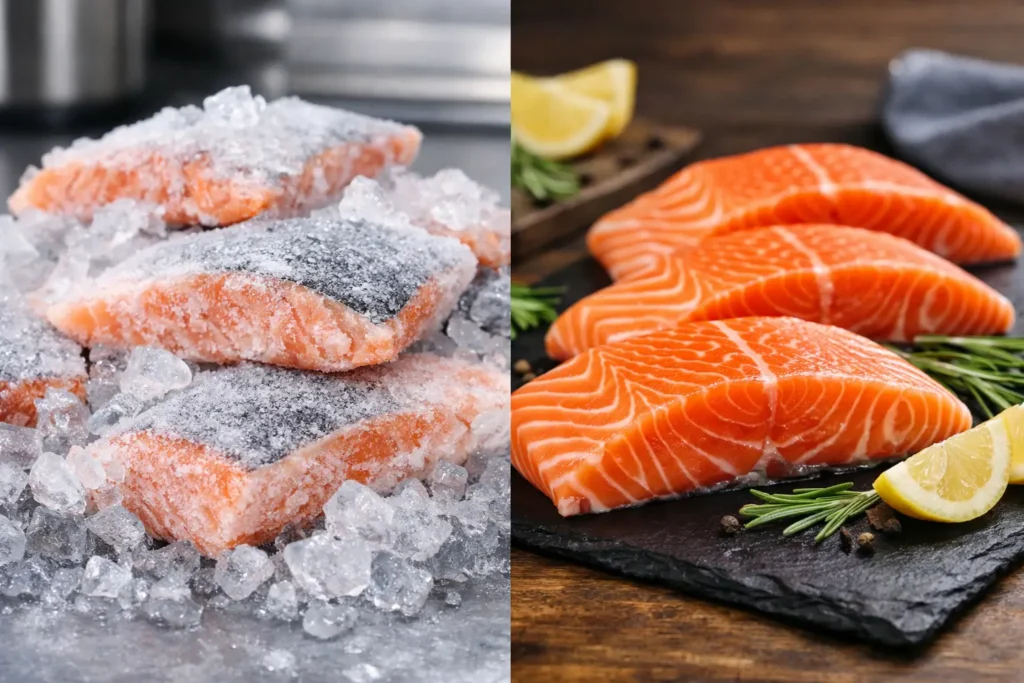
Frozen salmon gives buyers more inventory control and can protect production schedules when fresh supply becomes tight. Properly processed frozen whole fish and fillets can provide stable quality for distribution, retail, and industrial applications. The trade-off is that inventory must be planned earlier, specifications must be clear, and freezer capacity becomes part of the sourcing decision.
A balanced program often uses both. Fresh volume can serve immediate premium demand, while frozen inventory provides continuity for core items, contingency coverage, and longer-distance distribution. This approach is particularly useful for buyers managing multiple customer segments with different shelf-life requirements.
Traceability Is Now a Commercial Requirement
Traceability has moved beyond a compliance checkbox. Major retailers, distributors, and foodservice groups increasingly need to verify origin, farm standards, processing location, lot information, health documentation, and chain-of-custody controls. A supplier that cannot provide organized documentation can create risk for the buyer even if the fish itself meets quality expectations.
For Norwegian salmon, buyers should expect clear product identification, export documentation, food safety controls, and information that supports their own customer requirements. Sustainability claims should also be supported by recognizable standards and practical farm-level accountability, not broad marketing language.
The commercial benefit is straightforward. Reliable traceability reduces the time required to approve suppliers, respond to customer questions, manage recalls if needed, and maintain confidence in a premium seafood program. It also helps buyers differentiate verified salmon from commodity offers with incomplete origin details.
Logistics Is Part of the Product
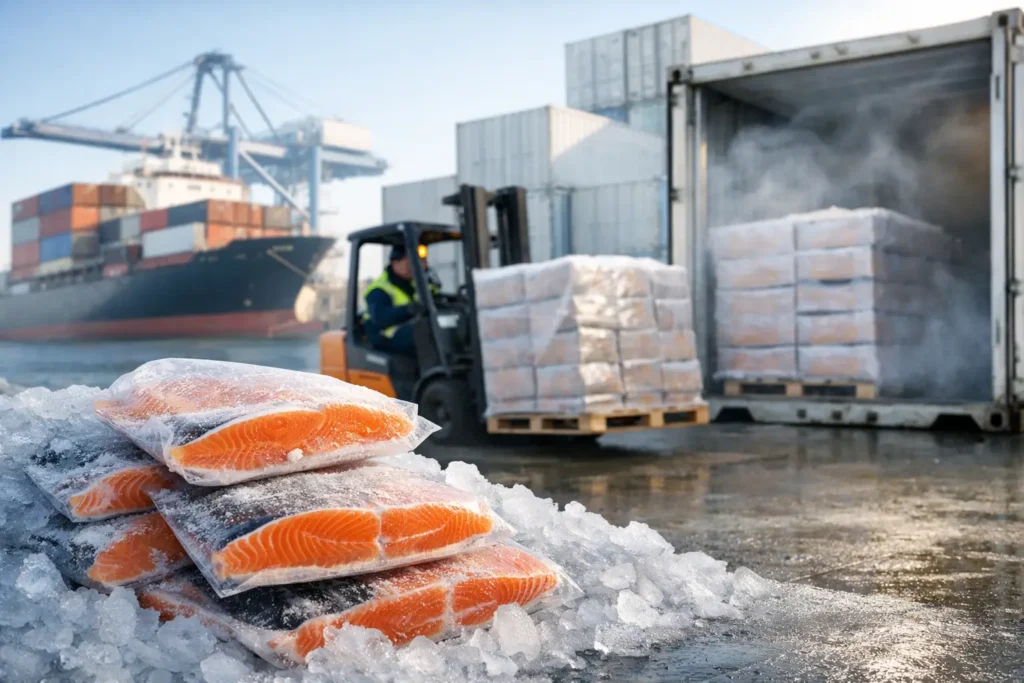
International salmon procurement succeeds or fails in the logistics plan. Product temperature, flight schedules, customs clearance, trucking capacity, warehouse appointments, and destination handling all affect final quality. Fresh salmon has a narrow operational window, so an exporter must understand not only packing and dispatch, but also the receiving realities of the US buyer.
Buyers should assess whether a supplier can work with the required Incoterms, packaging specifications, pallet configuration, labeling, documentation, and delivery schedule. They should also confirm how exceptions are handled. A supply partner’s value becomes most visible when weather disrupts an air route, a shipment needs rebooking, or a customer requires a rapid adjustment in format or volume.
Factory-direct sourcing can improve this process by reducing unnecessary handoffs between farm, processor, trader, and buyer. Fewer intermediaries can mean clearer product information, better coordination on specifications, and more competitive factory prices. It does not eliminate market risk, but it gives buyers a more direct view of the supply chain and the decisions affecting their orders.
How Buyers Can Build More Stable Salmon Programs
The most effective purchasing strategy is usually a structured supply program rather than repeated spot buying. Spot purchases can be useful for short-term gaps or opportunistic volume, but they leave buyers exposed when demand accelerates or preferred sizes become scarce.
Start with accurate demand segmentation. Separate the requirements for whole fish, HOG fish, fresh fillets, frozen fillets, and any specialized trim or packing standard. Then identify which volumes require fixed weekly coverage, which can be flexible, and which need backup inventory. This gives suppliers the information needed to reserve appropriate production and shipping capacity.
Price management should be tied to a clearly defined specification. A quote for fresh Norwegian salmon is not meaningful without size range, trim, quality grade, packing, delivery point, and timing. Comparing offers without matching these details can produce misleading savings calculations.
Buyers should also qualify suppliers on operational capability, not only price. Confirm processing relationships, certifications, export documentation, cold-chain procedures, communication standards, and contingency planning. A trusted long-term seafood partner should be able to discuss realistic availability and trade-offs directly, rather than promising every format at every time.
For procurement teams seeking Norwegian salmon and trout, Nordpoll Seafood supports factory-direct sourcing for fresh, frozen, whole, trimmed, and HOG products. The objective is practical: premium seafood, traceable supply, competitive factory pricing, and global delivery planned around the requirements of professional buyers.
The strongest salmon programs are built before the market becomes tight. Define the specification, secure the supply path, and choose partners that can protect quality from the processing facility to your receiving dock.