
When a shipment is late, grade is inconsistent, or documents are incomplete, the cost lands on your side of the business fast. For importers, distributors, retailers, and foodservice buyers, choosing among norwegian salmon suppliers is not a branding exercise. It is a procurement decision that affects margin, continuity, compliance, and customer confidence.
The market offers no shortage of sellers, but not every supplier operates at the same level. Some are genuine source partners with processing access, export experience, and stable cold-chain execution. Others are trading intermediaries with limited control over production slots, product specs, or shipment timing. That distinction matters more than price alone.
What separates strong norwegian salmon suppliers from the rest
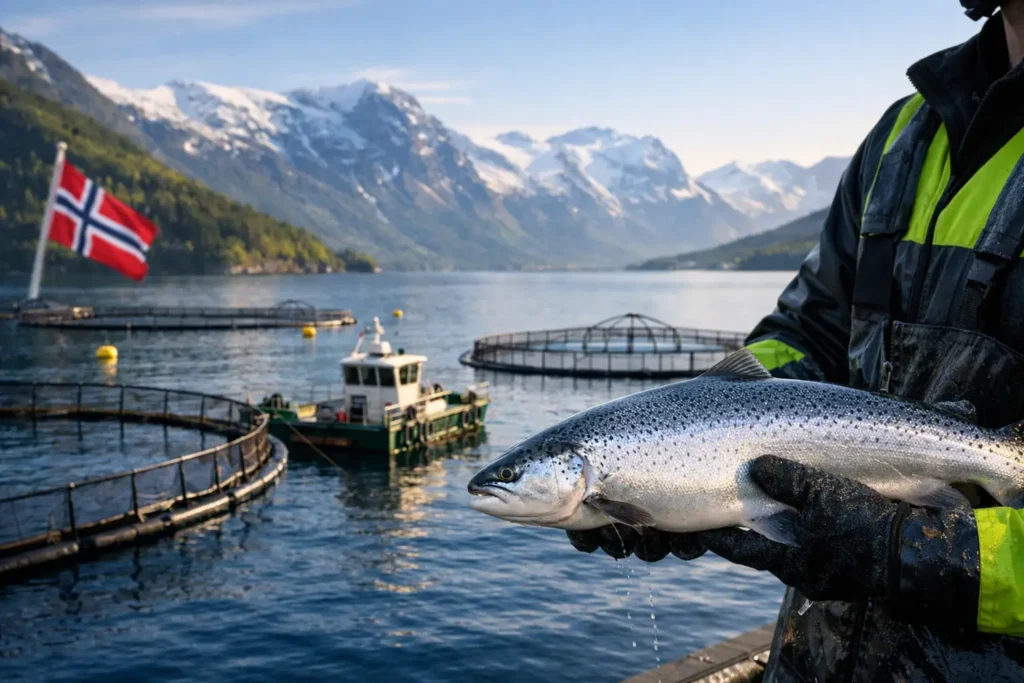
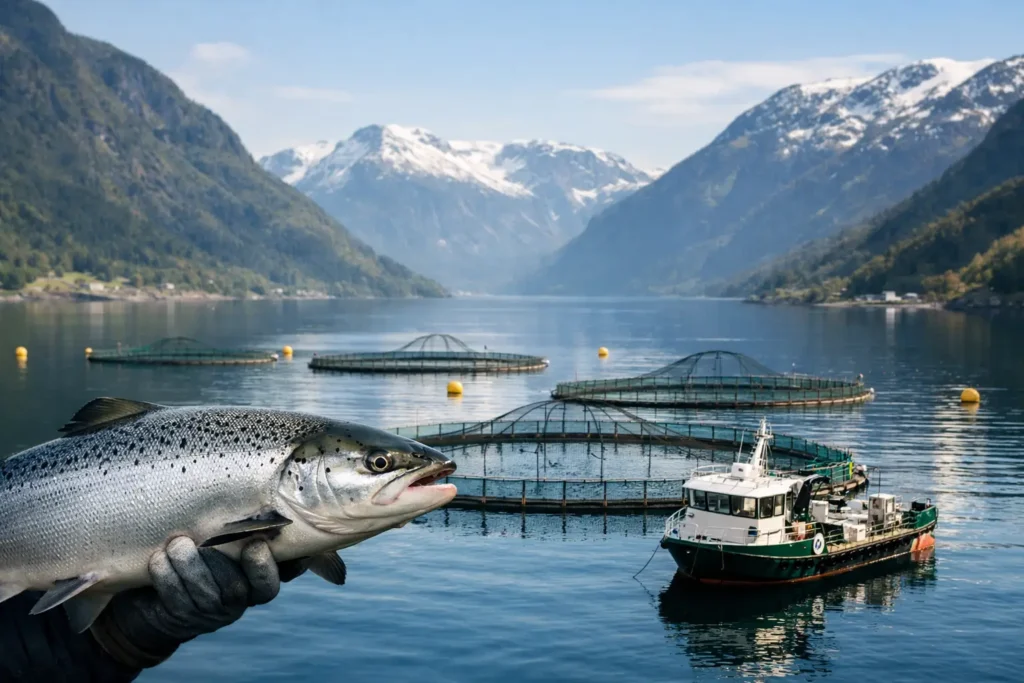
A serious Norwegian salmon suppliers should be able to show where the fish comes from, how it is processed, which specifications are available, and how export logistics are managed. If those answers are vague, the supply model is usually vague too.
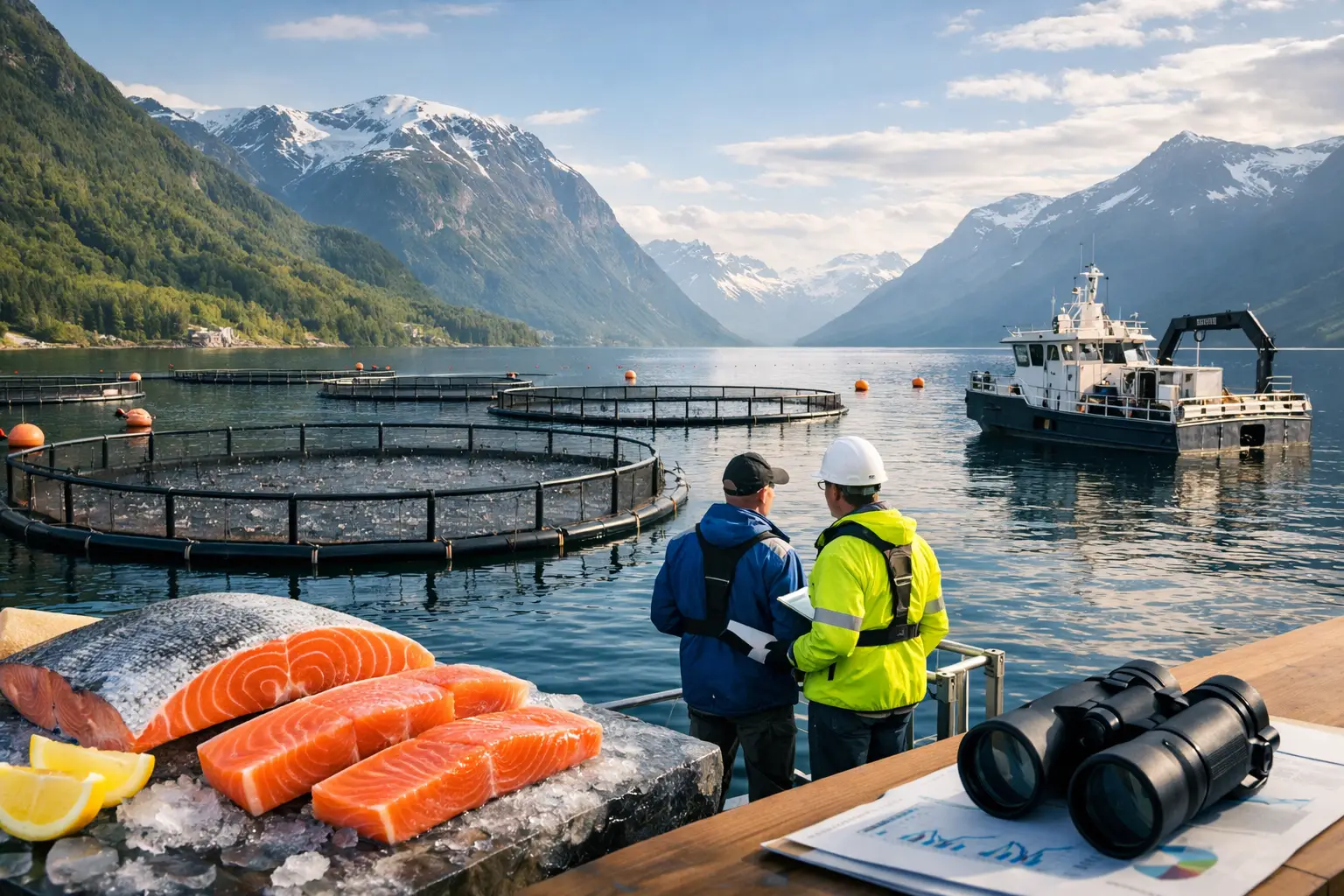
For B2B buyers, the real benchmark is operational control. That includes access to certified farms and processing facilities, dependable production planning, and documentation that supports customs clearance and food safety requirements. A supplier that can only quote price without clarifying product origin, harvest cycle, packing method, and shipping structure is not giving you enough to make a low-risk buying decision.
Factory-direct access is often the clearest advantage. It can reduce unnecessary markups, improve visibility on inventory and production schedules, and create more consistent communication when specifications change. That does not mean every direct supplier is automatically better, but it usually means fewer weak points between harvest and delivery.
Product format matters as much as origin
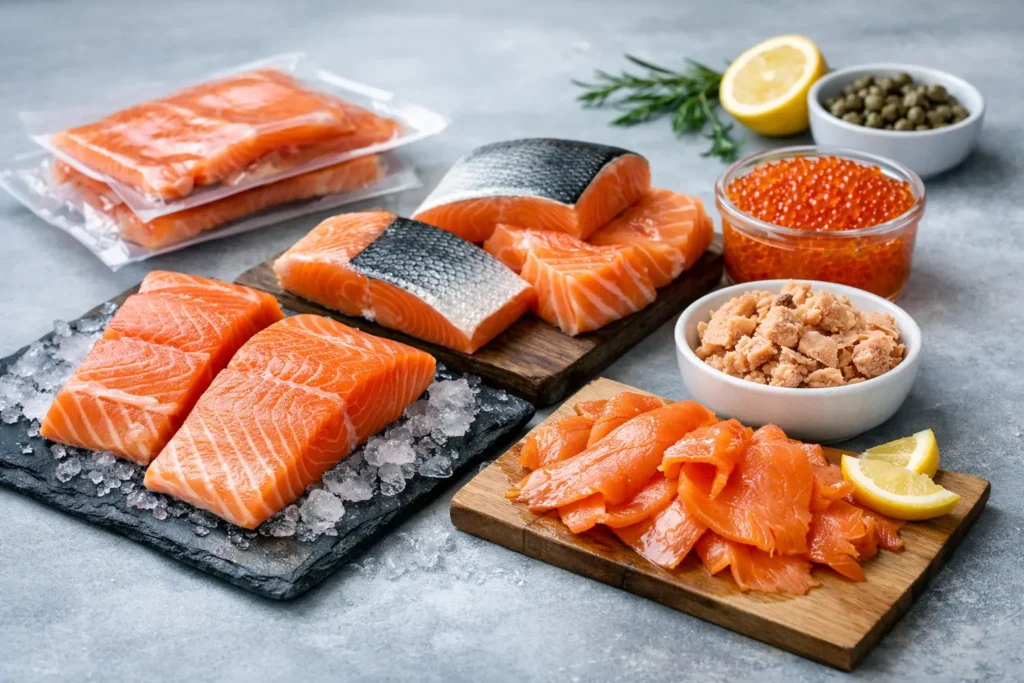
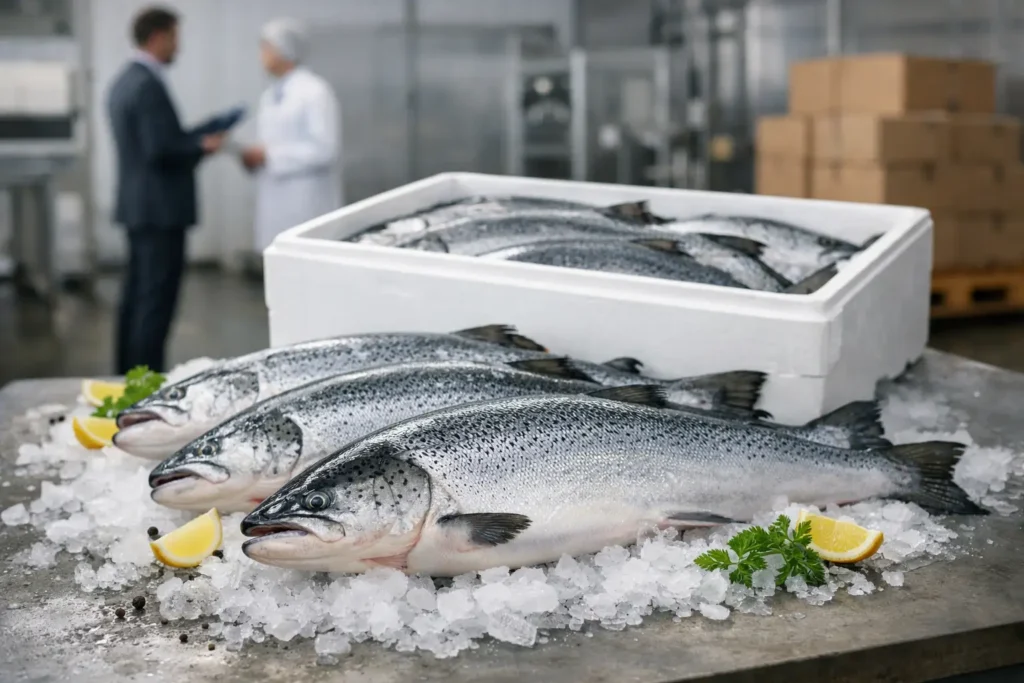
Norwegian salmon is not a single buying category. Bulk buyers typically need a supplier that can support the right format for their channel, whether that is fresh whole fish, frozen whole fish, trimmed fillets, portions, or HOG product for further processing.
A retail program may prioritize visual consistency, shelf life, and exact weight ranges. A distributor may need a mix of fresh and frozen formats to support different customer accounts. An industrial buyer may focus more on yield, cut specification, and predictable supply windows than on premium presentation. The best supplier for one business model may not be the best fit for another.
This is where many sourcing conversations go off track. Buyers ask for Norwegian salmon, but the practical question is which format, trim level, packing standard, and delivery rhythm best support your operation. A capable supplier should help define that early, because specification errors are expensive once product is packed and shipped.
Fresh, frozen, whole, trimmed, and HOG
Each format has a different commercial profile. Fresh salmon supports premium positioning and fast-turn programs, but it demands stronger logistics discipline and tighter delivery planning. Frozen product gives buyers more flexibility, especially for longer routes or inventory management, though the sales mix and end-use need to justify that choice.
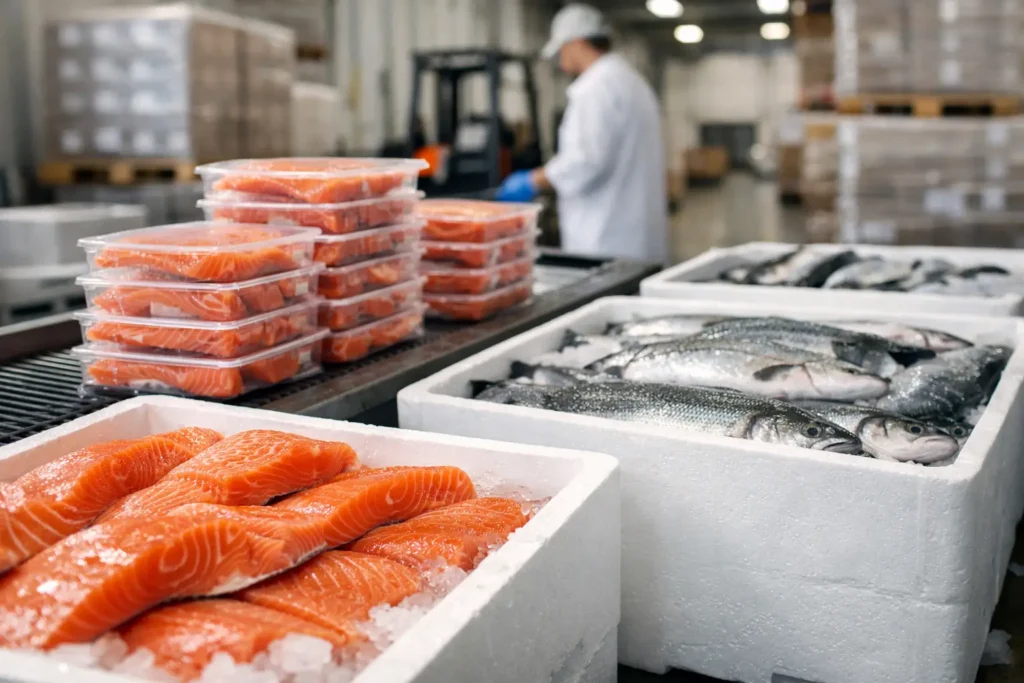
Whole fish can deliver cost advantages for buyers with in-house processing capacity. Trimmed and portion-ready formats reduce labor and improve handling efficiency downstream, but they also require tighter specification control at origin. HOG product remains relevant for many wholesale and industrial applications because it balances processing efficiency with transport economics.
A supplier that can support multiple formats is often more useful over time than one tied to a narrow product range. Procurement needs change. Seasonal demand shifts. Customer programs expand. Flexibility has real value.
Certifications and traceability are not optional
Professional buyers do not need broad sustainability claims. They need verifiable standards, lot traceability, and documentation that stands up during audits and import reviews.
Reliable norwegian salmon suppliers should be prepared to discuss farm sourcing, processing controls, food safety systems, and relevant certifications. Just as important, they should be able to connect paperwork to actual product movement. Traceability only matters if it works under pressure, especially when a customer asks for origin details, production data, or compliance records on short notice.
This is particularly important for US importers and large international buyers. Documentation gaps create delays, chargebacks, and avoidable risk. A strong supplier understands export paperwork as part of the product, not as an afterthought.
Ask how traceability works in practice
A useful test is to ask practical questions instead of broad ones. basic expectations in international seafood trade, but performance varies.
If the answers are slow or unclear before the first order, they are unlikely to improve when volumes increase.
Price should be competitive, but structure matters more
Most buyers start with price, and that is reasonable. Salmon is a volume business, and margin pressure is real. Still, a low quote means very little if the supplier cannot hold specification, protect transit quality, or deliver consistently.
The more useful question is how the price is built. Is the supplier quoting from direct processing access, or adding layers of brokerage cost? Are freight terms clear? Does the quote reflect the real product spec, or a looser interpretation that creates disputes later? Is there enough operational control to maintain stable pricing across repeat orders?
Factory pricing matters because it usually reflects a shorter supply chain. Removing unnecessary middlemen can improve competitiveness without sacrificing quality. It can also make communication cleaner when the market moves quickly and buyers need updated availability, adjusted pack plans, or faster booking decisions.
That said, the cheapest option is not always the most efficient one. If lower pricing comes with higher claim risk, weaker yield, or inconsistent sizing, the total cost can rise fast. Experienced buyers already know this. Good suppliers do too.
Export logistics decide whether quality arrives intact
Salmon quality is judged at receiving, not at origin. A supplier can source premium fish, process it correctly, and still lose value if cold-chain execution is weak.
This is why export capability should be treated as a core sourcing criterion. Buyers should look closely at shipment planning, packing methods, temperature control, transit coordination, and the supplier’s ability to manage international delivery requirements. Product quality and logistics quality are inseparable in seafood trade.
A supplier serving global markets should understand how different destinations affect lead times, routing decisions, and documentation needs. US buyers in particular benefit from suppliers who know the realities of import schedules, customs timing, and delivery planning for wholesale and retail programs.
Reliability is measurableThese are ordinary parts of international trade, and strong suppliers address them directly.
Reliable fulfillment is not only about avoiding failure. It also helps buyers plan promotions, production runs, menu commitments, and inventory with more confidence.
Why long-term partnerships outperform spot buying
Spot purchasing has a place, especially when buyers need flexibility or want to test a market. But for companies with recurring demand, long-term supplier relationships usually produce better results.
The reason is simple. With stable programs, suppliers can plan volume, reserve production capacity, align specifications, and improve forecasting. Buyers gain more consistent pricing, better communication, and less uncertainty around availability. Both sides work with clearer expectations.
This is especially true for premium Norwegian salmon, where quality, timing, and format requirements need to stay tight across repeated orders. A supplier with direct source access and export discipline is better positioned to support that kind of continuity.
For many B2B buyers, the right partner is not the one making the loudest claim. It is the one that can supply fresh and frozen Norwegian salmon in the right specifications, at factory prices, with traceable sourcing and global delivery that performs under real commercial pressure. That is the standard serious buyers should expect from trusted long-term seafood partners such as Nordpoll Seafood.
The best buying decisions usually come from asking harder questions early – about source control, documentation, product format, and logistics discipline – before price becomes the only conversation.