
Guide to Seafood Export Documents: Essential Paperwork for Successful Global Seafood Trade
Importing seafood requires more than finding a trusted supplier. Every successful shipment depends on complete and accurate documentation. This guide to seafood export documents helps importers in California, across the United States, and worldwide understand the paperwork needed for smooth customs clearance and reliable international trade.
Whether you purchase from a frozen salmon exporter, an Atlantic salmon supplier, or other seafood exporters in Europe, correct documentation protects your investment and reduces shipping delays. Professional exporters also provide traceability, food safety certifications, and compliance with international regulations. As a result, buyers receive premium seafood that meets global quality standards.
If you source products from a premium salmon supplier or a trusted wholesale Salmon company, reviewing export documents should become part of every purchasing decision.
Why Seafood Export Documents Matter
This guide to seafood export documents explains why proper paperwork supports efficient international shipping.
Accurate documentation helps importers:
- Speed up customs clearance
- Meet import regulations
- Verify product origin
- Confirm food safety compliance
- Protect against shipment disputes
- Reduce inspection delays
- Improve supply chain transparency
Furthermore, complete documentation builds trust between buyers and suppliers. It also strengthens long-term business relationships.
Commercial Invoice
The Commercial Invoice serves as the primary export document.
It normally includes:
- Seller information
- Buyer information
- Product description
- Quantity
- Unit price
- Total value
- Currency
- Incoterms
- Country of origin
Customs authorities use this document to calculate import duties and taxes.
Packing List
The Packing List provides detailed shipment information.
Typical details include:
- Number of cartons
- Gross weight
- Net weight
- Package dimensions
- Carton markings
- Pallet information
- Container number
Accurate packing lists improve warehouse handling and customs inspections.
Certificate of Origin
The Certificate of Origin confirms where seafood products were harvested or processed.
Many countries require this document before approving imports.
Importers also use it to verify supplier claims and satisfy trade agreement requirements.
Health Certificate
Food safety remains a priority in international seafood trade.
Therefore, exporters provide a Health Certificate issued by the competent authority.
This document confirms that seafood products comply with veterinary and public health regulations.
A reputable frozen salmon exporter always supplies valid health certificates.
Catch Certificate
Many seafood products require Catch Certificates.
This document verifies that fish originated from legal and regulated fisheries.
It also supports international efforts against illegal fishing.
Although farmed Atlantic salmon usually does not require this document, wild-caught species often do.
Bill of Lading
The Bill of Lading serves several important purposes.
It acts as:
- Shipping receipt
- Transport contract
- Ownership document
Importers need this document to claim cargo at the destination port.
Export Declaration
Governments require Export Declarations before goods leave the exporting country.
This document records shipment information for customs authorities.
Professional exporters complete this process electronically before shipment.
Product Specification Sheet
Many experienced buyers request detailed product specifications.
These documents usually include:
- Product size
- Processing method
- Glazing percentage
- Packaging format
- Storage temperature
- Shelf life
- Ingredients
- Nutritional information
An experienced Atlantic salmon supplier provides complete product specifications before shipment.
Product Labels and Packaging Information
Retail buyers need compliant product labels.
Labels normally include:
- Product name
- Scientific species name
- Production date
- Best before date
- Storage instructions
- Country of origin
- Batch number
Professional packaging protects seafood throughout international transportation.
Proper packaging also preserves freshness and improves shelf presentation.
Guide to Seafood Export Documents for International Buyers
Every importer should use this guide to seafood export documents before confirming any seafood purchase.
Professional suppliers maintain organized documentation because accurate paperwork reduces customs delays and protects international shipments.
Reliable exporters also update documents whenever destination regulations change.
Sustainability and Traceability Matter
Modern seafood buyers expect responsible sourcing.
A trusted sustainable salmon supplier supports environmentally responsible production while maintaining complete traceability.
Traceability records often include:
- Harvest location
- Production facility
- Batch identification
- Processing dates
- Export records
Consequently, retailers gain greater confidence in product quality and food safety.
European Standards Increase Buyer Confidence
Many importers prefer working with seafood exporters in Europe because European processing facilities follow strict regulations.
These suppliers maintain:
- Modern processing plants
- Hygienic production
- Continuous quality monitoring
- Advanced freezing systems
- Strict sanitation procedures
European standards help maintain product consistency across every shipment.
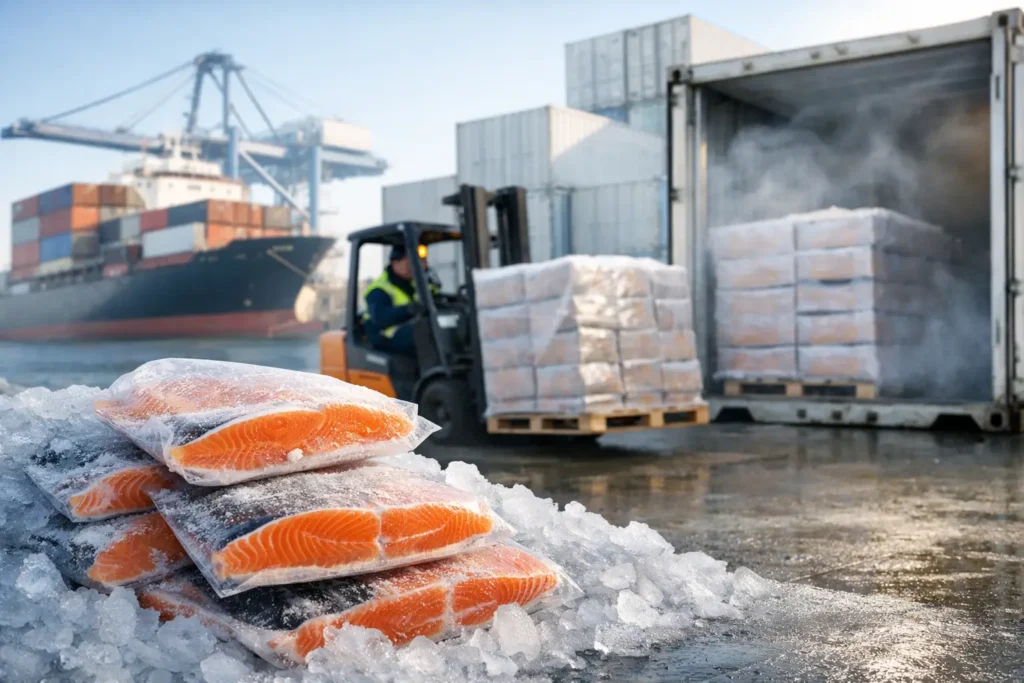
Cold Chain Protects Seafood Quality
Cold chain management remains essential during seafood exports.
Temperature control begins immediately after harvesting.
It continues through:
- Processing
- Cold storage
- Container loading
- Ocean freight
- Customs clearance
- Final delivery
Professional exporters monitor temperatures throughout transportation.
As a result, salmon and cod maintain excellent texture, flavor, and freshness.
Certifications Every Buyer Should Request
Professional exporters maintain internationally recognized certifications.
Common certifications include:
- HACCP
- BRCGS
- ISO Food Safety Management
- IFS Food Standards
- EU Export Approval
These certifications demonstrate commitment to food safety and international quality standards.
Four High-Value USA Salmon Supplier Keywords
Businesses searching for premium seafood often use these commercial search terms.
Fresh Salmon Supplier USA
Reliable companies provide fresh Atlantic salmon with consistent quality and nationwide distribution.
Frozen Salmon Supplier USA
Frozen salmon suppliers maintain strict cold chain management and dependable inventory.
Atlantic Salmon Wholesale USA
Wholesale suppliers serve supermarkets, distributors, food processors, and restaurants throughout the country.
Premium Seafood Supplier USA
Professional suppliers offer certified fresh and frozen seafood products supported by international documentation.
These commercial keywords strengthen search visibility while attracting qualified wholesale buyers.
Why Choose a Professional Wholesale Salmon Company
A dependable wholesale Salmon company offers more than competitive pricing.
Professional exporters provide:
- Export documentation
- International certifications
- Traceability systems
- Premium packaging
- Cold chain logistics
- Consistent product quality
- Flexible shipping options
- Responsive customer service
Many buyers also prefer suppliers that allow them to buy frozen salmon online through secure quotation systems.
Frequently Asked Questions
What is the most important seafood export document?
The Commercial Invoice remains one of the most important documents because customs authorities use it for shipment valuation and clearance.
Why is a Health Certificate required?
A Health Certificate confirms that seafood products meet veterinary and food safety requirements.
What does traceability mean in seafood exports?
Traceability allows buyers to identify the harvest location, processing facility, production batch, and shipment history.
Why should buyers verify certifications?
Certifications demonstrate compliance with international food safety standards and improve buyer confidence.
Can I buy frozen salmon online from certified exporters?
Yes. Many professional exporters allow international buyers to buy frozen salmon online, request quotations, review product specifications, and arrange worldwide delivery.
Conclusion
This guide to seafood export documents helps importers reduce risks while improving purchasing confidence. Working with a trusted frozen salmon exporter, experienced Atlantic salmon supplier, reliable premium salmon supplier, and established wholesale Salmon company ensures complete export documentation, international certifications, full traceability, sustainable production, premium packaging, strict cold chain management, excellent cod quality, and compliance with European standards. Following this guide to seafood export documents before every purchase supports faster customs clearance, protects your investment, and builds successful long-term seafood import partnerships worldwide.