

A restaurant salmon supplier is not simply a vendor that can deliver fish on time. For foodservice buyers, the supplier directly affects menu consistency, plate cost, kitchen yield, food safety compliance, and the guest experience. A salmon program can look profitable on paper, then lose margin quickly when fillet sizes vary, trim levels are inconsistent, or deliveries fail to meet the agreed cold-chain standard.
For multi-unit restaurants, hotel groups, caterers, distributors, and high-volume independent operators, the right sourcing decision starts with operational requirements. The question is not only whether salmon is premium. It is whether the product arrives in the right format, with repeatable specifications and documentation that supports dependable service week after week.
Why the Restaurant Salmon Supplier Matters
Salmon is one of the most recognizable premium proteins on a menu. Guests often associate it with freshness, quality, and responsible sourcing, while operators rely on it for broad appeal across grilled entrées, bowls, salads, sushi, breakfast menus, and prepared foods. That versatility makes consistency especially important.
A restaurant that portions its own fish needs predictable fillet shape, weight range, color, and trim. A kitchen using pre-portioned salmon needs accurate piece weights and a product that cooks evenly across shifts and locations. When these details change from shipment to shipment, purchasing teams face avoidable waste, recipe adjustments, and complaints from chefs.
The strongest suppliers understand that foodservice purchasing is a supply-chain decision. They can explain origin, farming standards, processing specifications, freezing method, packaging configuration, available volumes, and expected lead times before an order is placed. This clarity gives buyers a practical basis for comparing offers instead of making a decision based on a price per pound alone.
Define the Salmon Specification Before Requesting Prices
A useful quote begins with a complete product specification. “Fresh salmon fillets” is too broad for an accurate commercial offer. The supplier needs to know how the product will be used, processed, stored, and sold.
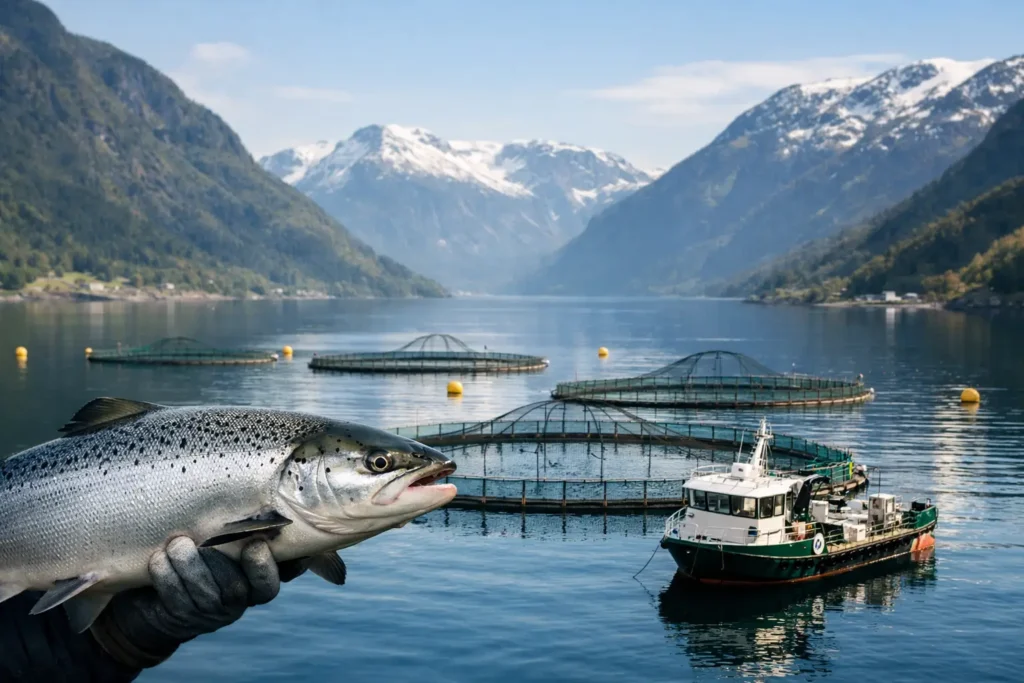
Start with the species and origin your operation requires. Norwegian Atlantic salmon is widely valued in foodservice for its consistent quality, fat content, firm texture, and dependable farming standards. For restaurants that promote sourcing on menus, country of origin and traceability may be as relevant as the product’s visual appearance.
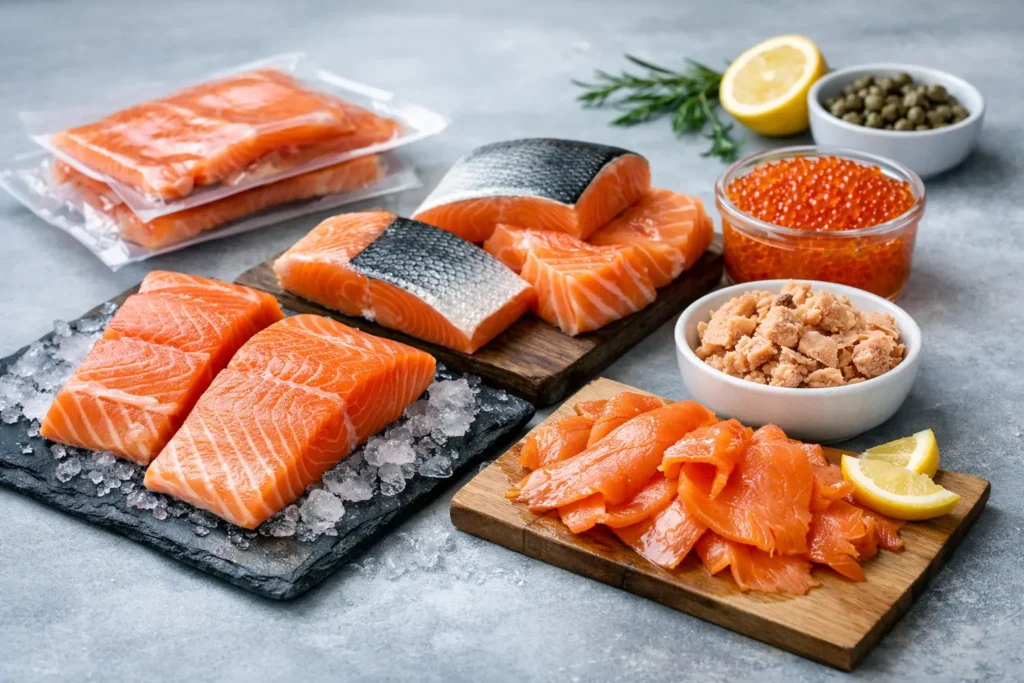
Then determine the format. Whole fish can offer flexibility for skilled in-house butchery programs, while trimmed fillets reduce labor and support predictable yields. HOG, meaning head-on gutted, salmon is often preferred by buyers who need a traditional whole-fish presentation or intend to complete processing closer to the point of use. Frozen salmon can be the better commercial choice for operations that need longer inventory coverage, stable availability, or lower exposure to short-term freight disruptions.
Fresh, Frozen, Whole, or Trimmed?
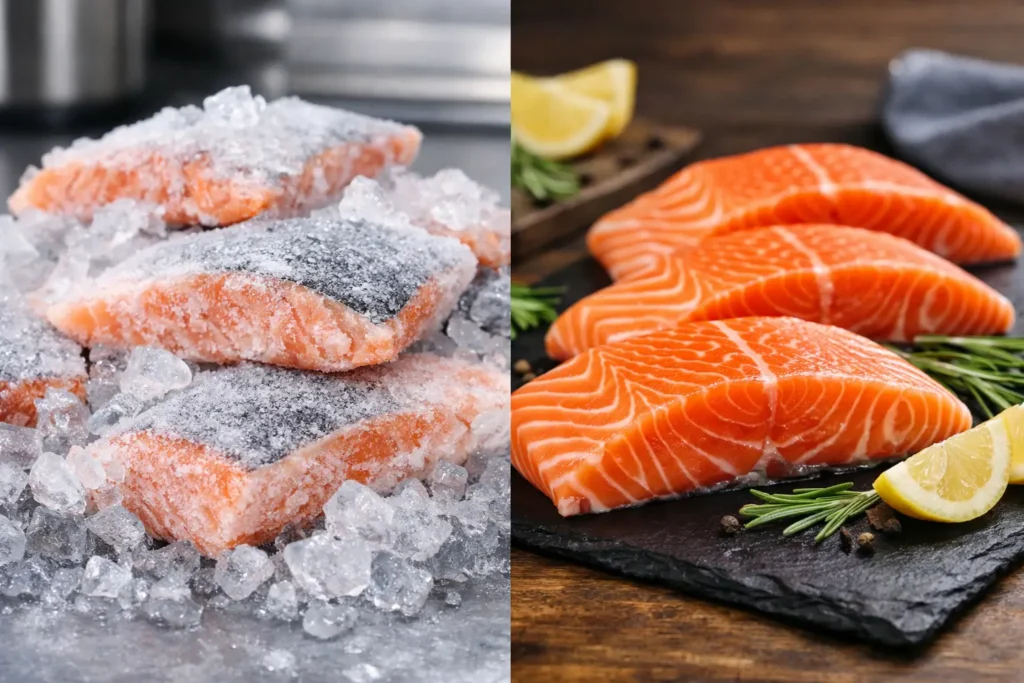
There is no single correct format. Fresh fish supports menus where immediate availability and premium presentation are central, but it requires disciplined forecasting and reliable delivery schedules. Frozen fish supports inventory planning and can reduce waste, particularly for restaurants with variable demand. Quality frozen salmon, processed and frozen under controlled conditions, can be a strong option when the thawing process is managed correctly.
Whole salmon may provide the best buying price and maximum cutting flexibility, but the labor, yield loss, and skill required must be included in the real cost calculation. Trimmed fillets cost more per pound than whole fish, yet they can improve portion control and reduce preparation time. A restaurant salmon supplier should help buyers evaluate the total delivered and usable cost, not merely quote the lowest entry price.
Set Tolerances That Protect Kitchen Performance
Specifications should include target weights, acceptable weight ranges, trim standard, pin-bone status, skin-on or skinless requirement, pack size, glazing requirements for frozen products, and label information. For portion-controlled programs, buyers should also define the acceptable variance per piece.
These details matter because a small difference in average portion weight can create a significant monthly food-cost variance across hundreds or thousands of covers. Written specifications also make receiving checks simpler. The kitchen team knows what it is accepting, and the purchasing team has a clear standard if a shipment does not conform.
Verify Origin, Traceability, and Food Safety Controls
Premium salmon should be supported by records, not broad claims. Buyers should be able to trace the product through the supply chain, from farm and processing facility to export documentation and final delivery. Traceability supports quality management, menu claims, recall readiness, and customer confidence.
Ask potential suppliers how they document product origin, lot identification, processing dates, and handling requirements. For international supply, confirm that the exporter can provide the documentation required by the destination market and the buyer’s internal compliance program. A supplier with export experience understands that product quality and paperwork must arrive together.
Sustainability standards also deserve a practical review. Many foodservice buyers need salmon produced under recognized farming, animal welfare, environmental, and food safety frameworks. The right requirement depends on the restaurant group, distributor, retailer, or institutional customer involved. A supplier should be prepared to discuss the source facility and the certifications or standards available for the selected product.
Traceability is particularly valuable when purchasing teams serve multiple customers. A distributor may need to provide clear origin information to restaurant accounts. A restaurant group may need consistent sourcing language across menu locations. A reliable supplier makes those conversations easier by maintaining organized, verifiable product records.
Evaluate Cold Chain and Export Capability
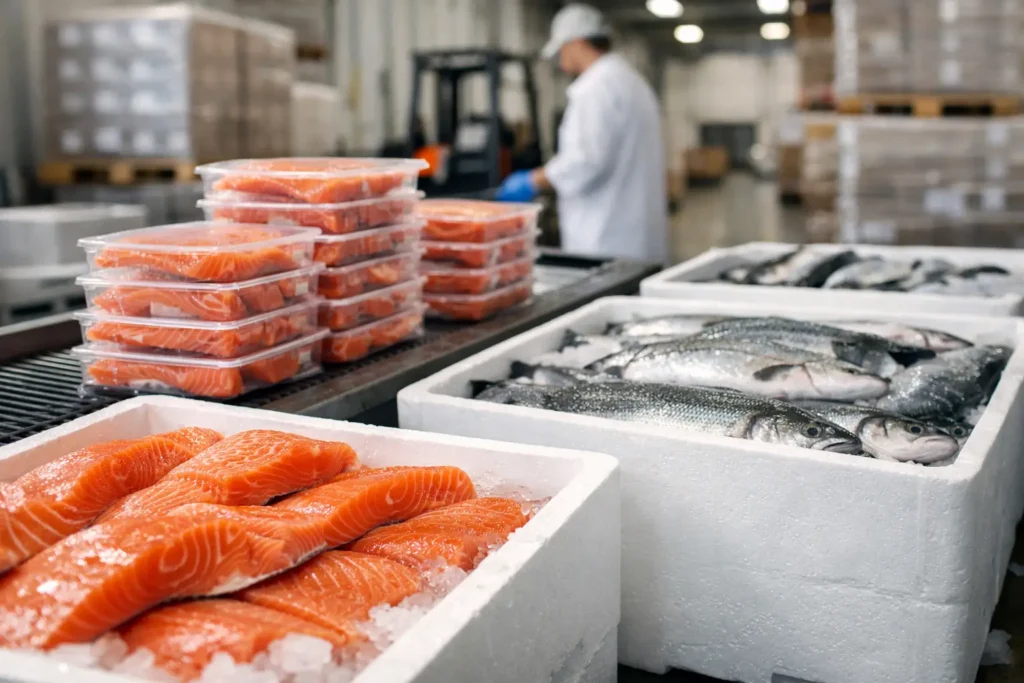
A high-quality salmon product can still become a costly problem if the cold chain is poorly managed. Temperature control, insulated packaging, shipping schedule, customs coordination, and receiving procedures all influence condition on arrival.
For domestic deliveries, buyers should confirm delivery frequency, order cutoffs, minimum order requirements, and the process for reporting shortages or quality issues. For imported salmon, the logistics review should go further. Ask who manages export coordination, what documentation accompanies the shipment, how transit timing is planned, and what product condition is expected at delivery.
The answer will vary based on whether the product is fresh or frozen, the destination, and the order volume. Fresh salmon programs require particularly close coordination because shelf life is finite and timing affects both usable inventory and menu availability. Frozen programs generally offer more planning flexibility, but buyers still need confidence that storage and transportation conditions will protect product integrity.
A supplier with direct factory access can provide an advantage here. Fewer intermediaries can mean clearer accountability, faster access to product information, and more efficient communication between the buyer, processor, and export team. However, factory-direct supply may involve larger minimum order quantities than local broadline distribution. For high-volume buyers, that trade-off can produce better pricing and greater supply visibility. For smaller restaurants, a distributor model may be more practical.
Compare Restaurant Salmon Supplier Pricing the Right Way
Factory prices are attractive, but procurement teams should compare offers on a like-for-like basis. A lower price may reflect a different trim, weight range, packaging format, product age, delivery term, or service level. If one quote is for skin-on trim C fillets and another is for more extensively trimmed, pin-bone-removed portions, the per-pound comparison does not show the full commercial picture.
Calculate usable yield, freight, cold storage, handling, kitchen labor, inventory risk, and expected waste. Then compare the cost of each finished menu portion. This approach often identifies savings that are not visible in the initial quote.
Long-term supply partnerships can also improve buying conditions. A supplier that understands forecasted demand, seasonal menu changes, and expected volume can plan production and logistics more effectively. Buyers benefit from more stable supply planning, while suppliers can allocate product with greater confidence.
Questions to Ask Before Approving a Supplier
Restaurant Salmon Supplier
Before adding a new supplier, procurement teams should confirm the available product formats, minimum order quantities, production lead times, and delivery capabilities for their market. They should review product specifications, traceability documents, food safety records, packaging details, and the supplier’s process for quality claims.
It is equally useful to ask how the supplier manages supply fluctuations. Salmon availability, freight capacity, and market pricing can change. A credible export partner will not promise fixed conditions that cannot be supported. Instead, it will explain lead times, forecast requirements, alternatives in product format, and the commercial steps needed to protect continuity.
A sample order or controlled first shipment can provide useful evidence before a larger rollout. Evaluate the fish at receiving, after storage, during portioning, and after cooking. Procurement may approve the specification, but the chef and kitchen team should confirm that the product performs as expected on the plate.
For buyers looking for premium Norwegian salmon with factory-direct sourcing, Nordpoll Seafood offers the combination that matters most: clear specifications, traceable supply, export competence, and dependable volume planning. The best next step is to build a product specification around your menu and operational needs, then source against the true cost of a consistent, deliverable salmon program.